AI agent startup Sierra valued at $15B in new $950M funding round

On this page
Strip away the funding headlines and this announcement says one thing: enterprise AI agents are no longer a pilot project. They’re infrastructure. The same category of software that, two years ago, was mostly answering password-reset tickets is now handling insurance claims, mortgage originations, and subscription switches at some of the world’s largest companies — without a human in the loop.
The money following that shift is staggering. But here’s the part worth sitting with: Sierra’s own CEO, Bret Taylor, is publicly predicting a market correction in AI within two years — even while leading one of the most heavily funded AI startups on the planet. That tension is the real story. And it tells you something important about where AI agents are actually headed.
What Sierra’s $950M AI Agent Round Actually Looks Like
On May 4, 2026, Sierra Technologies announced a $950 million Series E round, led by Tiger Global and GV (Google’s venture arm), with participation from Benchmark, Sequoia, and Greenoaks. The raise values the company at over $15 billion — up from $10 billion just eight months ago after a prior $350 million round.
The company was co-founded in early 2024 by Bret Taylor — OpenAI’s board chair and former Salesforce co-CEO — and Clay Bavor, a former Google executive. It sells tools that help organizations build AI agents: the flagship product is an Agent SDK (a developer toolkit for building agents without starting from scratch), alongside Agent Studio for teams that don’t write code, and Live Assistant for customer support workflows.
The numbers that matter: Sierra reports that more than 40% of the Fortune 50 now use its platform, with customers including Prudential, Cigna, Blue Cross Blue Shield, and Rocket Mortgage. The company hit $150 million in annual recurring revenue — growing from $100 million in late November 2025 to $150 million by early February 2026. Taylor called that timeline ‘unprecedented in traditional software.‘
Why the $150M ARR Milestone Matters More Than the Valuation
Valuations are stories investors tell each other. Revenue is what actually happened. Sierra went from zero to $150 million in annual recurring revenue in eight quarters. That’s not a trend line — that’s a category being born in real time.
That $150 million exists because enterprises are paying real money to replace real workflows. Bret Taylor estimates that $400 billion is spent globally on customer service every year. Most of that money currently flows to human labor. The argument Sierra is making — and that $950 million in new capital is betting on — is that a significant portion of that $400 billion is now addressable by software that costs a fraction of the headcount it replaces.
Two years ago, Sierra’s agents mostly handled support: tracking orders, resetting passwords, troubleshooting devices. Today, according to Sierra’s own blog, agents built on the platform are powering insurance claims processing, mortgage originations, banking sales, and healthcare billing — the full customer lifecycle, not just the help desk. That’s a different kind of software category than the one that launched.
The Signal Hidden in Sierra’s Own CEO’s Warning
Here’s the counterintuitive thing. While leading one of the best-funded AI startups in the world, Bret Taylor is on record predicting a market correction in the AI space within the next two years. That’s not a contradiction — it’s actually a sophisticated read of the market.
The AI agent category, like every technology category before it, has attracted capital faster than it has attracted discipline. A lot of that money is funding tools that don’t yet have real revenue, real retention, or real differentiation. The companies building on hype — rather than on provable enterprise workflows — are exactly the ones Taylor is signaling will get washed out. Sierra, which now has $150 million in recurring revenue and Fortune 50 penetration, is positioning itself on the right side of that correction.
For anyone watching the agentic AI space, this is a pattern worth recognizing. The first wave of a technology category is always crowded. The shakeout comes when enterprises stop experimenting and start demanding reliability, integrations, and accountability. Sierra is betting it will be the platform enterprises lock in before that shakeout arrives.
What Sierra’s Architecture Tells You About Building Your Own Agent
The technical decisions Sierra made are worth understanding — not because you’ll be building Fortune 50 enterprise software, but because the same design principles apply at every scale of agent deployment.
Sierra’s Agent SDK ships with prepackaged agent ‘skills’ — predefined capabilities that developers can mix and match rather than generating new plans from scratch for every user interaction. This matters because it directly reduces the surface area for AI errors. A predefined automation workflow makes fewer mistakes than an agent improvising its way through a novel task every time. The platform also includes simulation-based testing: before an agent touches a production system, it gets evaluated against simulated user interactions to verify its output. That’s not glamorous — but it’s the kind of reliability that enterprises actually pay for.
The multi-model strategy is equally instructive. Sierra runs 15+ models simultaneously because no single model is best at everything. That architectural choice — routing tasks to the right model rather than forcing one model to do everything — is the same pattern smart teams are adopting on AI agent platforms at every budget level. The approach also reduces vendor dependency: if one model provider raises prices or degrades quality, the platform keeps running.
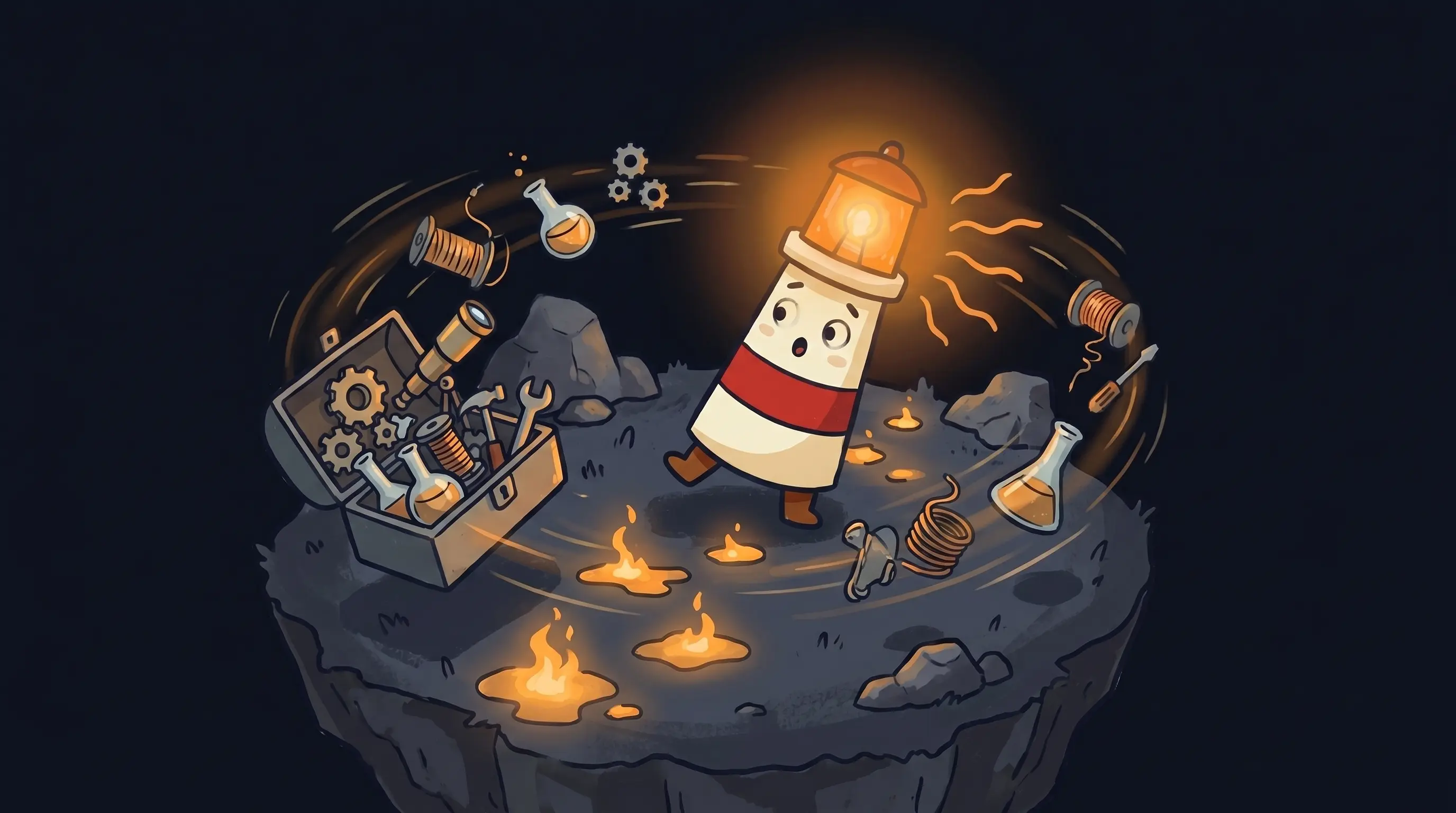
 Some valuations are so bright, even Beacon needs a moment to adjust.
What to Do With This Information
- Watch who Sierra partners with next. The company plans to use new funding to potentially replace some third-party proprietary models with custom-trained algorithms — a cost-reduction move other well-funded AI startups have already made. If Sierra trains its own models, that changes the competitive dynamics for every platform running on OpenAI or Anthropic. Watch the announcement timing over the next 12 months.
- Don’t read this round as ‘enterprise only.’ The design principles Sierra is proving at scale — prepackaged skills, multi-model routing, simulation testing before deployment — are the same ones that will define the next generation of personal AI agent platforms. What Fortune 50 companies fund today, smaller tools copy in 18 months.
- Take the correction warning seriously. Taylor’s public prediction of a market correction is a signal to evaluate any AI agent platform you’re betting on. Ask: Does it have real revenue? Real customers who renew? Real workflows it can demonstrate — not just demos? The tools that survive the shakeout will have answers to all three.
- Note where AI agents are landing in the stack. Sierra’s expansion from support into insurance claims, mortgages, and healthcare billing tells you something about where AI agents are heading: not just answering questions, but completing transactions. If your use case involves high-stakes decisions or financial outcomes, the reliability requirements — and the platform requirements — are higher than they were 18 months ago.
- If you’re evaluating agent platforms now, ask about model diversity. Single-model dependency is a real risk (see: model quality degradation, pricing changes, provider outages). Platforms using multiple models — routing tasks intelligently — are more resilient. That’s not an accident. Sierra built that way for a reason.
Sierra’s $15B Round: What This Confirms About AI Agents in 2026
- Sierra raised $950 million at a $15 billion valuation in May 2026, led by Tiger Global and GV — just eight months after closing a $350 million round at a $10 billion valuation.
- The company reached $150 million in annual recurring revenue in eight quarters, serving more than 40% of the Fortune 50 with enterprise customers including Prudential, Cigna, and Rocket Mortgage.
- Sierra’s platform runs on 15+ AI models simultaneously rather than relying on a single provider — a ‘constellation of models’ approach that reduces errors and vendor dependency.
- CEO Bret Taylor estimates the total customer service market at $400 billion annually, with most of it moving toward AI agents — and simultaneously predicts a market correction in the AI space within two years.
- AI agents have expanded beyond customer support into insurance claims, mortgage processing, and healthcare billing — a signal that high-stakes, transactional use cases are now proven territory for the technology.
The enterprises writing $15 billion mandates today are not experimenting anymore. They’re locking in infrastructure decisions they expect to live with for a decade. If you’re still treating AI agents as a pilot project — something to evaluate next quarter — consider what it means to be on the wrong side of that timeline. The tools that survive Taylor’s predicted correction will be the ones built on real workflows and real revenue. The question isn’t whether AI agents work. It’s which ones will still be running when the dust settles.