AI Assistant vs CRM Reminders for Small Business: What Actually Gets Follow-Ups Done?
On this page
What’s the real reason you still have leads sitting in a tab you haven’t opened since Tuesday?
It’s not that you forgot. You knew you needed to follow up. It’s that when you finally had a free minute, you couldn’t remember what stage that conversation was at, what you’d already said, or what the right next step even was. So you closed the tab and told yourself you’d handle it tomorrow. Tomorrow came. You didn’t handle it.
This is the follow-up problem in its actual form. Not a memory problem. Not a discipline problem. A context problem — and it’s why both CRM reminders and generic AI chat tools keep leaving business owners in the same spot. The underlying issue with both tools is the same, and we’ll get to that. But first, let’s look at what actually happens when you rely on each one.
If you’re evaluating your options for AI assistant tools for small business follow-ups, the comparison below is the most practical place to start.
Why CRM Reminders Fail the Solo Business Owner
The promise of a CRM is appealing. One place for all your customer data, deal stages, and activity history. Set a reminder, stay on top of every lead. The reality looks different.
80% of sales require five or more follow-up touches to close. Most salespeople give up after one or two — not because they don’t care, but because they don’t have a system that makes the next touch easy. A CRM reminder is supposed to solve that. It mostly doesn’t.
Here’s what actually happens. You set a reminder for Thursday at 9 AM. Thursday arrives. The notification fires: ‘Follow up with Sarah.’ You open it. There’s no context about what Sarah asked for, what you quoted her, or why she went quiet after your last message. You have to dig through email, scroll back through notes, and reconstruct the situation before you can write a single word. That reconstruction — not the follow-up itself — is what eats your morning.
There’s also the setup problem. Finding the right field, picking a date, clicking save — each step is a reason not to bother when you’re in the middle of a client conversation. So reminders only get set for the leads you already remember. The ones you forget are the ones who need the reminder most.
One well-observed pattern we’ve seen: small business owners install a CRM, enter their initial contacts, admire the dashboard — and then quietly go back to running their business from their phone. Not because the CRM is bad. Because it doesn’t actually do anything for them. It waits to be used.
Why Generic AI Chat Doesn’t Fix It Either
So you try the other obvious option: use ChatGPT or Claude to help draft follow-ups. This works, sometimes, for about a week.
The workflow goes like this. You open a new tab. You paste in what you remember about the customer. You ask the AI to draft a follow-up email. You get a decent draft. You edit it. You copy it into Gmail. You close the tab. The AI forgets everything.
Next week, you do it again from scratch. Same context, re-entered. Same background, re-explained. The AI has no idea who your customers are, what stage your deals are at, what you’ve already sent, or what you promised in the last call. It’s only as good as the context you remember to paste in — and it forgets every session.
Generic AI chat tools cannot query your customer data, don’t know your sales history, and can’t act on your business without you providing explicit context every single time. That’s not a knock on the tools — it’s just what they are. A general-purpose AI chat interface is not the same thing as a follow-up assistant that knows your business.
The irony is that this option often feels worse than the CRM reminder. At least the reminder required nothing from you to fire. The AI chat approach requires effort every time, and it still depends entirely on your own memory.
The Root Cause Both Tools Miss
Here’s what both approaches have in common: they give you a trigger without giving you the context to act on it.
A CRM reminder fires and says ‘follow up.’ It doesn’t tell you why, what to say, or what happened last. A generic AI tool can draft a message, but only with the context you manually supply in that moment. Neither one bridges the gap between knowing you need to follow up and knowing what to actually say.
This is the failure mode that shows up across both categories. When AI is pointed at customer data without real context — no deal stage, no history, no understanding of why the lead went quiet — the output is plausible-sounding but useless. Fast follow-up without customer visibility doesn’t move leads forward; it just sends noise faster.
The approach that actually works is different. It reads the context before drafting anything. It knows what was last discussed, what’s outstanding, and what the sensible next step looks like. And critically: it doesn’t send anything until you approve it.
What an AI Follow-Up Assistant Actually Does Differently
An AI follow-up assistant that’s genuinely useful for a small business isn’t an automation sequence. It’s not a robot that blasts scheduled emails on a timer. It’s closer to a second set of eyes that reads your files and notes, understands where each customer stands, and prepares a draft for your review.
The key distinction is the approval step. Nothing gets sent, posted, or changed outside your review. You see the draft. You edit it if you want. You approve it. Then it goes. That’s not a limitation — it’s the design. For a solo business owner, staying in control of customer communication isn’t optional.
Reads customer context before drafting
The AI works from the notes, emails, and records you've given it — so the draft reflects what actually happened, not a generic template.
Proposes the next step, doesn't just remind you
Instead of firing a notification that says 'follow up,' it prepares a draft you can approve, edit, or reject in seconds.
Checks with you before anything is sent
No autonomous sending. The draft waits for your approval. You stay accountable for what goes to customers.
Remembers context across sessions
Unlike a general-purpose AI chat tool, a properly set-up follow-up assistant doesn't require you to re-explain who your customer is every time.
Surfaces what's outstanding
It can flag which leads haven't had a reply in a week, which invoices are still open, and which conversations dropped off mid-thread.
This is architecturally different from full automation. You’re not delegating the decision to send — you’re delegating the work of preparing the draft. That distinction matters for customer relationships where tone, timing, and context are things only you can fully judge.
For a broader look at how AI helpers compare to hiring a virtual assistant for follow-up work, the article on AI for entrepreneurs as a one-person team multiplier covers the tradeoffs in more detail.
CRM Reminders vs AI Assistant for Follow-Ups: The Direct Comparison
Here’s how the two approaches actually stack up for a solo business owner running customer follow-ups without a sales team.
One note on CRM pricing before the table: HubSpot’s free CRM is genuinely free for up to two users and 1,000 contacts with no expiration. Paid plans start at $15/month per seat. AI-assisted CRM tiers that include more automation features run from $800 to $3,600/month for a team of 50 — which is relevant context if you’re evaluating whether to upgrade rather than add a separate AI tool.
- CRM reminders (e.g., HubSpot free): Tells you to follow up. Requires manual setup per contact. No context when it fires. You write the message yourself. Free to start.
- Generic AI chat (ChatGPT, Claude): Drafts messages fast. No memory between sessions. Requires you to paste in all context every time. Doesn’t know your customers.
- AI follow-up assistant (context-aware): Reads your files and notes. Drafts the next message for your review. Waits for approval before anything is sent. Remembers customer context across sessions.
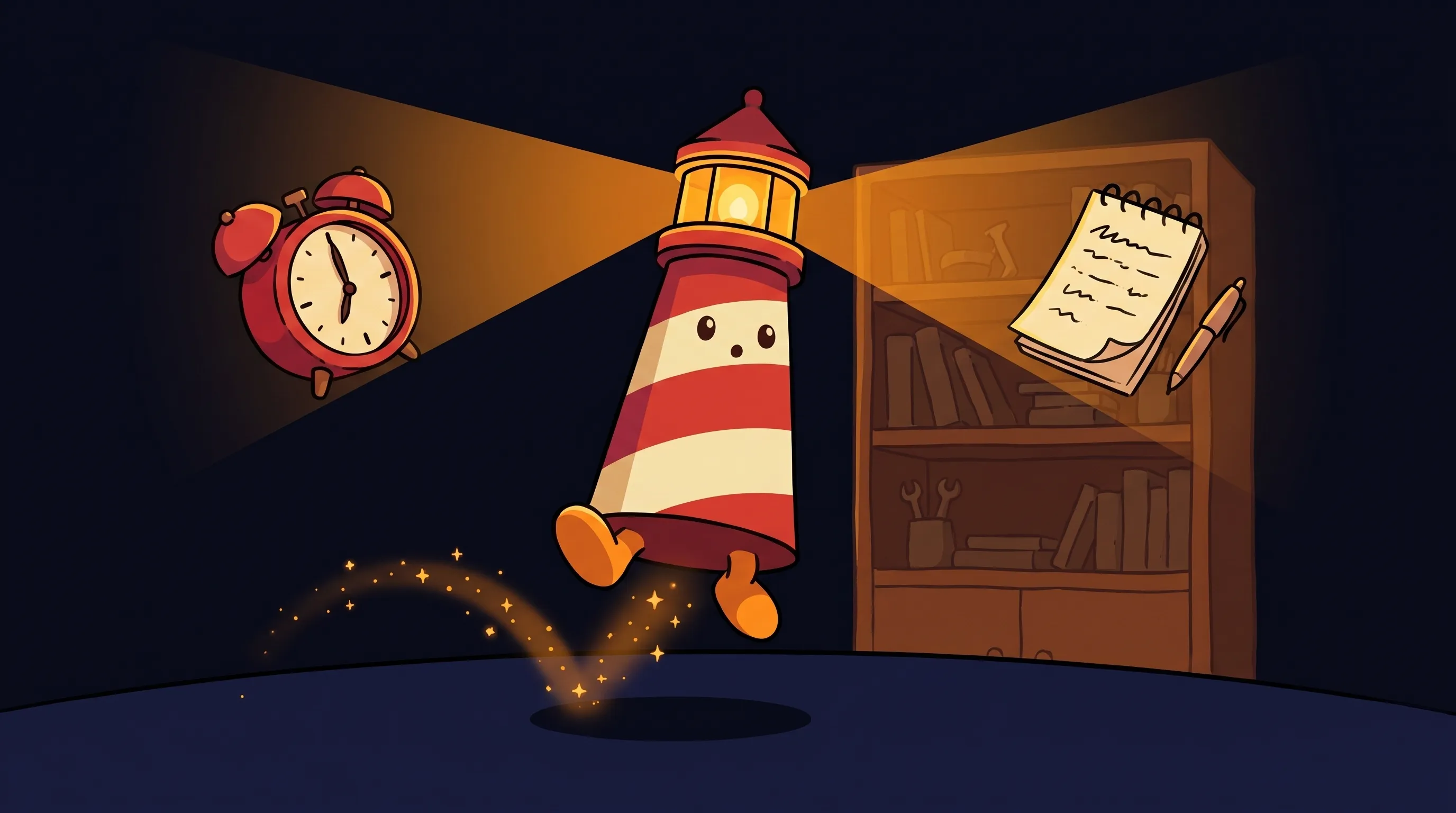 Beacon’s hot take: a CRM reminder you snooze is just a to-do list with ambitions. The follow-up that actually happens? That’s the real win.
The pattern that shows up consistently: manually chasing customers through reminders and copy-paste often consumes 30% or more of a professional’s day. Each interruption to check a reminder, dig for context, and draft a reply carries a recovery cost of roughly 23 minutes to return to focused work afterward. Across a week, that compounds.
That’s not a knock on CRMs — it’s a description of what reminder-based systems actually cost you in a one-person operation.
Where AI Follow-Up Assistance Still Falls Short
We’d be doing you a disservice if we described this as a clean win for AI assistants. There are real limitations, and most of them come down to setup and input quality.
- The AI is only as good as the files you give it. If your notes are sparse or your customer history lives in email threads you haven’t organized, the drafts will reflect that. Garbage in, generic out.
- You still need to approve everything. This is the right design, but it means you can’t fully disappear. If a lead replies at 11 PM, the draft waits until you review it.
- Setup takes real effort upfront. A generic AI chat tool works in 30 seconds. A context-aware follow-up assistant requires you to feed it your customer notes, deal stages, and communication history before it can draft anything useful.
- It won’t know what’s changed unless you tell it. If a customer called you and changed their requirements verbally, that context only makes it into the system if you document it.
- Full automation of sending is not the goal. An AI follow-up assistant that checks with you before sending is the appropriate model for solo business owners. If you want fully autonomous email sequences, that’s a different category of tool — with different risks.
- Most homemade follow-up automations fail at the stopping point. If you build your own automation, the most common failure is a system that keeps sending after a lead has already replied. A properly configured follow-up assistant should stop automatically when a response comes in — and that logic needs to be set up correctly from the start.
Your Monday Morning Follow-Up System Checklist
Whether you’re starting with CRM reminders, upgrading to an AI follow-up assistant, or deciding between the two, here’s a practical starting point.
- Audit your current follow-up failures this week. Open your CRM or inbox and count how many leads haven’t been touched in 7+ days. If the number is above 5, your current system isn’t working — and that’s the number that tells you what to fix first.
- If you’re using CRM reminders only: Set a rule for yourself — reminders only get set if you write at least one sentence of context in the note field at the same time. That single habit eliminates most of the ‘why was I supposed to follow up again?’ problem.
- If you’re evaluating an AI follow-up assistant: Start by giving it your three most common follow-up scenarios in plain notes — the post-quote check-in, the no-reply nudge, and the post-meeting summary. These three cover about 80% of follow-up volume for most solo business owners.
- Set your approval threshold before you start. Decide in advance: which drafts can you approve in under 30 seconds? (Standard check-ins, invoice nudges.) Which ones require real thought? (Scope changes, unhappy customers.) Route fast approvals through your phone; don’t let them sit.
- If you’re over $1,000/month in lost deals from slow follow-up: That’s the threshold where a context-aware AI follow-up assistant typically pays for itself. Below that, a disciplined CRM reminder habit with good note-taking is probably sufficient.
- Test the stopping logic before anything else. If you set up any kind of automated follow-up sequence, verify it stops sending the moment a lead replies. This is where most homemade automations break — and it’s the first thing to check, not the last.
- Give it 30 days before judging. The first week of any new follow-up system feels slower because you’re building habits. The compounding benefit shows up in week three and four when you notice leads you would have forgotten are still in active conversations.
What This Means for Your Follow-Up Workflow
CRM reminders are a solved problem — they exist, they’re free, and if you’re disciplined about context notes, they work reasonably well. The ceiling is low, though. They don’t help you draft the message, they don’t surface what’s outstanding, and they fire into a vacuum of context.
Generic AI chat tools are useful in the moment, but they reset every session. They’re a drafting tool, not a follow-up system.
A context-aware AI follow-up assistant is genuinely different — but only if you actually give it the context to work from. The owners who see the most benefit are the ones who spend an hour documenting their customer notes before expecting the AI to draft anything useful. That upfront investment is what separates the people who say ‘the AI doesn’t know my business’ from the ones who say ‘I don’t know how I ran follow-ups without it.’
The business owners who sort this out now — who build a working follow-up system with context baked in — will be faster at follow-up, keep more deals in play, and spend less of their week reconstructing context that should have been captured the first time. The ones who wait keep paying the same 30% tax on their day. That math is already not working.
Follow-Up System Decisions: What to Carry With You
- 80% of sales close after five or more follow-up touches — most solo business owners give up at one or two, not from laziness, but from lack of a system that makes the next touch easy.
- CRM reminders fail at three points: they’re easy to skip when setting up, they fire without context, and they leave the hard part (writing the message) entirely on you.
- Generic AI chat tools draft fast but forget everything between sessions — they require you to re-supply context every time, which means they’re only as useful as your memory.
- A context-aware AI follow-up assistant bridges the gap: it reads the files and notes you’ve given it, prepares a draft for your review, and waits for approval before anything is sent.
- The quality of the output depends entirely on the quality of your input. Good notes produce useful drafts. Sparse notes produce generic ones.
- Manual follow-up chasing consumes 30% or more of the workday for many professionals — and each interruption carries a ~23-minute recovery cost to return to focused work.
Frequently Asked Questions
Is a CRM reminder the same as follow-up automation?
No — and this distinction matters. A CRM reminder notifies you to follow up. You still have to open the record, remember the context, and write the message yourself. Follow-up automation actually sends the message on your behalf. Most CRM vendors market reminder features using automation language, but they’re not the same thing. If you’re still writing and sending every follow-up manually after the reminder fires, your system is reminder-based, not automated.
What's the difference between an AI assistant for follow-ups and a CRM with AI features?
Most CRMs that advertise ‘AI features’ are offering a chat interface that answers questions about the CRM itself, or a writing assistant that helps draft emails. That’s useful, but it’s not the same as an AI assistant that reads your customer context, surfaces what’s outstanding, and prepares a follow-up draft for your review. The distinction is whether the AI knows your specific customer history — or just knows how to write emails generally.
Can an AI follow-up assistant send emails on its own?
It depends on how you configure it. The model that makes most sense for solo business owners is draft-first, approve-second: the AI prepares the follow-up, you review it, then it sends. Fully autonomous sending is possible with some tools, but for customer-facing communication where tone and context matter, a human review step before sending is the safer default — and the right design for most small businesses.
How much context does an AI follow-up assistant need to produce useful drafts?
More than most people expect upfront. At minimum: a description of each active lead or customer, the current status of the conversation, what was last discussed, and what the next logical step should be. The more organized your notes, the better the drafts. An AI assistant that reads well-structured customer notes will produce a draft you can approve in 20 seconds. One working from sparse notes will produce something generic you’d have been better off writing yourself.
What's the best small business CRM for follow-up if I'm starting from zero?
HubSpot’s free CRM is the practical starting point for most solo business owners — genuinely free for up to two users and 1,000 contacts, no credit card required, no expiration date. It handles contact records, deal tracking, and basic reminders well. Where it stops short is the context-aware drafting and proactive surfacing of what’s outstanding. For that layer, you’d need to pair it with a separate AI follow-up assistant or upgrade to a paid tier with more AI functionality.
Sources
- How to Automate Sales Follow-Ups 2026 — Distk
- Automatic Contact Follow-Up Reminders with AI — Dench Blog
- AI CRM vs AI Assistant: What’s the Difference? — Dench Blog
- AI Reminder Software vs Manual Follow-Ups — Squirrels.ai
- Manual CRM vs AI-Assisted CRM: What Actually Works — DEV Community
- Instant Replies Are Not Enough — Kira Management
- Best Small Business CRM for Follow-Up Automation 2026 — SaaS Sleuth
- AI Lead Follow Up: Why It Doubles Calls — SetSmart
- CRM vs AI Business Manager — ALPA Marketing
- AI CRM Integration: Salesforce vs HubSpot vs Custom AI Agents — Applied AI Studio
- HubSpot Free CRM
- McKinsey State of AI 2024 — via DEV Community