AI Workforce vs AI Employee: What Is the Difference?
On this page
Every vendor is calling something different an ‘AI employee’ right now. Some mean a chatbot with a persona. Some mean an autonomous agent with tool access. Some mean a workflow wrapper dressed up in a LinkedIn headshot. And ‘AI workforce’ gets thrown around as the collective noun for all of it — as if the terminology just needs a bit of tidying up.
It doesn’t. These two terms describe structurally different things, and if you’re making deployment decisions based on marketing language, you’re going to build the wrong architecture. The real question isn’t what vendors are calling their products. It’s what level of autonomy, identity, and governance you’re actually committing to — and whether your operating model can support it. There’s a counter-intuitive warning buried in Forrester’s analysis of agentic AI that most enterprise teams miss entirely. It directly concerns the ‘AI employee’ framing. We’ll get to it — but first, the definitions have to be right.
If you’ve been working through the broader category, our piece on agentic AI covers how autonomous agents plan, decide, and act — useful context for what follows. If you want the parent commercial lens for this cluster, the next stop after this page should be the AI agent platform pillar.
What the AI Workforce Actually Describes
The AI workforce is an organizational construct. It describes the full set of AI systems — copilots, virtual assistants, autonomous agents — that collectively form what’s sometimes called a business’s ‘digital headcount.’ These systems operate alongside human teams, with each component carrying a defined role, scope, and level of autonomy.
The key word is ‘integrated.’ An AI workforce isn’t a collection of tools you’ve licensed. It’s a managed operating layer — digital contributors that execute workflows, make bounded decisions, and collaborate with both humans and each other. The organizational shape matters as much as the individual systems.
One attribute that distinguishes the AI workforce from a software stack: institutional continuity. Digital workers don’t leave for competitors, don’t experience fatigue, and don’t take critical process knowledge with them when they exit. That’s operationally significant — though it comes with its own governance challenges, as we’ll cover.
What Makes an AI Employee Different
Here’s the distinction that actually matters: an AI employee is a role-based digital worker that operates inside enterprise controls. Not a chatbot with a job title. Not a copilot with extra features. A bounded system with identity, permissions, and outcome ownership.
The clearest three-level framing comes from Emika’s breakdown of the category: assistants help you work, agents execute bounded tasks, and employees own outcomes. That’s not just a positioning statement — it reflects real architectural differences in how each type handles memory, state, and accountability.
Goal-Driven Behavior
The agent works toward a defined outcome, not just a prompted response. It knows what done looks like.
Multi-Step Planning
It decides a sequence of actions to reach the goal — not a single-turn interaction.
Tool Access
It can read and write in systems of record. Not sandboxed. Connected to real business data.
State and Continuity
It can pause, wait, retry, resume, and finish — across sessions, across time, without losing context.
Governance
Permissions, approvals for risky actions, logging, and monitoring. Not optional — required for enterprise operation.
Compare that to an AI assistant. Assistants are stateless and session-based — memory resets between conversations, there’s no access to external systems, no persistent data, no learning from past interactions. That architecture is fine for drafting emails or summarizing documents. It’s architecturally unsuitable for owning an end-to-end business process.
The Crawl-Walk-Run Model Most Teams Skip Over
EverWorker’s maturity model maps this cleanly. Crawl: AI assistants. Walk: AI agents. Run: AI workers (or employees). Each level carries different implications for autonomy, context handling, and outcome ownership.
Most teams fail not because they deploy the wrong technology, but because they deploy the right technology at the wrong maturity level. You can’t bolt AI-employee expectations onto an assistant-tier architecture and wonder why nothing sticks. The work type has to match the AI type.
Only 50% of employees feel they do meaningful work, according to McKinsey. That’s the organizational driver behind enterprise adoption of AI employees — absorbing the routine and time-consuming tasks so humans concentrate on work that actually requires them. But matching AI maturity to task type is the prerequisite. Throw an autonomous worker at a task that only needs an assistant, and you’ve over-engineered a problem and introduced governance overhead for no return.
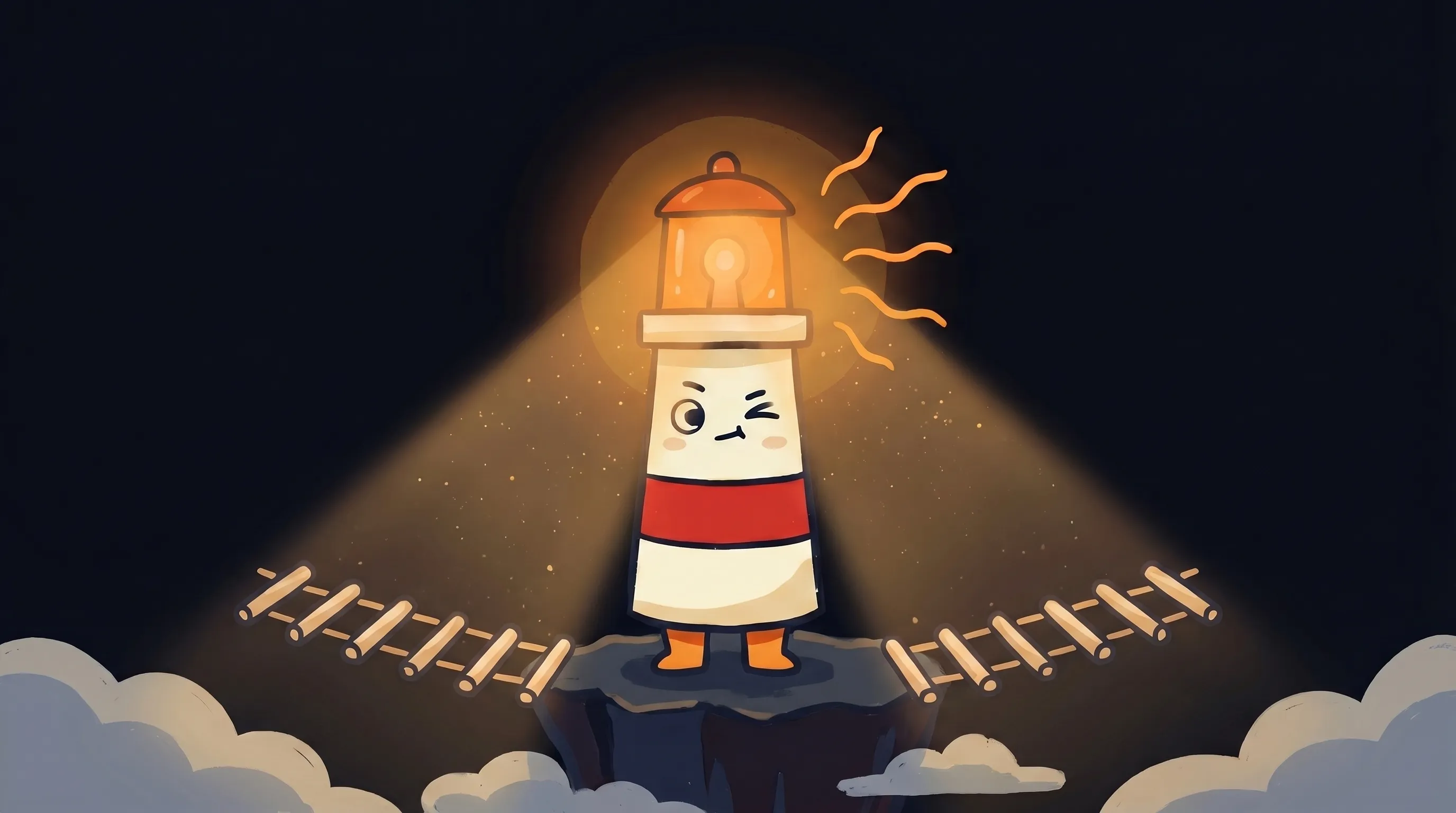 The maturity jump from assistant to employee is not cosmetic. It changes the operating model, the review model, and the governance burden.
Why the ‘AI Employee’ Mental Model Has a Hidden Flaw
Here’s the Forrester finding most deployment strategies miss: the ‘AI employee’ framing is useful for one specific thing — establishing identity, permissions, and access management for individual agents. But it has a fundamental flaw built in.
Treating agents as employees frames them as tactical work units. That framing causes enterprises to sidestep system-level controls and governance modes — managing individual agents in isolation instead of governing the agentic portfolio as a whole. Forrester’s language is direct: it ‘bestows a false sense of autonomy, judgment, and accountability to the agent.’
This isn’t a theoretical concern. When agent deployments fall short, the problem is rarely the model itself. It’s how agents are introduced, governed, and expected to operate inside real business environments. Unclear ownership and governance controls — not technical limitations — are the primary cause of enterprise AI agent failures.
The distinction between workforce and employee matters precisely here. The workforce framing forces you to think at the system level: how do agents collaborate, where do handoffs happen, how does the portfolio govern itself. The employee framing, applied too narrowly, lets you avoid that question entirely — and that avoidance is where value gets left on the table.
We explored this distinction in more depth in our piece on AI employee vs AI agent: the difference is identity, memory, and governance — worth reading if you’re making architectural decisions about how to structure individual agent roles.
The Three Operating Layers You Actually Need
Once agents hold roles, execute recurring workflows, and operate under bounded authority, the organization needs more than prompts and dashboards. The MARIA OS analysis identifies three distinct layers required for a functioning AI workforce:
Workplace Layer
Where agents work. The environment, tooling, and system access that allows agents to execute their roles. Think: integrations, permissions, data access.
Organizational Topology Layer
How the agent organization is structured and governed. Hierarchy, handoff rules, escalation paths, collaboration protocols between agents and humans.
HR Lifecycle Layer
Recruiting, onboarding, assigning, evaluating, and retiring AI employees. The governance loop that keeps the portfolio healthy and aligned to business outcomes.
Most teams build the workplace layer — they get the integrations working and the tools connected. Fewer build the topology layer well — the governance structure that determines how agents collaborate and escalate. Almost nobody builds the HR lifecycle layer, and that’s where the failure modes live.
An AI employee without a defined lifecycle is an agent that will drift. Without evaluation criteria and retirement triggers, you end up with agents running workflows they were built for six months ago — in a business context that has since changed. The workforce framing demands that you think about all three layers. The employee framing, used in isolation, lets you stop at layer one.
How BrainRoad Uses the Distinction
BrainRoad’s framing is narrower than most of the market’s. AI employee is the durable operating role: an agent with persistent identity, persistent context, and governed execution strong enough for recurring delegated work. AI workforce is the coordination layer above that: multiple specialist roles working together under approvals, auditability, and clear boundaries.
That distinction matters because it keeps the product legible:
- if you’re evaluating one role, ask whether the employee has identity, memory continuity, and approval boundaries
- if you’re evaluating a portfolio, ask how the workforce coordinates specialists, escalates work, and keeps the full trail reviewable
- if a product uses
workforcelanguage without making individual roles governable, it is selling org-chart imagery without the operating substrate underneath it
Start with the employee model, then expand to the workforce.
Read the canonical AI employee definition first, then see how BrainRoad turns governed roles into a coordinated multi-agent company.
Read What Is an AI Employee?If you want the product proof page that turns that model into a concrete setup path, read What Is BrainRoad? Your First 15 Minutes. It is the clearest BOFU follow-up once the workforce-vs-employee distinction makes sense.
Where Enterprise Deployments Actually Break Down
The shift from using AI to operating AI employees requires a language change as much as an architectural one. Tool-language framing — copilots, chat assistants, summarizers — implies that humans are still in the driver’s seat for every action. Workforce-management framing treats agents as managed labor with defined roles, lifecycle stages, and bounded authority.
That language shift has operational consequences. When a team calls their agent a ‘copilot,’ they build review loops for every output. When they call it an ‘AI employee,’ they ask different questions: What is this agent’s authority? Who approved its access? What happens when it gets something wrong? Who owns the outcome?
Aligning the type of AI to the type of work reduces failure risk, avoids expensive rework, and concentrates investment where it produces measurable results. But the alignment has to happen at the governance level, not just the task level. Matching an autonomous worker to a complex workflow without building the topology and lifecycle layers around it is how you get an expensive, ungoverned agent running loose in production.
Your Monday Morning Alignment Checklist
Before you classify another AI deployment or sign off on a new agent build, run this check:
- Audit every current AI deployment against the three-tier model: assistant (stateless, session-based), agent (bounded task execution), or employee (persistent, outcome-owning). If you don’t know which tier something is, check whether it has persistent state and system-write access — those two attributes define the line between agent and employee.
- For each deployment you classify as ‘AI employee,’ verify it has all five operational attributes: goal-driven behavior, multi-step planning, tool access, state/continuity, and governance with logging. If any are missing, it’s not functioning as an AI employee regardless of what it’s called.
- Check your governance structure: are you managing agents individually or at the portfolio level? If your answer involves tracking individual agents in a spreadsheet or project tracker, you’re operating at the wrong level. The portfolio needs topology — escalation paths, handoff rules, collaboration protocols.
- Map each agent to a lifecycle stage: newly deployed, active, under review, or due for retirement. If any agent has been running longer than 6 months without a formal evaluation against current business requirements, schedule that review within 2 weeks.
- If you’re deploying a net-new AI employee, confirm you have all three operating layers before go-live: workplace (integrations and access), topology (governance structure), and HR lifecycle (onboarding criteria, evaluation cadence, retirement trigger). Missing layer 2 or 3 is the single most common failure mode.
- Apply the language test to your internal documentation: if it uses tool-language framing for workforce-tier agents, update it. The framing shapes how people make governance decisions — ‘copilot’ language produces copilot-level oversight even when the agent is operating at employee-level autonomy.
What This Means for Your Agent Roadmap
- AI workforce is the organizational construct — the full portfolio of AI systems (assistants, agents, employees) operating alongside humans with defined roles and governed authority. It’s the org chart, not a product category.
- AI employee is a specific tier within that workforce — a bounded, role-based digital worker with identity, persistent state, tool access, and governance. It owns outcomes end-to-end. Architecturally distinct from an assistant or agent.
- The crawl-walk-run maturity model (assistant → agent → employee) maps directly to the type of work: stateless tasks, bounded task execution, and persistent outcome ownership respectively. Misalignment between AI tier and task type is the primary driver of deployment failures.
- The ‘AI employee’ framing carries a governance trap: used as an operating philosophy rather than an access-management tool, it causes teams to manage individual agents instead of the portfolio as a system — producing localized value at best.
- Functioning AI workforce deployments require three layers: workplace (integrations and access), organizational topology (governance structure), and HR lifecycle (evaluation and retirement). Most teams build only the first. The second and third are where deployments succeed or fail.
- When agent deployments fall short, the cause is rarely the model — it’s unclear ownership and governance controls. Fixing the architecture without fixing the operating model produces the same outcome at higher cost.
The companies that figure this distinction out early aren’t just building better agents. They’re building a governance layer that compounds — each well-structured AI employee adds to a portfolio that becomes more valuable and more controllable over time. The ones that skip the vocabulary and jump straight to deployment keep rebuilding from scratch every six months, because ungoverned agents drift and nobody owns the outcome when they do. The technology isn’t the hard part anymore. The operating model is.
Frequently Asked Questions
Is an AI employee just a more advanced AI agent?
Not exactly. The distinction is about outcome ownership and operational architecture, not just capability level. An AI agent executes bounded tasks with a defined start and end. An AI employee owns end-to-end outcomes across time — with persistent state, identity, permissions, and governance built in. An agent can be stateless between runs. An AI employee cannot be — continuity is required for the role to function.
Can a single AI system be both an AI employee and part of an AI workforce?
Yes — and this is the key relationship between the two terms. An AI employee is a role within the AI workforce. The workforce describes the organizational shape: how multiple AI systems (at different maturity tiers) operate alongside humans with governance and structure. An AI employee is one node in that structure — the one operating at the highest tier of autonomy and outcome ownership.
What's the biggest risk of treating agents as employees?
Forrester’s analysis identifies it precisely: the employee framing bestows a false sense of autonomy, judgment, and accountability. This causes enterprises to manage individual agents in isolation rather than governing the agentic portfolio as a system — which produces localized value at best and ungoverned, drifting agents at worst. The framing is useful for access management. It’s dangerous as a complete operating philosophy.
How do you know which tier of AI to deploy for a given task?
Apply three tests: Does the task reset completely between interactions? Use an assistant. Does the task have a defined start and end with bounded scope? Use an agent. Does the task span time, require the AI to remember context across sessions, and produce an outcome the business is accountable for? That’s an AI employee — and it warrants the full governance stack: identity, permissions, lifecycle management, and portfolio-level oversight.
What are the three operating layers required for an AI workforce?
Workplace layer: where agents work — integrations, system access, and tooling. Organizational topology layer: how the agent organization is structured and governed — hierarchy, handoff rules, and escalation paths. HR lifecycle layer: how AI employees are recruited, onboarded, assigned, evaluated, and retired. Most teams build the first. The second and third are where deployments succeed or fail in production.
Sources
- Delight AI — AI Workforce: Definition, How It Works, and Use Cases
- Global Tech Council — Autonomous AI Employees
- Forrester — The Right Mental Model For Agentic AI
- MARIA OS — From AI Office to Agent HR OS
- Emika — AI Employee vs. AI Agent vs. AI Assistant
- EMA — AI Agents as Employees: How Enterprises Are Building a Digital Workforce
- Slack — What Is an AI Employee? Understanding AI in the Workforce
- EverWorker — AI Assistant vs AI Agent vs AI Worker