Content Production Pipeline: Automate Your Blog with AI Agents

On this page
One team publishes ten blog posts a day. Keyword-researched, SEO-optimized, images included, live on WordPress before noon. The team is four people. They are not working weekends.
Meanwhile, across town, a marketing team of six just spent three hours on keyword research, two hours drafting a single post, and forty-five minutes formatting it in their CMS. By the time it goes live, they’ve burned a full workday on one piece of content. They have eleven more to write this month.
The first team isn’t smarter. They didn’t hire better writers. They built a pipeline — a structured sequence of AI agents, each handling one stage of content production, handing off to the next. The second team is still asking one person (or one AI prompt) to do everything at once. That’s not a workflow. That’s a wish.
There’s a reason most of these pipelines fall apart before month two, though. And it’s not the tools. I’ll get to it after the framework — because understanding the failure mode is what makes the setup stick.
Why Most Content Pipelines Collapse Before Month Two
Here’s the pattern we’ve watched play out more times than we’d like to count. A team decides to automate their blog. They sign up for an AI writing tool, point it at a keyword list, hit generate, and celebrate the first batch of posts. Week one looks great. Week three, the posts start feeling hollow — same structure, same transitions, no brand voice. By week six, someone is quietly editing every output by hand. The automation saved nothing.
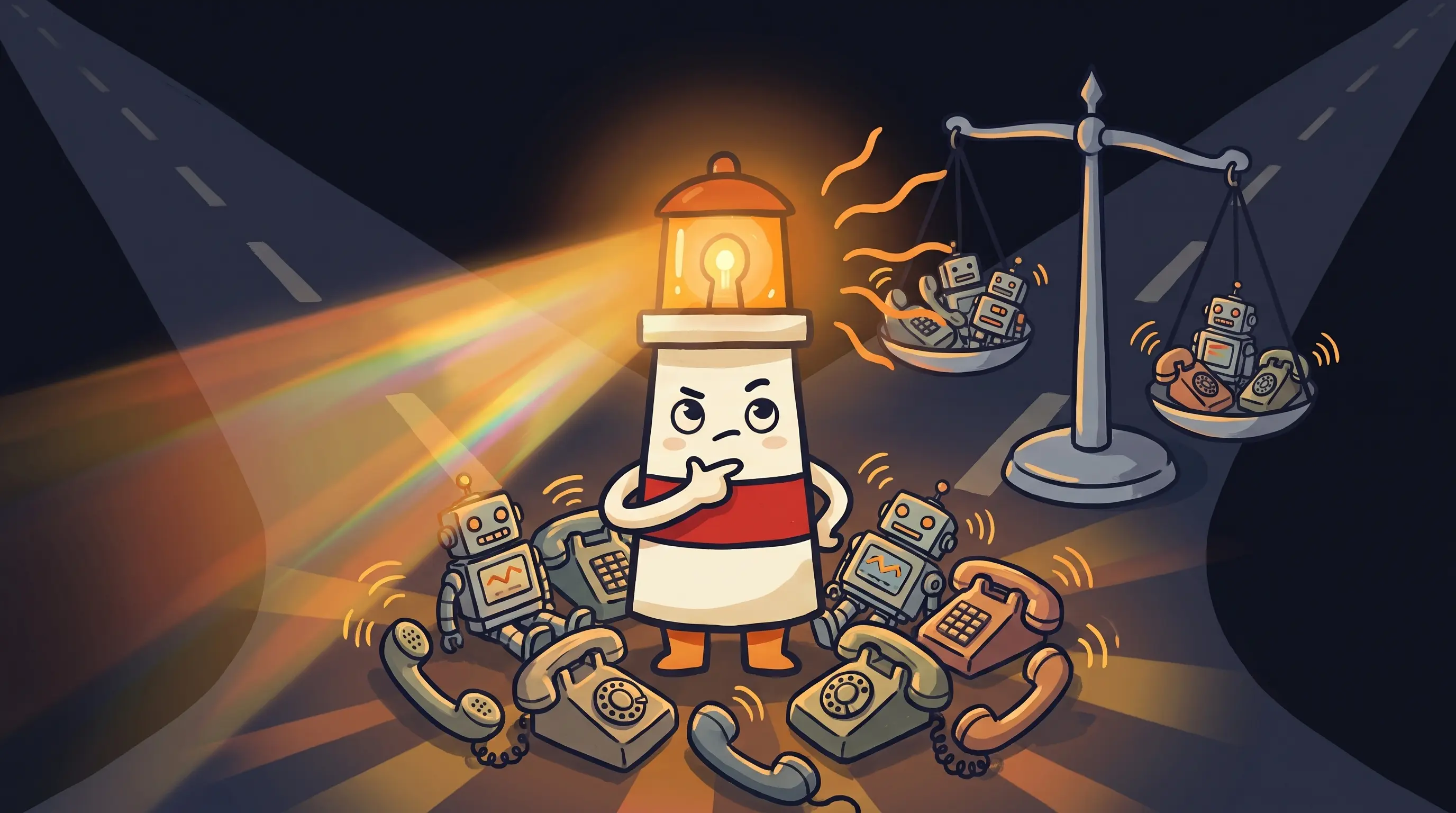
The root cause is almost always the same: disconnected tools with manual handoffs between stages. You end up with a research tool that doesn’t talk to your drafting tool, a drafting tool that doesn’t talk to your CMS, and a human copying and pasting between all three. That’s not a pipeline. That’s the old process with extra steps and an AI subscription you’re not fully using.
The second failure mode is skipping stages entirely. A fully functional content pipeline has five stages: research, drafting, editing, visuals, and distribution. Skip one — say, visuals — and you’ll find yourself manually creating images for every post, which eats back the hours you saved on drafting. Skip distribution and your perfectly optimized posts sit unindexed for days. Each stage feeds the next. Pull one out and the whole thing slows down.
The Five Stages Every Automated Pipeline Needs
Think of each stage as a station on an assembly line. Each one has a clear input, a clear output, and a handoff to the next. The goal is zero manual steps between stations.
Stage 1: Research
Keyword discovery, competitor analysis, topic validation. An AI agent pulls search data, identifies gaps, and produces a structured brief. This is where 60% of your time savings live — research that used to take three hours gets done in minutes.
Stage 2: Drafting
First-draft generation from the brief. This is your biggest lever — 70% of total time savings come from this stage. The agent follows the brief, hits the target structure, and produces a complete draft. Not a perfect draft. A complete one.
Stage 3: Editing
Brand voice alignment, factual review, readability pass. This is the one stage where human judgment still adds the most value — but AI can handle structural and grammar checks automatically, leaving humans to focus on substance.
Stage 4: Visuals
Featured image generation, image optimization, alt text creation. Tools like Leonardo AI can generate matching images from article titles automatically. This stage is easy to skip — and expensive to skip, because manual image sourcing will eat your time savings.
Stage 5: Distribution
Publishing to CMS, SEO metadata via tools like Yoast, internal linking, social scheduling. A fully wired pipeline publishes to WordPress via API, tags the post, and queues social distribution — without anyone touching a keyboard. This pairs naturally with an [AI social media manager](/ai-social-media-post-generator-create-30-days-of-content-in-minutes/) running in parallel.
That’s the architecture at a high level. But here’s where most guides stop — and where most pipelines fail. They describe the stages without explaining why you can’t compress them into a single step.
Why One Prompt Can’t Do What Five Agents Can
Early on, the instinct is to find one AI tool and ask it to do everything: research the topic, write the draft, optimize for SEO, suggest images, format for the CMS. Send one prompt, get one article.
This works about three times before the cracks show.
The problem isn’t the AI’s capability — it’s the architecture. When you ask a single system to handle research, structure, writing, and optimization simultaneously, you get averaged-out results across all four. The research is shallow because the system is also thinking about structure. The writing is generic because it’s also thinking about SEO. Nothing gets the full attention it needs.
Multi-agent architectures solve this by assigning specialized AI agents to distinct phases. The research agent’s only job is to surface the best sources and build a tight brief. The drafting agent’s only input is that brief — it doesn’t know about SEO yet, so it writes without compromise. The editing agent sees the draft fresh, without attachment to what the research said. Each agent optimizes for one thing and hands off a complete output.
The result is qualitatively different — not just faster, but more consistent. One person using a multi-agent framework can produce 40+ blog posts per month with trackable, repeatable quality. That’s not a claim we’d make about single-prompt generation.
Where the Time Actually Goes
Here’s the math that makes this worth building.
A single long-form article — keyword research through publication — costs a small team about twelve hours when done manually. That’s not padding. That’s keyword research (three hours), drafting (two hours), editing, formatting in the CMS (forty-five minutes), internal linking, image sourcing, and social scheduling. By the time it’s live, you’ve burned a full workday and then some.
With a wired AI pipeline, that same article runs about five and a half hours. Not because corners get cut — because the mechanical parts (research pulls, first draft, image generation, CMS formatting) are handled automatically. The human time shifts to judgment calls: is this factually accurate, does it sound like us, is the argument sharp?
Five and a half hours versus twelve. That’s roughly six and a half hours per article returned to your team. If you publish four articles a week, that’s twenty-six hours back — most of a full-time position’s output per week. At four articles a week for fifty weeks, you’re looking at over 1,300 hours reclaimed annually from a single workflow change.
Manual content teams hit a ceiling around four to eight quality articles per week before burnout sets in. A wired pipeline removes that ceiling entirely. The constraint shifts from human bandwidth to editorial judgment — which is the right constraint to have.
The Stack That Actually Works
Resist the urge to build a ten-tool stack. It feels like progress. It isn’t. Most teams that struggle with content automation have too many tools with weak connections between them, not too few tools. A tight stack of four or five tools with solid integrations will outperform a bloated toolkit every single time.
The budget reality: solo creators can run a competitive pipeline for roughly $50 per month. Agencies building higher-volume pipelines typically spend around $400 per month — but save 80+ hours per week in return. The math is not subtle.
The actual tooling decision matters less than the integration quality. What you need is a workflow orchestration layer (something like n8n, Make, or a custom agent setup) that connects your research, drafting, CMS, image generation, and distribution tools without manual handoffs. That’s the thread that makes it a pipeline rather than a collection of tabs.
One more thing worth naming: modern content pipelines need to optimize for two audiences simultaneously. Traditional search engines rank your posts in blue-link results. But increasingly, AI assistants — the technology behind ChatGPT, Perplexity, and similar tools — surface content in their answers. Winning both requires structured content with clear definitions, specific claims, and citable sections. That’s not an optional layer. It’s baked into how you brief the drafting agent.
This is also where agentic AI starts to look like infrastructure rather than a feature — your pipeline doesn’t just automate tasks, it runs continuously, adapts to new topics, and publishes without you being in the loop for every piece.
 Beacon says: a great content pipeline isn’t about working harder — it’s about letting the right systems carry the light for you.
What Breaks When You Automate Too Fast
Imagine it’s Monday morning. You wired everything up over the weekend. The pipeline ran overnight. You have twenty new posts in WordPress. You open three of them at random.
Two are fine. One has a factual error in the third paragraph, a generic featured image that has nothing to do with the topic, and no internal links. It’s already been indexed.
This is the failure mode nobody talks about in the tutorials. Automation scales your output — which means it also scales your mistakes. Here’s what to watch for:
- Brand voice drift — AI drafting agents default to a generic register. Without explicit brand voice guidelines baked into the prompt, posts will feel interchangeable with your competitors’ output after a few weeks.
- Factual drift — Research agents summarize sources; they don’t verify them. Any pipeline producing high-volume content needs a human factual review stage or it will eventually publish something wrong at scale.
- Stage skipping under load — When a pipeline runs at volume, failed API calls or rate limits cause stages to silently skip. You need error recovery logic built in, not assumed.
- SEO keyword stuffing — Optimization agents instructed to ‘hit the keyword’ will over-optimize if not given density guidelines. This hurts rankings rather than helping them.
- No quality gate before publish — The biggest mistake. Pipelines that publish directly to live (rather than to draft for review) have no recovery point when something breaks. Start with draft-first publishing. Always.
- Tool sprawl creep — Pipelines attract new tools. Every new integration adds a potential failure point. Keep the stack minimal and document every dependency.
How to Know Your Pipeline Is Actually Working
Don’t trust the volume numbers. Ten posts per day means nothing if the posts are hollow. Here’s what to check instead:
- Indexing rate — Are posts getting picked up by search engines within 48-72 hours of publishing? If not, your distribution stage has a problem.
- Draft-to-publish approval rate — What percentage of AI drafts are being approved without significant edits? Aim for 70%+ within the first month. Below 50% means your brief or prompts need work.
- Stage completion logs — Each stage in your pipeline should log completion status. If you’re not tracking which stages fail and how often, you’re flying blind.
- Brand voice consistency check — Pull five random posts from different weeks. Read them aloud. Do they sound like the same publication? If not, your editing stage needs tighter guardrails — rules that prevent the AI from producing harmful or off-brand content.
- Time-per-article tracking — Measure actual human hours per piece, not just pipeline clock time. This is your real ROI number.
- Cost per post — Track API costs, tool subscriptions, and human review time together. Your cost per published article should trend down as the pipeline matures.
Your First Two Weeks: Building the Pipeline That Holds
Don’t build everything at once. Build one stage, confirm it works, then connect the next. A pipeline with two stages that work beats a five-stage pipeline that breaks every third run.
Audit your current workflow
Write down every step from 'we should publish about this topic' to 'it's live.' Time each stage. You need real numbers — not estimates — before you touch any tool. This takes 2-3 hours and will save weeks of misdirected automation.
Identify your biggest time sink
Research and first-draft generation are where most teams lose the most time (and gain the most back). Start with the stage that costs you the most hours. Don't automate distribution first if drafting is the bottleneck.
Build and test Stage 1 in isolation
Get your research stage working — a brief that you'd actually use — before connecting anything else. Run 5 topics through it. If the briefs are solid, move on. If they're weak, fix the prompts before adding stages.
Wire stages sequentially, not in parallel
Connect research → drafting first. Publish to draft (not live) for the first two weeks. Review every output. You're not looking for perfection — you're calibrating the system and learning what breaks.
Set a quality gate before live publishing
Before switching to automatic live publishing, set a threshold: if your draft-to-publish approval rate is above 70% for two consecutive weeks, you can move to draft-then-auto-publish. Below that, keep human review in the loop.
Add visuals and distribution stages last
Once research and drafting are stable, add image generation (Stage 4) and CMS distribution (Stage 5). Budget $50-400/month depending on volume, and expect 2-3 weeks of calibration before the full pipeline runs cleanly.
Track cost per post from day one
Log API costs, tool subscription allocations, and human review hours per article. This is your baseline. If it's not going down month over month, something in the pipeline needs tuning.
The teams that figure out automated content pipelines first are building a compounding advantage — more indexed content, more surface area for search and AI citation, more pipeline maturity. The teams that wait keep paying the same twelve-hour tax on every article. The technology is available now. The gap between teams who’ve built this and teams who haven’t is already measurable in search visibility, and it widens every month.
What This Means for Your Content Strategy
- A single blog article costs 8-15 hours of human effort when produced manually — a wired five-stage pipeline cuts that to roughly 5.5 hours, returning thousands of hours annually to small teams.
- The biggest time savings come from first-draft generation (70%) and research (60%) — these are the two stages to automate first.
- Single-prompt AI generation produces inconsistent results because one system can’t specialize across five stages simultaneously. Multi-agent architectures — where each agent handles one stage and hands off — produce repeatable quality.
- Most pipelines collapse from disconnected tools with manual handoffs between stages, not from bad AI. Integration quality matters more than tool selection.
- Automate stages sequentially, publish to draft first, and don’t switch to live auto-publishing until your draft approval rate holds above 70% for two consecutive weeks.
- Modern pipelines must optimize for both traditional search rankings and AI assistant citations — structured content with clear definitions and specific claims performs better in both channels.
Frequently Asked Questions
Do I need coding skills to build an AI content pipeline?
Not necessarily. Tools like n8n, Make, and Zapier offer no-code workflow builders that connect AI drafting tools, CMS platforms, and image generators without writing code. That said, more complex pipelines with custom error recovery logic benefit from basic scripting. Start with no-code tools, and add custom logic only when you hit a wall the visual editor can’t solve.
How much does an AI content pipeline cost per month?
Solo creators running a lean pipeline typically spend around $50/month across tools. Agencies running higher-volume operations spend around $400/month but often save 80+ hours per week in return. The biggest cost variable is API usage for the drafting stage — volume publishing at scale adds up. Track cost per published article from the start so you have a real ROI number, not a subscription total.
Will Google penalize AI-generated content?
Google’s guidance focuses on content quality and helpfulness, not on how it was produced. AI-generated content that provides genuine value, accurate information, and clear authorial perspective is treated the same as human-written content. The risk isn’t that the content is AI-generated — it’s that it’s generic, inaccurate, or over-optimized. A pipeline with a strong editing stage and factual review produces content Google has no reason to penalize.
What's the difference between a chatbot and an AI agent in this context?
A chatbot responds when you ask it something. An AI agent takes action on its own — in a content pipeline, that means pulling keyword data, generating a brief, passing it to a drafting agent, and publishing the result to your CMS without waiting for you to prompt each step. The agent handles the mechanical workflow. You handle the editorial judgment. That’s the distinction that makes pipelines possible.
How long does it take to set up a working pipeline?
A basic two-stage pipeline (research → drafting) can be functional within a weekend using existing tools and templates. A full five-stage pipeline with error recovery, image generation, and CMS distribution typically takes 2-4 weeks to build and calibrate. Expect the first two weeks to be mostly observation and prompt tuning — the pipeline will tell you where it’s breaking if you’re watching the right metrics.
Sources
- Automated SEO Content Pipeline: 7 Proven Strategies — TrySight
- How to Build an AI Content Pipeline — ToolIndex
- Automated Long Form Content Creation: 7 Strategies — IndexPilot
- Building an AI Content Writing Workflow That Actually Works — AI:Productivity
- Content Farming: AI-Powered Blog Automation for WordPress — n8n
- How to Build AI Content Pipelines That Scale Organic Traffic — SEOproAI
- Content Generation Workflow Automation Guide 2026 — TrySight