Cross-Agent Organizational Memory: How Knowledge Compounds

On this page
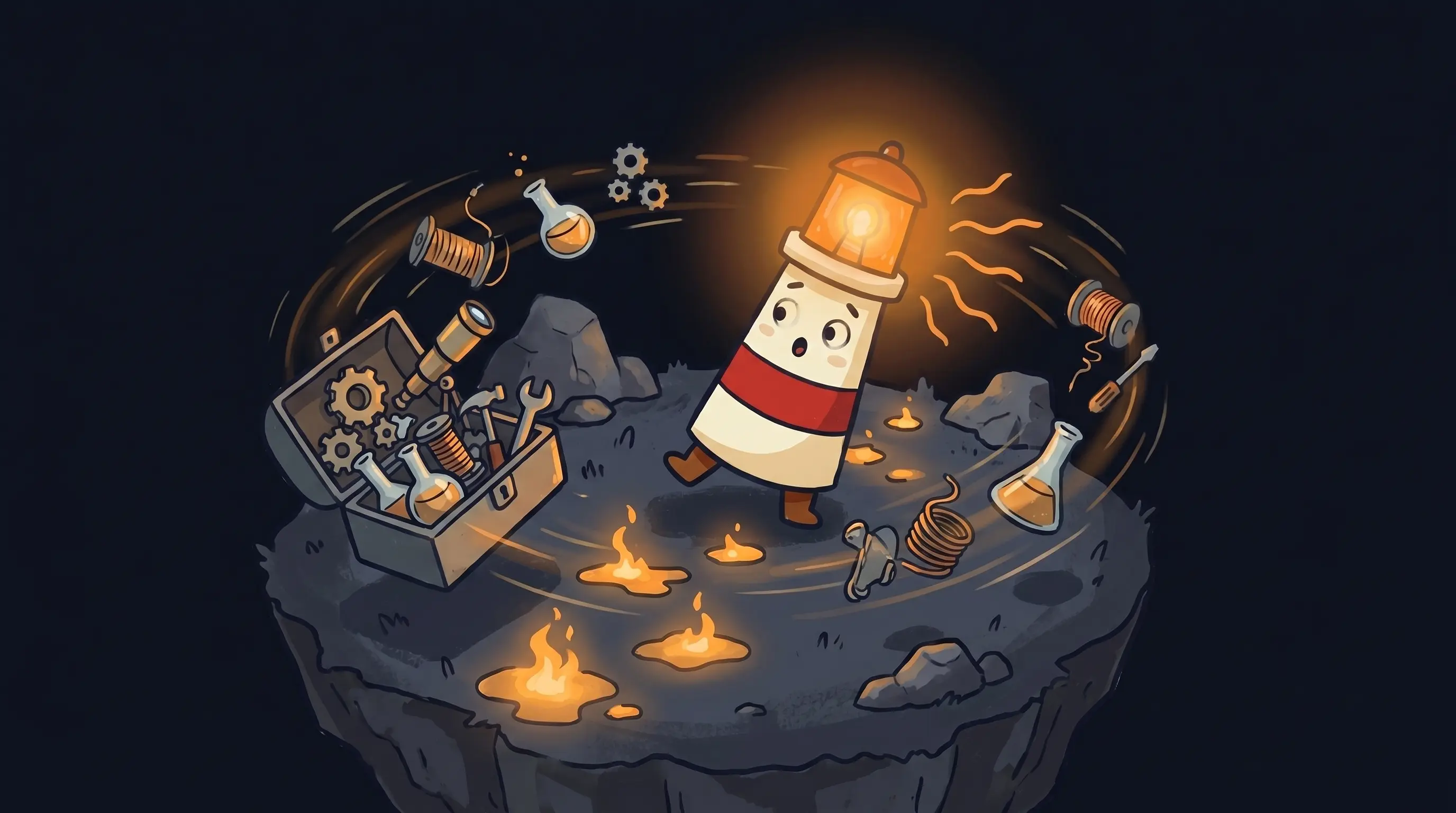
Your competitor’s AI deployment is humming along. Six agents, clean workflows, impressive demos. Individual engineers are shipping faster than ever. Then a critical production incident hits on Thursday. The agent investigating it has no record of Monday’s deploy. No awareness of the feature flag that gated it. No memory of the on-call engineer who flagged a similar symptom last quarter. The agent works the symptom. The senior engineer gets paged. Again.
Meanwhile, the incident from three months ago — same root cause, same resolution path — sits in a closed session that no agent will ever access. The organization isn’t getting smarter. It’s paying the same diagnostic tax on repeat.
This is the cross-agent organizational memory problem. And it’s the reason AI adoption is producing a paradox that researchers are now putting numbers to. If you’re exploring what makes agentic AI work in practice — not just in demos — this is the infrastructure layer most teams skip.
The DORA Finding Nobody’s Talking About
Here’s the counterintuitive finding. DORA 2024, drawing on data from roughly 3,000 respondents, found that AI adoption improves individual productivity while hurting software delivery stability and system-level throughput. More agents, faster individuals — worse outcomes at the organizational level.
That’s not a model quality problem. It’s a memory architecture problem. When every agent session resets, every workflow restarts from zero. Individual agents get smarter within a session. Organizations never accumulate intelligence across them.
The math compounds fast. METR research shows the duration of tasks AI agents can handle is increasing with a doubling time of around seven months. Longer tasks, larger agent fleets — and every session boundary is a place where accumulated reasoning evaporates. The more agents you add to a stateless architecture, the more knowledge loss events you create, not fewer.
Where Knowledge Actually Gets Trapped
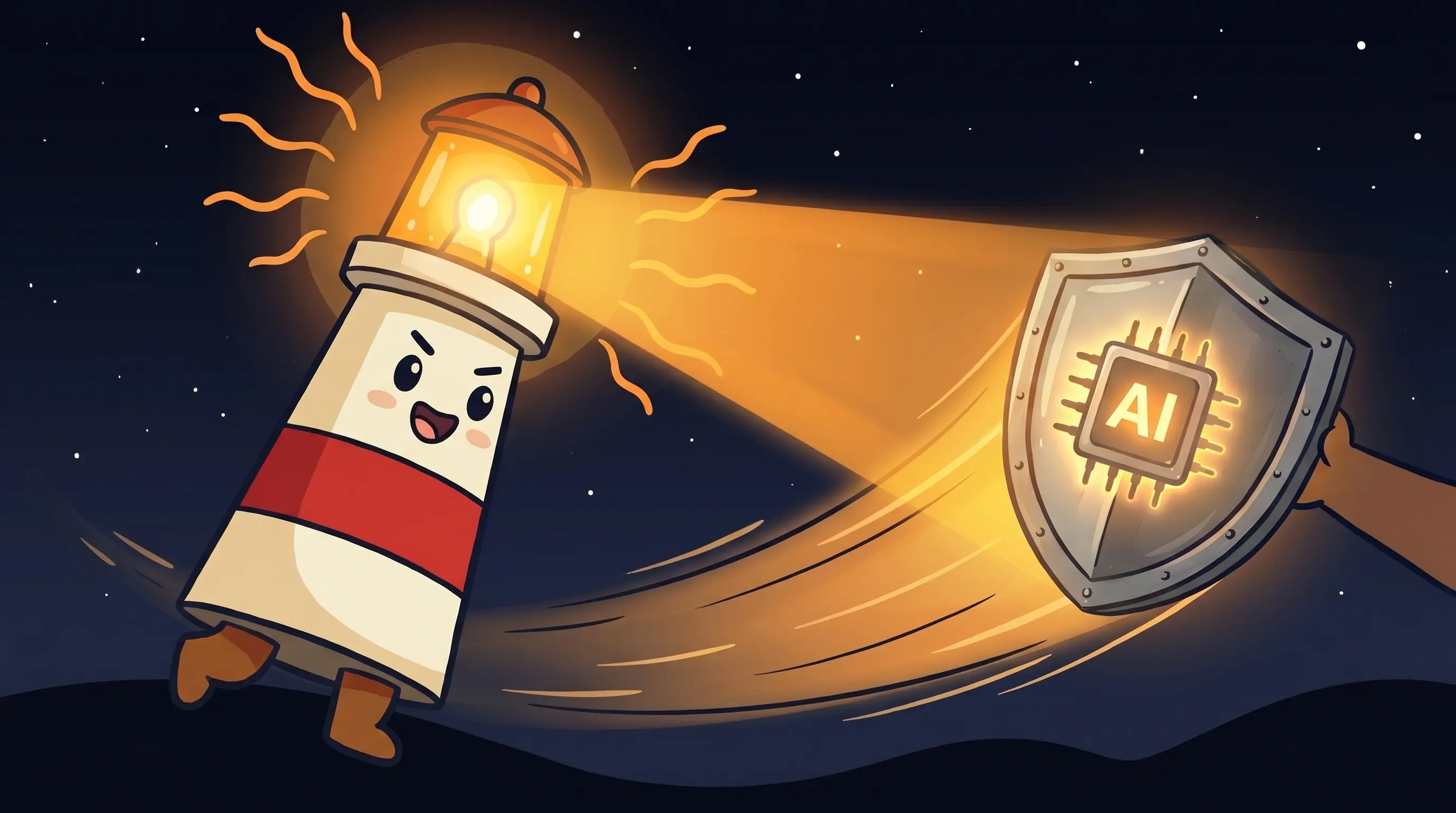
 Some knowledge doesn’t fade — it compounds. Beacon keeps the light burning so every new agent picks up right where the last one left off.
The fragmentation isn’t in one place. It’s everywhere — and each surface has its own compounding cost.
- Disconnected prompts: Each team encodes domain rules into their own system prompts. Those rules are invisible to every other team. Conflicting guidance multiplies with headcount.
- Isolated sessions: An agent solves a problem Tuesday. By Wednesday, it has no memory of it. By Thursday, someone re-explains the same architecture rationale to a fresh session.
- Individual engineer context: Months of AI workflow optimization living in one person’s local configuration. That person leaves. The configuration — and the accumulated AI context — leaves with them.
- Siloed incident history: Past resolution paths, rejected hypotheses, root causes — all locked in closed sessions. Every incident rediscovers known causes. Organizations never build cumulative diagnostic intelligence.
- Fragmented tooling: IDE copilots, chat interfaces, and CLI agents each maintain separate memory. The same question gets answered differently across tools with no reconciliation layer.
The research on this is converging. AWS documentation describes the technology behind ChatGPT-style AI as fundamentally stateless, and recommends using external memory or storage to maintain context across sessions. Larger context windows — a common proposed fix — don’t solve this. The fragmentation exists across tools and workflows, not just within a single conversation.
What Stateless Memory Failure Actually Looks Like in Production
There’s a specific failure mode worth understanding because it’s the hardest to detect: silent memory degradation. When an agent’s memory is poorly managed, incorrect decisions about what to keep and what to discard produce degraded output — but no error, no log entry, no obvious signal. The output just gets worse. And it’s most dangerous in exactly the longest-running agents, where memory matters most.
Peer-reviewed research on incident root cause analysis confirms the pattern: generic, surface-level diagnoses are a common failure mode for AI agents operating without historical context. The agent isn’t hallucinating — it’s working correctly given what it knows. The problem is how little it knows.
Multi-step migrations are another casualty. An agent maps 40 of 120 services, identifies undocumented dependencies, flags breaking API changes — then the session times out. The next agent doesn’t inherit a checkpoint. It restarts the discovery phase, potentially reaching different conclusions because nothing persisted the prior reasoning. Progress that should compound becomes disposable.
Why More Agents Without Shared Memory Makes Things Worse
Here’s what most AI deployment guides won’t tell you: adding more agents to a stateless architecture doesn’t scale your intelligence. It scales your fragmentation. Each new agent is another isolated knowledge island. Multi-agent knowledge management introduces problems that single-agent systems don’t face — temporal validity (facts that were true six months ago may be wrong today), conflicting writes from two agents simultaneously updating the same entity, and stale knowledge that produces errors that look like AI making things up but are actually retrieval failures.
Gartner predicts that over 40% of agentic AI projects will be cancelled by end of 2027, due to escalating costs, unclear business value, or inadequate risk controls. That number lines up with the infrastructure gap, not a model quality gap.
This connects directly to a pattern we’ve been tracking — explored in more detail in Is Your Workplace Set Up for AI Agents?. The failure usually isn’t the AI. It’s the surrounding infrastructure.
What Cross-Agent Organizational Memory Actually Requires
The fix isn’t a better model. It’s an infrastructure layer that sits outside any individual session and gives every agent access to a shared, governed knowledge base. Think of it as the institutional historian that no individual agent can be on its own.
What that layer needs to handle: memory boundaries that match real collaboration patterns (what’s shared at the user level vs. project level vs. team level), freshness controls so stale knowledge doesn’t silently degrade output, provenance tracking so agents know where information came from and when it was last verified, and access controls so agents only retrieve context they’re authorized to use.
The practical starting point is simpler than the enterprise architecture suggests. File-based or external persistence — structured context that accumulates across sessions without requiring model retraining — is the entry point. An agent that can read a project-level context file at session start is already dramatically more effective than one starting cold. The compounding happens over months, not immediately.
What to Do This Week
- Audit your current agent sessions for context loss points. Where do multi-step workflows break? Where do agents re-explain things that were resolved last week? These are your highest-cost fragmentation surfaces.
- Define your memory boundaries before adding more agents. Decide what should be shared at the user level, project level, and team level. Wrong boundaries cause either noise (too much shared) or silos (too little). This decision is harder to reverse later.
- Implement file-based persistence as your starting point. A structured context file that agents read at session start — with decisions made, patterns observed, and architecture rationale documented — costs almost nothing to set up and starts compounding immediately.
- Treat engineer departures as a memory audit trigger. When someone leaves, what AI context goes with them? Their local configurations, prompt optimizations, and workflow patterns represent accumulated organizational intelligence. Build a handoff protocol.
- Watch your incident resolution time as the leading indicator. If the same root causes keep surfacing in postmortems, your agents aren’t building cumulative diagnostic intelligence. That’s the clearest signal your memory layer isn’t working.
What This Changes About How You Think About AI Agent Infrastructure
- DORA 2024 (3,000 respondents) found AI adoption improves individual productivity while hurting system-level delivery stability — a direct result of stateless agent memory, not model quality.
- The technology behind modern AI is stateless by design. External memory infrastructure is required for continuity — larger context windows don’t solve cross-session, cross-tool fragmentation.
- METR research shows AI agent task duration is doubling every ~7 months. As tasks get longer, session-boundary knowledge loss compounds. More agents in a stateless architecture creates more fragmentation, not less.
- 60% of enterprise AI knowledge layer failures trace to freshness and consistency problems, not model capability.
- The business moat isn’t the model — it’s the accumulated context. Organizations that treat agent memory as a compounding institutional asset create differentiation that off-the-shelf model access can’t replicate.
The teams that get this right first are building a compounding advantage. Every interaction adds to their institutional knowledge base. Every incident makes the next diagnosis faster. Every engineer transition gets smoother because context doesn’t walk out the door with them. The teams that don’t get this right keep paying the same rediscovery tax — on every project, every incident, every quarter. The cost of stateless operation isn’t a fixed overhead. It scales with the size of your agent deployment.
Frequently Asked Questions
What is cross-agent organizational memory?
Cross-agent organizational memory is a persistent knowledge layer that sits outside any individual AI agent session. It lets multiple agents share context, decisions, and institutional knowledge — so the second agent picking up a task doesn’t start from zero. Without it, every session reset destroys accumulated reasoning.
Why don't larger context windows solve the problem?
Context windows only help within a single session. The fragmentation problem exists across sessions, tools, and teams — an IDE coding assistant, a chat interface, and a CLI agent all maintain separate memory with no shared retrieval layer. A larger window doesn’t bridge those gaps.
How does stateless AI memory hurt software delivery teams specifically?
DORA 2024 data from ~3,000 respondents found AI adoption improves individual productivity while degrading system-level delivery stability. When agents can’t connect current incidents to historical context, they produce generic diagnoses, escalate to senior engineers repeatedly, and never build cumulative diagnostic intelligence. Organizations pay the same rediscovery cost on every incident.
What's the simplest starting point for persistent agent memory?
File-based or external persistence — a structured context document that agents read at session start. This can contain architectural decisions, past incident patterns, and workflow rationale. It costs almost nothing to set up and starts compounding across sessions immediately, without requiring model retraining.
What are the risks of shared memory across multiple agents?
Multi-agent shared memory introduces consistency challenges: facts can become stale, two agents can simultaneously write conflicting views of the same entity, and stale knowledge produces errors that look like AI making things up but are actually retrieval failures. Governance — including freshness controls, provenance tracking, and access boundaries — is required, not optional.