Governments Can’t Agree on What AI Actually Is

On this page
Every country wants to govern AI. Most have signed something. Many have launched summits. The commitments from the Seoul AI Summit? Enforcement has been shaky at best. The summits held in India? Voluntary. The global debates? Fractured.
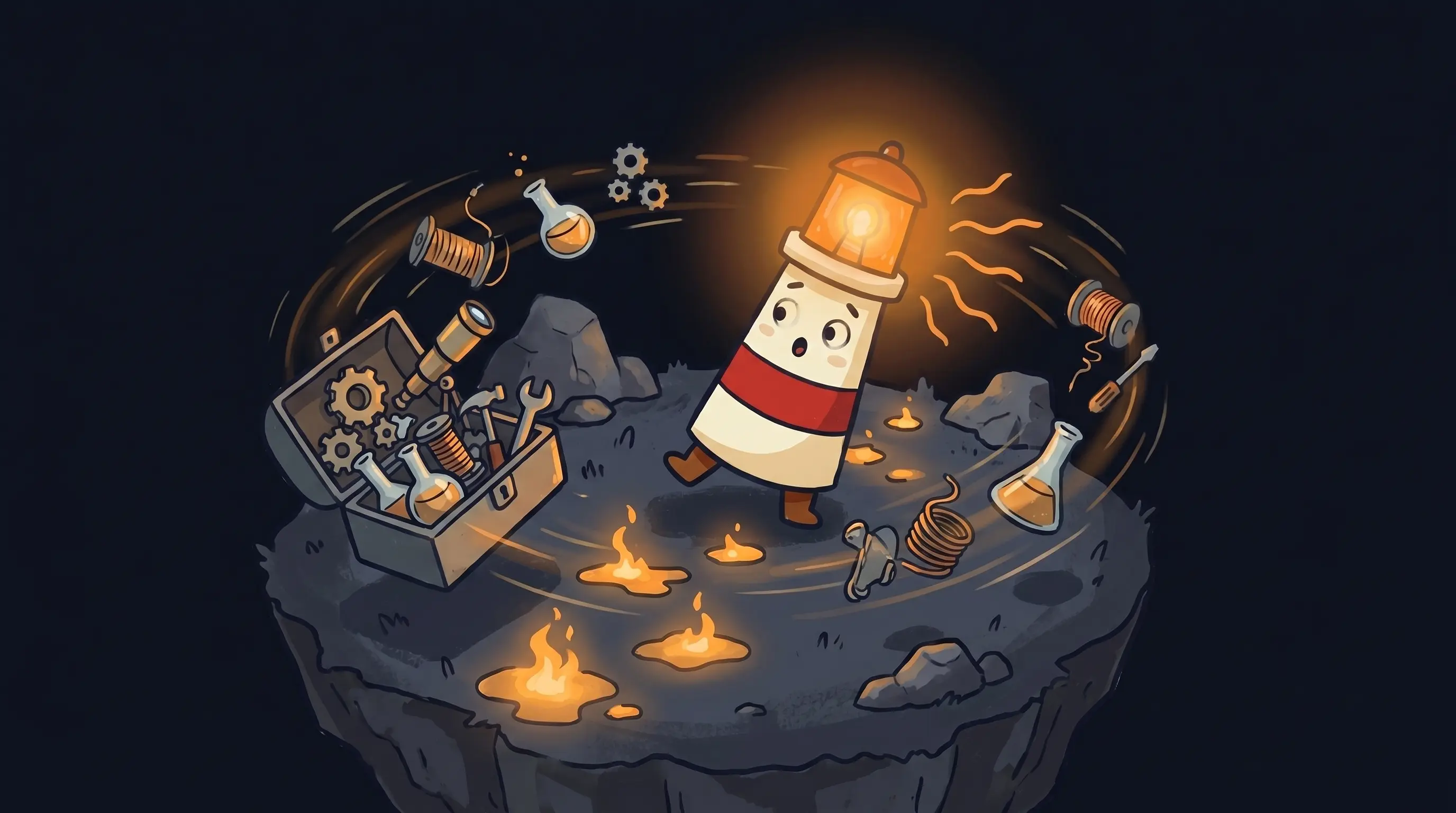
Strip away the diplomatic language and the situation looks like this: the world is trying to write traffic laws without agreeing on what counts as a vehicle.
That’s not a metaphor we invented. Computer scientists Arvind Narayanan and Sayash Kapoor made exactly that comparison — pointing out that ‘AI’ is used as loosely as the word ‘vehicle’ to describe cars, trucks, and every form of transportation simultaneously. You can’t regulate a category that nobody can define. And right now, nobody can define it.
What the Foreign Policy Analysis Actually Says
A piece published in Foreign Policy on May 11, 2026, by Sarosh Nagar and David Eaves lays out the structural problem clearly. The authors argue that most commentary on AI governance focuses on political disagreement — the U.S. wants light-touch, Europe wants frontier model regulation, China has its own posture. All of that is real. But the deeper problem is epistemic: governments don’t share a common understanding of what AI is, how fast it moves, or what kind of threat or opportunity it represents.
The divide isn’t just semantic. Economist Daron Acemoglu argues AI will have a ‘nontrivial but modest’ impact on the economy — localized to certain white-collar sectors, playing out over decades. Anthropic CEO Dario Amodei argues the opposite: AI could transform nearly every sector of civilization within a very short period, with artificial general intelligence — a system matching human cognitive performance across tasks — or even superintelligence potentially arriving in just a few years.
These aren’t differences of opinion about whether AI matters. Both camps agree it matters enormously. The disagreement is about the speed and scale of the transformation — and that disagreement shapes every policy decision that follows. A government that believes civilization-scale disruption is imminent behaves very differently from one treating AI as important infrastructure that will diffuse slowly over time.
Why AI Governance Confusion Directly Affects Your AI Agent
 Even lighthouses need a fixed point to shine from — and right now, governments are still arguing about where to stand.
Here’s where this stops being abstract. If you’re using or evaluating a personal AI agent, this definitional chaos is already shaping what’s possible and what’s restricted.
In February 2026, the OECD published a 34-page working paper — presented to over 190 experts at a Global Partnership on Artificial Intelligence meeting — that found the terms ‘AI agents’ and ‘agentic AI’ are used interchangeably across the industry, creating significant conceptual confusion. These aren’t the same thing. But because nobody has nailed down the distinction, regulations written for one category routinely get applied to the other.
That matters for AI agent platforms because legal definitions don’t stay in one place. As Aspen Digital’s research on technology definitions explains, legal definitions are ‘highly-referenced and recycled throughout the lawmaking process’ — they cascade from laws into enforcement, creating unintended consequences when the original definition was imprecise. A vague definition written for a chatbot can end up governing autonomous workflow agents that do fundamentally different things.
And there’s a specific American complication worth knowing about. The 2024 Loper Bright Supreme Court decision overturned the Chevron Doctrine — a long-standing legal principle that allowed executive agencies to interpret ambiguous laws within their domain. That interpretation authority is gone now. Congress has to get AI definitions exactly right in the legislative text itself, with no fallback to regulatory agencies to fill the gaps. One imprecise definition in a bill doesn’t get quietly corrected by a regulator. It gets locked in and replicated.
The Real Governance Risk Nobody’s Talking About
The definitional confusion creates a specific failure mode that goes beyond politics. A CSIS brief on agentic AI governance makes it concrete: if you apply the same vague label to a helpful chatbot and a combat-ready autonomous system, you could accidentally deploy a system capable of initiating an operation before it understands the context or risks involved.
That sounds extreme. But the underlying principle scales down to everyday agent use. The CSIS brief identifies the core danger precisely: ‘The danger is not that the AI lacks intelligence, but that it lacks judgment. A system might be smart enough to execute a task perfectly yet fail to realize that a sudden change in the local situation makes that task a catastrophic mistake.’
Governance frameworks that can’t distinguish between autonomous agents and simple chatbots can’t build in the right checkpoints for judgment. And existing evaluation methods don’t help — the Brookings Institution notes that most current AI testing practices were developed for static, narrowly scoped models, and are fundamentally ill-suited to agents that act autonomously over time and pursue open-ended goals.
There’s a harder legal problem underneath this too. Legal scholars identify three reasons why defining AI has always been difficult: there’s no agreed definition of intelligence itself; humans keep shifting the goalposts as AI improves (chess mastery once signaled intelligence, now it’s dismissed as mere computation); and AI tends to be judged by its worst errors rather than its best capabilities, causing systematic underestimation. Governance built on this unstable conceptual foundation doesn’t hold.
What to Do While Governments Figure This Out
- Track where your AI tools fall in the definition debate. The OECD working paper distinguishes between AI agents and agentic AI — and that distinction will eventually matter for compliance. If your agent automates workflows across multiple tools, it likely falls on the ‘agentic’ end of the spectrum. Understand which category your setup sits in before regulators define it for you.
- Watch EU AI Act implementation closely. Europe is furthest along in actually enforcing AI regulation. The definitions written into the Act are already cascading into enterprise procurement requirements. If you’re evaluating platforms or integrations, check whether vendors are proactively aligning with EU definitions — that signals durability.
- Build human checkpoints into any autonomous workflow now. The CSIS brief recommends clearer context charts for AI workflows — knowing exactly which tasks a machine handles alone and exactly where human oversight is required. Don’t wait for regulation to force this. Building oversight into your agent setup today reduces both liability and failure risk. Read more on how companies are actually deploying agents in Agentic AI Companies Building the Future in 2026.
- Don’t assume ‘voluntary’ governance commitments are stable. The Seoul Summit commitments and the India summit agreements are voluntary today. But voluntary frameworks often become mandatory quickly once a triggering event occurs — a high-profile failure, a geopolitical incident, a legislative push. What’s optional now may become compliance overhead in 18 months.
What This Means for Anyone Using AI Agents Right Now
- Governments worldwide are calling for AI regulation while lacking consensus on what AI actually is — making substantial international enforcement essentially impossible as of May 2026.
- The OECD confirmed in February 2026 that even the terms ‘AI agents’ and ‘agentic AI’ are used interchangeably across the industry, creating conceptual confusion that directly affects how governance frameworks are written.
- The 2024 Loper Bright Supreme Court decision removed regulatory agencies’ authority to interpret ambiguous AI legislation — Congress must now define AI precisely in statutory text, raising the stakes enormously for every definition written into law.
- The core danger of poorly-defined autonomous AI governance isn’t lack of intelligence — it’s lack of judgment. Systems executing tasks perfectly can still make catastrophic mistakes when circumstances change and no human checkpoint exists.
- Current AI evaluation methods were built for static models and are not adequate for agents that act autonomously over time — meaning regulators are also trying to test something they cannot yet properly measure.
The teams that understand this gap now have a practical edge. Regulations written with fuzzy definitions create unpredictable compliance requirements — and unpredictable requirements favor whoever already has clear internal policies and human checkpoints built in. The governance frameworks are coming. The question is whether they’ll be written precisely enough to regulate the right things.
That part is still genuinely uncertain. But the cost of not paying attention is already real.