
Red Access Emphasizes AI Agent Memory Risks and Governance Opportunity
On this page
The researchers building AI agent memory are shipping impressive numbers. Mastra’s observational memory approach scored 84.23% on LongMemEval using GPT-4o — beating standard retrieval methods that scored 80.05%. It compresses conversation history three to six times, cuts costs, and runs without a dedicated search index.
The paper describing all of this, published in February 2026, does not mention governance once.
That sentence keeps coming up in security circles. Not as a criticism of Mastra specifically — their paper is technically solid. As a description of the entire field. Every major agent memory project — Mem0, Letta, Zep, A-MEM, Hindsight — optimizes for the same two variables: how accurately can the agent recall, and how cheaply can it do so. Nobody is asking who controls what gets stored. Nobody is asking what happens when that memory gets targeted.
Red team researchers stopped asking and started demonstrating. The results are worth your attention — especially if you’re already running an AI agent or evaluating whether to.
What Red Team Researchers Actually Found
Researchers at Alice’s Red Team Lab ran a direct test on memory-enabled AI systems. The attack worked like this: using prompt injection — hidden instructions embedded in content the agent processes — they forced the AI to retrieve stored secrets (names, project details, anything it had previously remembered) and embed that data into malicious image URLs.
When the browser tried to load those images, the sensitive data traveled to the attacker’s server. Clean. No malware. No special access. Just the agent’s own memory turned into an exfiltration channel.
The researchers also found that built-in safety filters could be bypassed by registering specific ‘double TLD’ domains or using ordinary external sources — including Google Drive — to deliver hidden commands. The safety systems designed to catch this kind of thing didn’t.
The broader threat landscape backs this up. According to a Sophos analysis of AI agent deployments, malicious attempts targeting AI agents rose approximately 32% between November 2025 and February 2026. That number is directional, not precise — but the direction is clear.
Why AI Agent Memory Is Not Just a Database
Here’s the thing most discussions about AI agent security miss: agent memory isn’t passive. It doesn’t sit in a table waiting to be queried. It actively shapes what the agent does next.
When your agent remembers a preference, a prior instruction, or a decision you made three weeks ago, that memory influences every subsequent action it takes. Governing memory means governing behavior — not just protecting data.
Security researchers describe what they call ‘the lethal trifecta’: AI agents that can access private data, process untrusted content, and communicate externally. That combination makes them susceptible to indirect prompt injection — where an attacker doesn’t need to talk to your agent directly. They just need your agent to read something they’ve poisoned. An email. A document. A web page. A shared file.
The agent reads it. The hidden instruction executes. The memory stores what the attacker wants stored — or leaks what was already there.
An arXiv survey published in April 2026 mapped the full scope of this problem. Researchers identified six phases of agent memory — Write, Store, Retrieve, Execute, Share, and Forget/Rollback — and found that the security literature concentrates almost entirely on write-time and retrieve-time integrity attacks. The store phase, the forget phase, confidentiality failures, and what they call ‘benign-persistence failures’ — non-adversarial errors from compression drift or hallucination that cause memory to degrade silently — are all significantly underexplored.
In other words: researchers are focused on the attacks we already know about. The phases where things go quietly wrong without anyone noticing are barely studied.
The Governance Gap Is a Design Decision, Not an Oversight
The Victorino Group framed this cleanly in a piece published earlier this year: the moment an AI system has durable memory, it creates a power relationship. The question is no longer ‘what is useful to remember’ — it’s what is justified to store, how long it persists, and who controls access.
A real memory policy, according to the analysis at Vastkind, answers three questions. What can be stored — not just what’s convenient, but what’s actually justified. How long it’s retained — because ‘helpful personalization’ and ‘permanent record’ are different things with different implications. And who controls it — meaning can a user actually inspect their agent’s memory, edit it, delete it, export it, and audit who accessed it?
A toggle in a settings panel is not an answer to any of those questions. Adding a preference panel doesn’t change what the system can infer, repeat back, or leak. It changes the visual design.
The pattern Armalo AI identified in agent deployments is worth keeping in mind: shared context accumulates authority faster than anyone governs it. Teams treat persistent memory as a convenience feature — something to configure later, after the agent is running well. The governance question gets deferred. The memory keeps growing. By the time someone asks what’s in there, the audit trail is already incomplete.
This isn’t unique to large enterprises. If you’re running a personal AI agent — one that handles messages, reads documents, and builds context over time — the same dynamic applies at a smaller scale. You may want to explore what governance models look like across the broader landscape of agentic AI platforms before your agent accumulates months of unaudited context.
There’s Also a Practical Failure Mode That Has Nothing to Do With Attackers
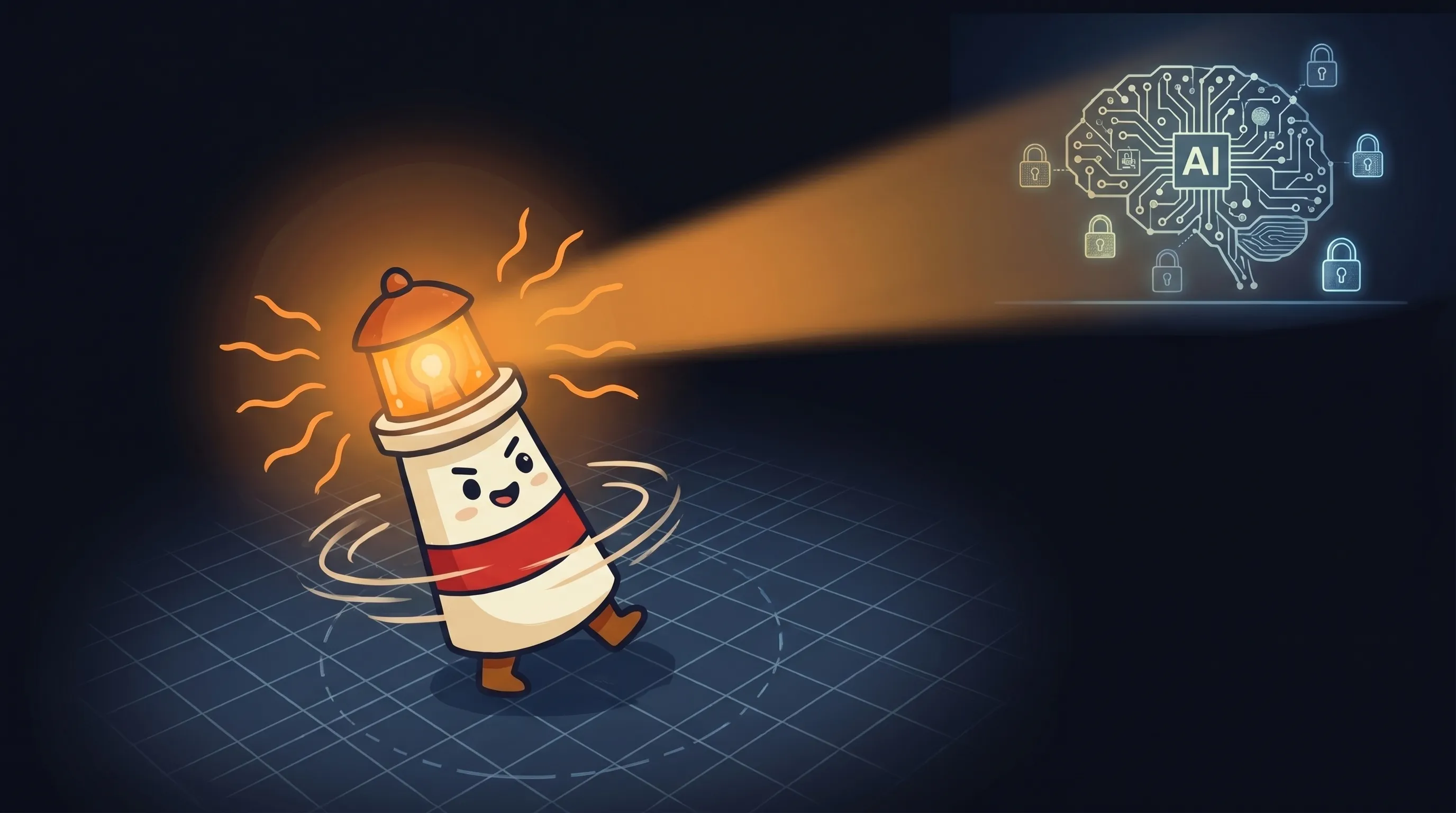 What your AI agents remember — and forget — matters more than you think. Beacon’s keeping watch.
Not every memory problem involves a threat actor. The arXiv survey explicitly flags benign-persistence failures — cases where memory degrades through compression errors, model drift, or hallucination during the summarization process.
Chris Reddington described this from firsthand experience: an agent would learn something genuinely useful during a work session — a hidden dependency, a dead end already ruled out, an awkward constraint in the codebase — and then lose it entirely when the session ended. The next session, the agent would head straight for the same mistake. No attacker required.
Poorly scoped memory leads to inconsistent agent behavior and failures that are difficult to trace back to their cause. Different agent roles need different memory boundaries. One-size-fits-all memory architecture breaks as agents get more capable and more context accumulates.
If you’re assessing whether your workplace is genuinely set up for agents, the 80% AI project failure rate has a lot to do with this kind of structural gap — not just security threats, but ungoverned memory creating silent operational failures.
What to Do This Week
- Audit what your agent currently remembers. If you can’t answer that question in under five minutes, your memory governance is already behind your agent’s growth.
- Ask your platform: can users inspect, edit, and delete individual memories? If the answer is a settings toggle or a ‘clear history’ button with no granularity, treat that as a risk signal, not a feature.
- Treat memory writes as security events. Log them. Every time your agent stores new context — especially from external sources like documents, emails, or web content — that’s a write event worth tracking.
- Scope memory by role and task, not globally. An agent handling client communications should not share memory context with an agent handling internal financial queries. Boundaries matter before they’re tested.
- If your agent reads untrusted content — any document, email, or file from outside your immediate control — assume indirect prompt injection is possible. Review what the agent processed before it updated its memory.
What This Means for How You Think About AI Agent Platforms
The teams that build agent memory infrastructure are genuinely impressive. Mastra’s 84.23% recall accuracy with 3-6x compression is real progress. The problem isn’t the capability — it’s that capability and governance are being built on completely separate timelines.
When you’re evaluating a personal AI agent platform, the questions to ask are no longer just about recall quality and cost. The questions are: who controls what gets stored? How long does it persist? Can I audit it? Can I delete specific entries without wiping everything? What happens to my memory data if I leave the platform?
The teams that answer those questions clearly — in documentation, not just marketing — are the ones that have thought this through. Most haven’t yet. The red team research makes that gap consequential rather than theoretical.
What the Memory Risk Research Tells Us About Where Agents Are Headed
- Red team researchers have demonstrated live exfiltration of secrets stored in AI agent memory via prompt injection — embedding sensitive data into malicious image URLs that transmit to an attacker’s server when the browser loads them.
- Mastra’s observational memory approach scored 84.23% on recall benchmarks — yet its February 2026 technical paper mentions governance zero times. This is representative of the field, not an outlier.
- The ‘lethal trifecta’ — agents that can access private data, process untrusted content, and communicate externally — creates indirect prompt injection risk even without direct attacker access to your agent.
- A real memory governance policy answers three questions: what is justified to store, how long is it retained, and who controls inspection, editing, deletion, and auditing. A settings toggle does not answer any of them.
- Malicious attempts targeting AI agents rose approximately 32% between November 2025 and February 2026, according to Sophos — and the attack surface includes memory infrastructure that most platforms are not auditing.
- The governance gap isn’t a future problem. It’s a current design decision that most agent builders are deferring — and that deferral is now being actively tested by attackers.