Conversational AI for Customer Service: Your Agent Handles It

On this page
A customer emails you at 10 PM about a billing question. You see it the next morning at 8 AM. By then, they’ve already posted a frustrated review and started shopping competitors.
Meanwhile, a prospect messages you on WhatsApp asking about your services. You respond four hours later. They’ve already talked to someone who answered in 90 seconds.
This pattern kills small businesses quietly. Not through one catastrophic failure, but through hundreds of small delays that compound into lost revenue and eroded trust. Research from Gartner projects that 80% of B2B sales interactions will occur in digital channels powered by AI by 2026. The businesses winning at customer service aren’t the ones with more staff. They’re the ones whose customers never wait.
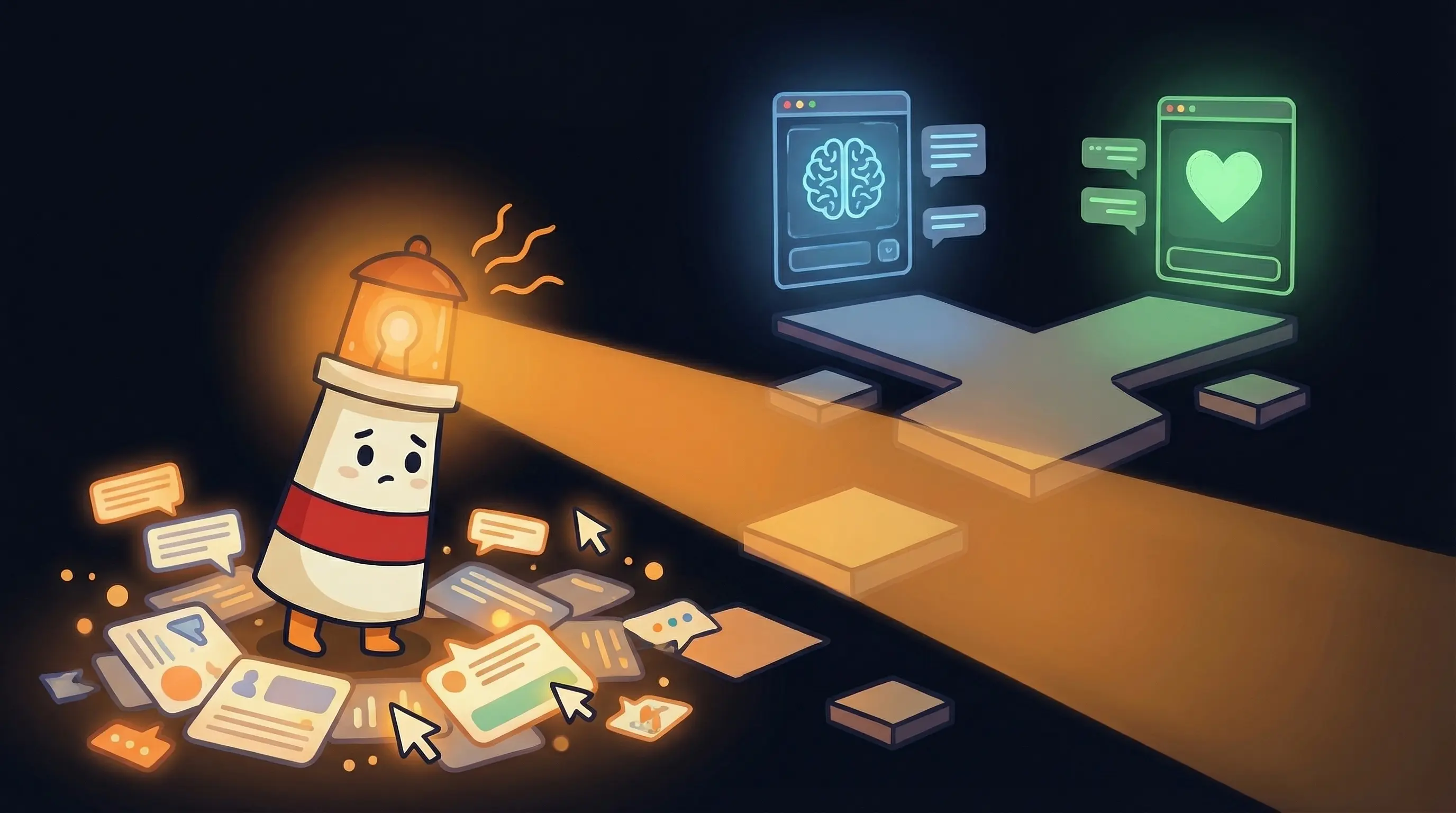
I spent years recommending chatbot platforms to small businesses. Build your decision trees, write your scripts, configure your escalation rules. Some of them worked — for the 60% of inquiries that matched the scripts. The other 40% hit dead ends, frustrating customers more than silence would have.
The shift I’m seeing in 2026 is fundamental. Instead of building a chatbot that follows scripts, you deploy a personal AI agent that handles real conversations. The difference isn’t incremental. It’s the difference between a phone tree and a person who actually listens.
Why Chatbots Hit a Wall
Every chatbot platform makes the same promise: 24/7 customer support without hiring more staff. And they deliver — for a narrow band of predictable questions.
The problem shows up the moment a customer asks something that doesn’t match your decision tree. “I ordered the blue one but I think I actually want the green one, and my cousin said you have a loyalty program — can I use that too?” That’s a single sentence containing three separate requests. A chatbot sees gibberish. A human sees a straightforward conversation.
The failure modes I’ve watched play out over three years:
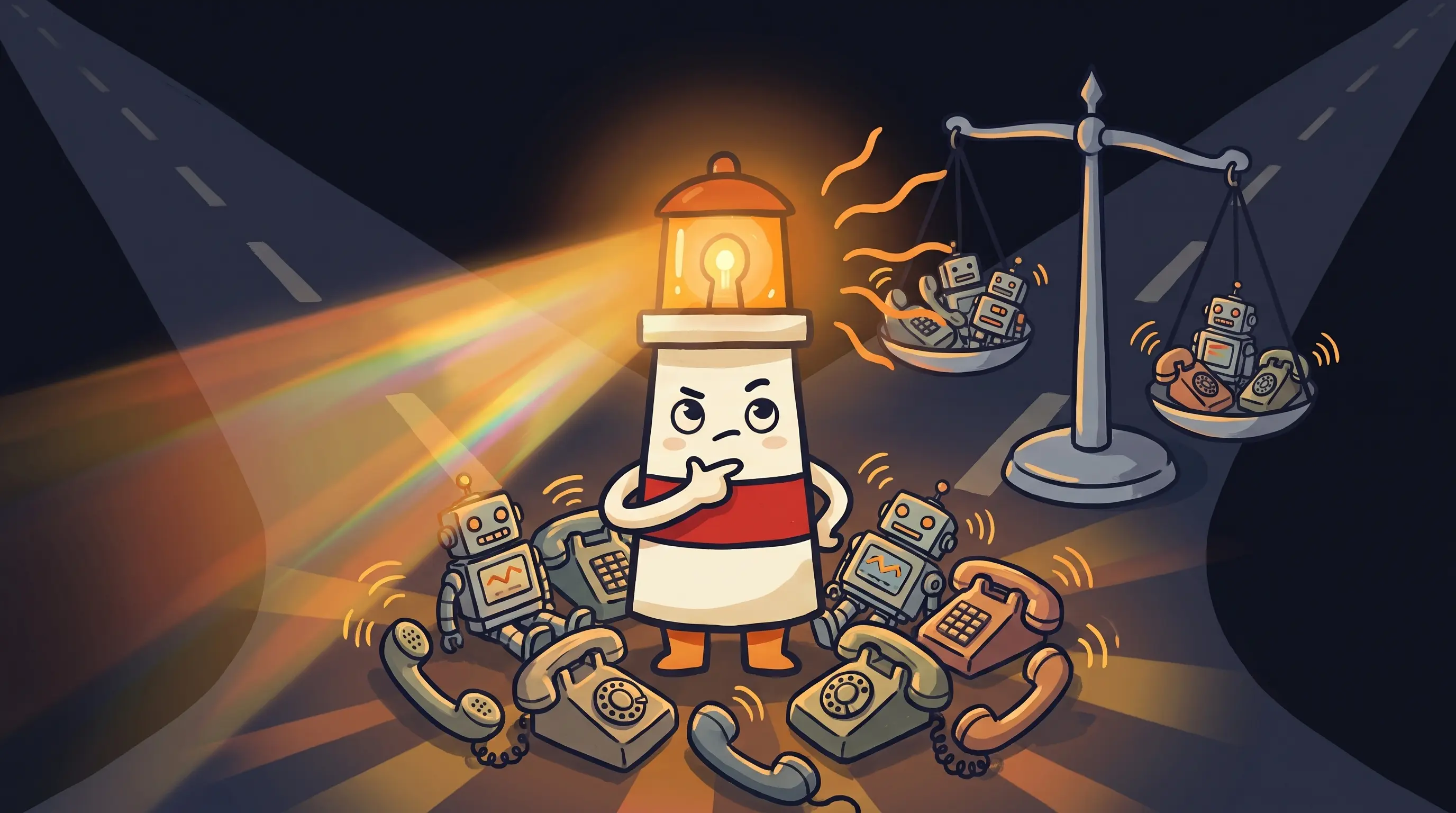
The infinite loop. Customer asks a question the chatbot doesn’t recognize. Chatbot asks for clarification. Customer rephrases. Chatbot still doesn’t understand. Three rounds later, the customer is furious — and they associate that frustration with your brand, not with the chatbot.
The channel silo. Customer emails on Monday about a return. Messages you on WhatsApp on Wednesday asking for a status update. Your chatbot on WhatsApp has zero idea about the email conversation. The customer has to re-explain everything. That’s not customer service — it’s customer punishment.
The script graveyard. You launch with 50 carefully crafted responses. Six months later, your pricing changed, your hours shifted, and you added three new services. Nobody updated the chatbot. Now it’s confidently giving customers wrong information, which is worse than giving no information at all.
These aren’t edge cases. They’re the normal experience for most businesses running chatbot platforms. The 80% that gets handled correctly masks the 20% that actively damages customer relationships.
What an AI Customer Service Agent Does Differently
A personal AI agent handles customer service the way a skilled team member would — reading the actual message, understanding the context, and making judgment calls about how to respond.
Natural conversation, not scripts. When a customer writes “hey, I ordered something last week and it hasn’t arrived yet — can you check?” your agent reads the message, identifies the customer, looks up their order, checks the shipping status, and responds with specific information. No decision tree. No keyword matching. Actual understanding.
Cross-channel memory. The same customer who emailed on Monday and messaged on WhatsApp on Wednesday gets a seamless experience. Your agent knows it’s the same person, maintains the full conversation history, and continues where the last interaction left off. This is something no chatbot platform does well, because chatbots are channel-specific tools. An agent is a unified intelligence.
Intelligent escalation. Your agent doesn’t just route conversations based on keywords. It reads the emotional tone, evaluates the complexity, and makes a judgment call. Straightforward billing question? Handled autonomously. Frustrated customer threatening to cancel? You get an immediate WhatsApp alert with full context and a suggested response.
Proactive follow-up. After resolving an issue, your agent can follow up 24 hours later: “Just checking — did the replacement arrive?” This kind of proactive service builds loyalty, and almost no small business does it because nobody has time. Your agent does.
The Three-Layer Framework That Works
After watching dozens of businesses move from chatbots to AI agents, the framework that produces the best results looks like this:
Layer 1: Immediate Response (agent handles autonomously)
Every incoming message — email, WhatsApp, web chat — gets an instant, personalized response. Not a template. The agent reads the message, understands the request, and either resolves it directly or acknowledges it with a specific timeline.
This layer handles 60-70% of all customer inquiries: order status, hours, pricing, service descriptions, appointment scheduling, basic troubleshooting. The customer never waits. The response is specific to their situation, not a generic acknowledgment.
Layer 2: Assisted Resolution (agent + your information)
For more complex requests — returns with special circumstances, custom quotes, multi-step problems — the agent gathers the necessary information, evaluates against your policies, and either resolves it or drafts a response for your quick approval.
This layer handles another 20-25% of inquiries. The agent does the research and drafting. You spend 30 seconds approving or adjusting instead of 10 minutes starting from scratch.
Layer 3: Human Excellence (you handle what matters)
The remaining 10-15% reaches you with full context: conversation history, customer profile, the agent’s assessment of the situation, and a suggested approach. You handle the conversations that benefit from human empathy, creative problem-solving, and relationship-building.
The key insight: your time on these high-value conversations is better because you’re not exhausted from handling routine questions all day. When the only conversations reaching you are the ones that genuinely need you, you bring your best to each one.
The Economics of Agent-Based Customer Service
Let me be specific about the cost comparison.
Traditional chatbot approach:
- Chatbot platform: $50-300/month
- Your time building and maintaining scripts: 5-10 hours/month
- Your time handling escalations: 10-15 hours/month
- Missed inquiries outside chatbot capabilities: unquantified lost revenue
- Total: $50-300/month + 15-25 hours/month of your time
Personal AI agent approach:
- BrainRoad Starter: $29/month
- API costs (bring your own key): $20-80/month
- Your time reviewing and coaching: 3-5 hours/month
- Your time on genuine escalations: 3-5 hours/month
- Total: $49-109/month + 6-10 hours/month of your time
The software savings matter, but the time savings are the real win. Cutting your customer service time from 20+ hours monthly to under 10 hours isn’t just a cost reduction — it’s getting your evenings and weekends back.
And there’s a revenue impact that’s harder to quantify: every inquiry that gets an instant, competent response instead of a 4-hour delay is a customer you didn’t lose. Research shows that responding within 5 minutes makes you 21x more likely to convert a lead compared to waiting 30 minutes. Your agent responds in seconds.
Setting Up Your Customer Service Agent
Here’s the deployment timeline that works for most businesses.
Day 1-2: Connect your channels. Give your agent access to your email and primary messaging channel (WhatsApp, Signal, or web chat). Upload your FAQ, pricing, hours, return policy, and service descriptions. This is your agent’s knowledge base.
Day 3-4: Supervised operation. Your agent starts handling inquiries with you reviewing every response before it’s sent. This is your training period — approve what’s good, correct what’s off, and reject what misses. Most agents need 20-30 interactions to calibrate to your voice and standards.
Day 5-6: Selective autonomy. Enable automatic responses for inquiry types where quality has been consistently high (FAQ answers, scheduling, order status). Keep review-before-send for anything complex.
Day 7+: Full operation with guardrails. Your agent handles routine inquiries autonomously. Complex or sensitive conversations get flagged for your review. You spend 15-20 minutes daily checking the agent’s work and providing feedback.
Ongoing: Coach and expand. Add new channels as you trust the quality. Update the knowledge base when your business changes. Review transcripts weekly to catch patterns the agent should handle differently.
Where AI Agents Don’t Replace Humans (Yet)
I’ve seen enough implementations to know the boundaries. Your AI agent excels at speed, consistency, and availability. It doesn’t excel at:
Reading emotional subtext. A customer who writes “Fine, whatever” isn’t fine. Humans pick up on this instantly. Agents are getting better at sentiment analysis, but they still miss the nuance that experienced service professionals catch.
Creative problem-solving. When a customer has a unique situation that doesn’t fit any policy, the best response often requires creative thinking — offering a solution that technically bends the rules because it’s the right thing to do. Agents follow policies; humans know when to flex them.
Relationship repair. When a customer is genuinely upset and considering leaving, the conversation that saves the relationship requires empathy, patience, and the kind of human connection that AI can’t replicate. These are the moments where your personal involvement has the highest ROI.
The winning pattern: your agent handles the volume, you handle the moments. Every customer gets instant, competent service. The ones who need more get your undivided attention.
What This Means for Your Business
The businesses delivering the best customer service in 2026 aren’t the ones with the biggest support teams. They’re the ones who removed the delay between customer question and competent answer.
A personal AI agent doesn’t make you more responsive during business hours. It makes you responsive all the time. Every channel. Every timezone. Every 3 AM Saturday question that used to wait until Monday.
For more on how AI agents handle different aspects of your business, explore the best AI agents for your use case or learn about the AI agent platform that makes this possible.
Frequently Asked Questions
How is an AI agent different from a customer service chatbot?
A chatbot follows scripts you write — if the customer’s question doesn’t match a script, it fails. A personal AI agent understands natural language, maintains conversation context across channels (email, WhatsApp, chat), makes judgment calls about urgency, and handles the full resolution rather than just routing to a human.
How much does AI customer service cost with a personal agent?
BrainRoad Pro is $29/month with $5 of managed model use included each calendar month. Optional $10 prepaid top-ups add $11 and never expire; new managed work pauses at $0.
Will customers know they're talking to an AI agent?
For routine inquiries, most customers can’t tell the difference. The agent uses natural language, references previous conversations, and adapts tone to the situation. For complex or emotional situations, the agent escalates to you with full context — the handoff feels seamless.
Can an AI agent handle customer service across multiple channels?
Yes. A personal AI agent maintains conversation context across email, WhatsApp, Signal, web chat, and other channels. A customer who emails on Monday and messages on WhatsApp on Wednesday gets a consistent experience — the agent remembers the full history.
How long does it take to set up an AI agent for customer service?
Most businesses have their agent handling customer inquiries within one week. Day 1-2 is setup and connecting channels. Days 3-5 are supervised operation where you review the agent’s responses. By day 7, most users trust the agent to handle routine inquiries autonomously.