
Virtual Assistant AI Examples: 7 Workflows Worth Automating First

On this page
It’s not your fault. You tried to automate things. You set up a Zapier workflow that was supposed to route emails. You asked ChatGPT to handle follow-ups. You watched three YouTube tutorials. And somehow, on Monday morning, you’re still manually sorting your inbox and wondering if ‘AI for productivity’ is just marketing copy dressed up as software.
The tools weren’t broken. The workflows were. There’s a difference between automations that shuffle data from one bucket to another and automations that actually think — the kind that read an email, decide if it’s urgent, draft a reply, and file it away. One of those saves you two hours. The other saves you a click. Most people build the second one and wonder why nothing changed.
There’s a reason this keeps happening, and it’s more specific than ‘bad setup.’ I’ll get to it after we walk through the seven workflows that actually move the needle. But hold that thought — because the reason smart people keep building automations that quietly die is something most automation guides never address.
If you’re comparing tools or looking for a broader breakdown of what AI can handle for you, the AI virtual assistant category covers the full landscape. But this article is about getting specific — here are the seven workflows worth doing first.
Why Most Automation Breaks Before Lunch
The problem isn’t a lack of tools. There are hundreds of automation platforms. Zapier, Make, n8n, Notion AI, Microsoft Copilot — you can build a workflow before breakfast.
The problem is that most people build dumb automations. Automations that move data around without making decisions. ‘If email arrives, add to spreadsheet.’ That’s a data shuffle. Nobody’s life changed.
Real workflow automation involves a decision layer. The software reads the email, classifies it, determines urgency, drafts a context-aware reply, and routes it to the right person. That’s the difference between a trigger and an agent. And it matters more than tool selection.
Here’s the other thing worth knowing: most teams already have access to AI tools. The gap isn’t access — it’s setup and training. Ema’s productivity research found that far fewer teams invest in the configuration needed to use these tools well. That gap between access and capability is where real competitive advantage lives right now.
The 7 Workflows Worth Automating First
These aren’t theoretical. They’re running in real businesses. Each one saves 2–5 hours a week on its own. Combined, you’re looking at a full employee’s worth of hours — without the salary.
1. Customer Support Ticket Routing (saves ~10 hrs/week)
Picture this: it’s 8 AM Monday. Your support manager opens the inbox to 60 tickets from the weekend. Each one gets manually read, categorized — billing issue, bug report, password reset, feature request — and assigned to the right person. This happens every day. It costs about two hours daily, 10 hours weekly, every week.
An AI classification workflow reads each incoming ticket, identifies the type, urgency level, and required expertise, then routes it automatically. The support manager reviews the edge cases, not every ticket. Time to triage drops from two hours to fifteen minutes.
2. Invoice Processing and Data Entry (saves ~12 hrs/week)
Invoice processing is one of the highest-leverage automations you can build — and one of the most-neglected. Someone is manually opening PDFs, reading line items, and keying numbers into your accounting system. Every. Single. Invoice. An AI workflow reads the document (structured or not), extracts vendor name, amount, due date, and line items, then posts them to your system of record with a human review flag for anything anomalous.
At 12 hours a week saved, this is the single highest-ROI automation on this list. It’s also the one that pays for every tool you’re using, twice over.
3. Lead Qualification and Follow-Up (saves ~15 hrs/week)
A new lead fills out your contact form. Without automation: someone reads the form, checks the company size, guesses at intent, writes a personalized follow-up, adds them to the CRM, sets a reminder. With automation: an AI reads the form, cross-references company data, scores the lead against your ideal customer profile, drafts a personalized outreach email, adds the contact to the right CRM pipeline stage, and queues a follow-up sequence.
This is the workflow most sales teams are shocked by. Not because it’s magic — because 15 hours a week of a salesperson’s time was going to administrative work, not selling.
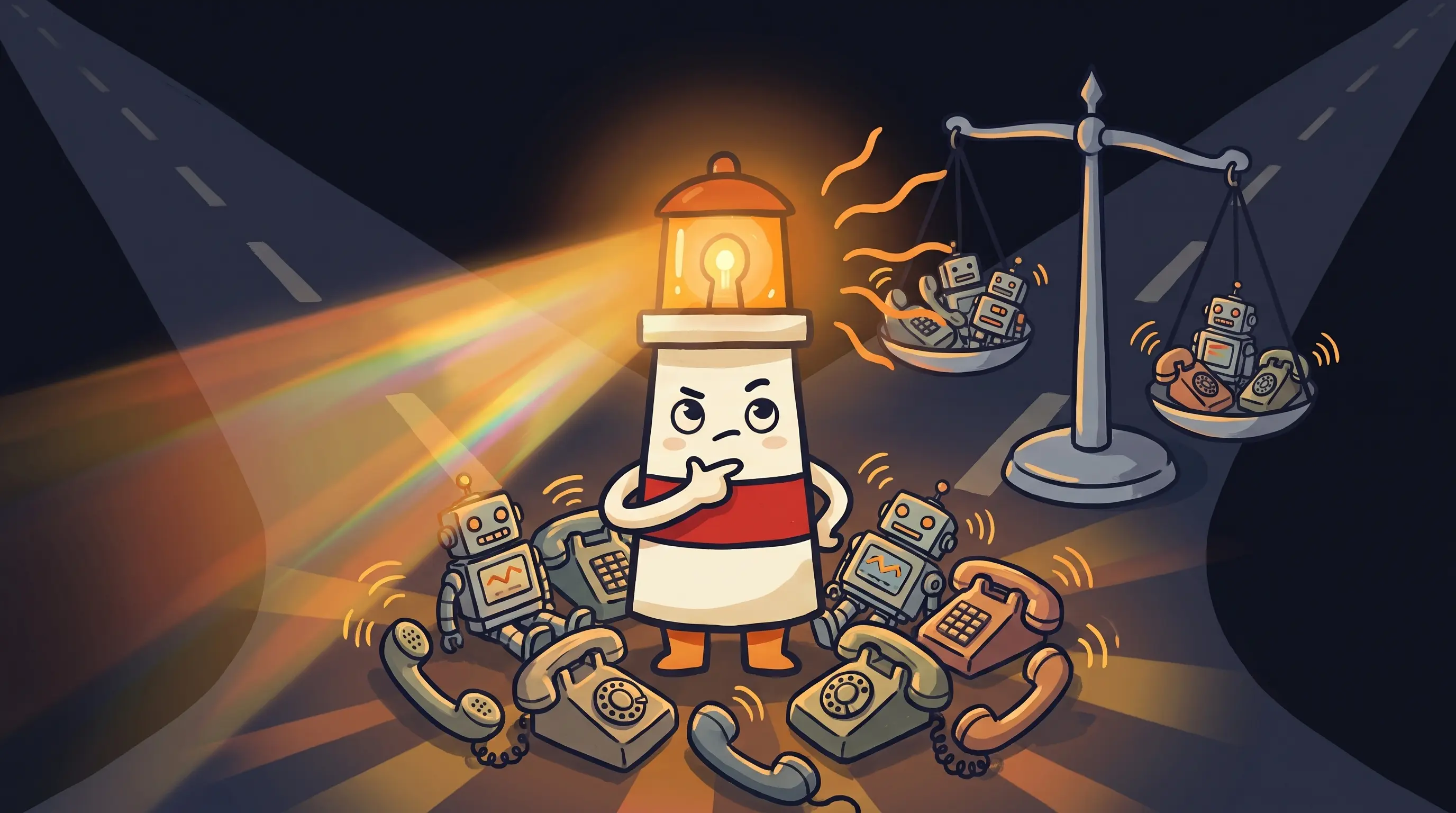
 Some tasks were never meant to stay on your to-do list forever. Beacon’s shining a light on the seven workflows worth handing off first.
4. Email Triage and Draft Replies (saves 3–5 hrs/week)
Ad hoc AI prompting — ‘draft this email,’ ‘summarize this thread’ — doesn’t scale. It doesn’t count as integrating AI into your workflow. A real email triage workflow connects to your inbox, reads incoming messages, flags anything requiring your attention, auto-replies to routine requests (scheduling, document requests, status updates), and drafts context-aware responses for anything substantive. You approve, you don’t compose.
Email management alone saves 3–5 hours weekly. For anyone managing client relationships at volume, it’s often the first workflow that pays back in the same week you build it.
5. Weekly Report Generation (saves ~5 hrs/week)
Somewhere in your organization, someone spends two to three hours every Friday pulling numbers from different dashboards, pasting them into a doc, writing summary sentences, and formatting everything before sending it to whoever needs it. This is a solved problem.
An AI reporting workflow pulls from your data sources on a schedule, generates narrative summaries with trend analysis, flags anomalies (the kind a human might miss at 4 PM Friday), and distributes to the right recipients. Five hours back, every week, permanently.
6. Social Media Content Scheduling (saves ~6 hrs/week)
This isn’t about generating generic posts. It’s about removing the assembly-line work: resizing images, reformatting copy for different platforms, scheduling at optimal times, writing captions from a content brief, recycling evergreen content on a rotation. Six hours a week, gone. The creative decisions stay yours. The mechanical execution doesn’t have to.
7. Employee Onboarding Tasks (saves ~3.5 hrs per hire)
Every new hire triggers the same checklist: send welcome email, create accounts, assign training modules, schedule intro calls, collect paperwork. An onboarding automation handles all of it from a single trigger — the new hire’s start date appears in your HR system. Accounts get provisioned, emails go out on the right schedule, reminders fire when tasks aren’t completed. HR gets a workflow, not a to-do list.
The Real Reason Dumb Automations Die
Here’s what I promised earlier.
Every failed automation we’ve seen follows the same pattern. Someone identified a repetitive task, found a way to trigger software when the task appeared, and moved the data somewhere else. Clean inbox → spreadsheet. Form submission → CRM record. The task happened faster. Nothing else changed.
The automations that actually change how much time you have — the ones that save 10 or 15 hours a week — all contain a decision. They don’t just move data. They read it, interpret it, and route it based on context.
Look at every workflow in the list above. Ticket routing doesn’t just move emails — it classifies intent and urgency. Lead qualification doesn’t just log submissions — it scores them against criteria and decides what happens next. Invoice processing doesn’t just copy numbers — it reads unstructured PDFs and flags anomalies.
The pattern: every high-leverage automation contains at least one step where the software makes a judgment call. Build for that, and the time savings are real. Build without it, and you’ve automated a data shuffle.
This is also why persistent context matters so much. If your automation can’t remember what it decided last time, it can’t improve. That’s the deeper case for AI automation platforms that maintain state across tasks — not just one-shot triggers, but agents that carry context forward.
Where These Workflows Fall Apart
Nothing breaks faster than an automation deployed without testing the edge cases. Here’s what goes wrong — often quietly, in ways you don’t notice until a client emails asking why they got two automated replies.
- Garbage-in problem: AI workflows are only as good as the data they read. Messy CRM records, inconsistently named invoice files, and vague form fields break classification logic fast. Clean your inputs before you automate them.
- Missing the exception path: Every workflow needs a human escalation route. A ticket the AI can’t classify, a lead that scores in a gray zone, an invoice with a mismatch — these need to land somewhere specific, not disappear. Build the exception handler first.
- Over-automation on day one: The evidence is consistent here: automating too many processes at once makes it impossible to diagnose what broke. One workflow, working reliably, before you add the next.
- Brittle triggers: If your trigger depends on a specific email subject line format or a field that gets inconsistently filled in, the workflow fails silently. Use AI classification as the trigger layer, not rigid text matching.
- No monitoring in place: Automations degrade. Someone changes a form field, a vendor changes their invoice format, a CRM field gets renamed. Build in a weekly 10-minute check to verify your workflows are still firing correctly.
How to Know Your Workflows Are Actually Working
A workflow that runs silently and produces no errors isn’t the same as a workflow that’s helping you. Verify these things before you trust the hours-saved math.
- Error rate is below 5%: Check your automation platform’s run history. More than 5% failures means the input data or trigger logic needs fixing.
- Human escalations are landing correctly: The tickets, leads, or invoices that get flagged for human review should actually be the edge cases — not routine items the AI couldn’t figure out.
- Your time on the task has measurably dropped: Before you automate, track how long you spend on the task for two weeks. After, check again. If the number didn’t move, the workflow isn’t firing or isn’t doing what you think.
- Output quality holds: For reply-drafting and report generation workflows, spot-check 10 outputs per week for the first month. AI-generated content drifts in quality when context isn’t maintained properly.
- No duplicate actions: A common failure mode — two triggers fire, two emails go out, two CRM records get created. Add deduplication logic to any workflow that creates records.
Your Monday Morning Automation Checklist
Pick one workflow from this list. Not seven. One. Here’s how to go from reading this to having something running by end of week.
- Identify your most repetitive decision task. The workflows that save the most time share one trait: someone is making the same classification call, over and over. Ticket routing, lead scoring, invoice matching. Find yours — it’s probably taking 2+ hours daily.
- Track the current time cost for 5 business days. Log how long you actually spend on the task. No estimate — real time. You’ll need this baseline to measure whether the automation worked.
- Start with a no-code tool. Zapier, Make, or n8n handle most of these workflows without engineering involvement. If your task involves reading emails or forms and routing them, you can have a draft workflow running in under 3 hours.
- Build the exception path before anything else. Decide: what happens when the AI can’t classify something confidently? It should flag to a human inbox, not disappear. Set this up first, before you go live.
- Run in parallel for 1 week before removing the manual process. Let the automation run alongside your existing process for 5 business days. Compare outputs daily. Only cut over to fully automated when the error rate is below 5%.
- Check your tool limits before you go live. Most platforms gate runs, premium connectors, or AI steps by plan tier. Budget for that before you assume the ROI math works.
- Review the run history every Monday morning for 30 days. Automations degrade when inputs change. A 10-minute weekly check catches problems before they compound.
The teams that get the most out of this aren’t the ones with the most sophisticated setups. They’re the ones who got one thing working, trusted it, and then added the next. One team of three using this approach described it as feeling like a team of ten. That’s not hyperbole — that’s what happens when 20+ hours a week of decision-making busywork stops landing on human desks.
If you want a setup that goes beyond task-level automation — something that maintains context, handles multi-step decisions, and keeps a durable operating history — that’s the case for a personal AI assistant rather than a standalone workflow. BrainRoad is built for that kind of persistent agent. But the seven workflows above work with any platform — start there.
What This Means for Your Time This Week
- Seven workflows — ticket routing, invoice processing, lead qualification, email triage, report generation, social scheduling, and onboarding — can save 20+ hours per week combined.
- Each workflow saves 2–5 hours on its own. The compounding only works if you build them one at a time, reliably.
- The difference between automations that work and ones that die quietly: the ones that work contain a decision step, not just a data transfer.
- You don’t need to write code. Zapier, Make, and n8n handle all seven workflows with no engineering resources.
- Start with the task where someone is making the same classification call every day. That’s your highest-leverage first automation.
Start with one. Get it working. Measure the time saved. Then add the next. That’s the entire playbook — and it works every time people actually follow it.
Frequently Asked Questions
Do I need technical skills to build these workflows?
No. Platforms like Zapier and Make offer no-code builders where you connect apps visually, set triggers, and add AI steps without writing a line of code. Many of the seven workflows above can be set up in an afternoon by someone who’s never built an automation before. The harder part is designing the logic — deciding what the AI should do when it encounters an edge case — not the technical implementation.
How much do these automation tools cost?
Most no-code automation platforms have entry plans and then scale with usage, premium connectors, and AI volume. Your actual cost depends on how often the workflow runs and how much model processing it uses. The comparison that matters is simple: if a workflow saves several hours a week, it often pays for itself quickly. Price the tool stack against the time you are getting back, not against a headline subscription number alone.
Which workflow should I automate first?
Automate the task where someone in your business is making the same judgment call repeatedly — classifying, routing, scoring, or matching. Support ticket routing and lead qualification have the highest time-savings per workflow. But the right first automation is the one that’s costing you the most hours right now. Track your time for one week before you build anything. The answer will be obvious.
What's the difference between AI workflow automation and regular automation like Zapier triggers?
Traditional automation follows rigid rules: ‘if X happens, do Y.’ It breaks the moment something unexpected arrives. AI workflow automation adds a decision layer — the software reads unstructured data, interprets context, makes judgment calls, and handles exceptions without breaking. A rule-based email trigger fires on a subject line match. An AI workflow reads the email body, classifies intent, determines urgency, and routes accordingly. That’s the gap between saving a click and saving two hours.
How do I know if my automation is actually working?
Check three things: your run history error rate (should be under 5%), your time on the task before vs. after (it should have dropped measurably), and your exception queue (edge cases should land there, not routine items). Spot-check outputs weekly for the first month. Automations degrade quietly — a form field gets renamed, an invoice format changes, a trigger stops firing. Ten minutes of weekly review prevents most failures.
Sources
- 7 AI Tools for Virtual Assistants That Elite VAs Use in 2026 — Avila VA
- AI Automation Workflows in 2026: 15 Workflows That Actually Save Time — AI Tool Briefing
- 7 AI Workflow Automation Examples That Save 20+ Hours Per Week — AI Makers
- AI Workflows: How to Use AI in Your Business — Zapier
- Replace Your VA with AI Workflows: Solo Founder Playbook — AI Shortcut Lab
- 7 AI Automation Workflows That Save 20+ Hours/Week — PxlPeak
Related Articles
AI front desk software vs answering service for small business

Best AI Virtual Assistant for Small Business: Email, Follow-Ups, and Owner Approval Compared