Your BrainRoad Account Includes a Full AI Company: Here's What That Means
On this page
It’s not your fault you find this confusing. Every piece of content about personal AI agents assumes you already know what you’re signing up for — or worse, assumes you want to build it yourself. You’ve probably stared at a GitHub README, read three comparison articles that all said “it depends,” and wondered why something that’s supposed to make your life easier requires this much research.
Here’s the thing: getting a personal AI agent isn’t just about picking software. It’s about running infrastructure. And most people have no idea what that actually involves — until they try.
We’ve watched this pattern play out repeatedly. Someone reads about OpenClaw agents (the open-source technology behind BrainRoad) and thinks: great, I’ll just set this up myself. Then they hit step 4 of 12. Something breaks. The weekend disappears. And there’s a version of this story that cost one user $800 before they even got their agent working — I’ll tell you exactly what happened in a moment.
But first — what do you actually get when you sign up for an AI agent platform like BrainRoad? The answer is more than most people expect. If you’re evaluating your options as a self-hosting route, a managed platform, or comparing different AI agent platforms, this breakdown matters.
What Getting a Personal AI Agent Actually Requires
The personal AI assistant market is growing fast — from $3.35 billion in 2025 toward a projected $21.11 billion by 2030. Y Combinator has already funded 149 AI assistant startups as of early 2026. That’s a crowded, noisy market with a lot of options and a lot of hype.
But here’s what the noise obscures: most of what’s being sold are smarter versions of apps you already have. They don’t reduce the number of places you need to go — they just make each stop a little nicer. The critical distinction right now is between AI tools that answer questions and AI agents that take action. Conversational tools like ChatGPT, Claude, and Gemini are extraordinary — but when the conversation ends, you still have to go do the work.
A true personal AI agent is different. It connects to your email. It messages you on WhatsApp when something needs attention. It takes action on your behalf — not just when you open a tab and type a prompt, but 24/7, in the background, without you driving it. Half of founders who use AI tools like this report saving more than 6 hours per week. Small businesses using AI are now saving more than 20 hours per month, according to the Thryv 2025 Survey.
That’s 20 hours a month — two and a half full workdays — handed back to you. For a freelancer billing $100/hour, that’s $2,000 worth of reclaimed capacity every month.
The catch? Getting there requires actual infrastructure. Not an app. Not a subscription to a chat interface. Infrastructure — the kind that runs 24/7, holds memory between conversations, and connects securely to your real tools. Here’s what building that yourself actually looks like.
The Product Layer You’re Actually Getting
When you sign up for BrainRoad, you’re not just getting “an AI agent.” You’re getting an operating model that would take real work to assemble from raw tools. Here’s what that actually includes.
AI Company
Your account can run as a governed AI company, not just a single chat surface. A primary agent can coordinate work, delegate, and report back through a structured system.
Verified Agent Identity
Your agent can have its own managed mailbox and, where applicable, its own phone path. This matters because actions come from a real identity surface, not a vague backend process.
Credential Vault
Secrets, API keys, and identity credentials live in a secure vault with an audit trail instead of scattered across terminals and local files.
Approval Controls
High-impact actions can stop for review. This is the difference between 'autonomous' and 'governed.'
Persistent Context
Your agent keeps memory and role context across sessions and updates.
Managed Execution Layer
Hosting, isolation, provisioning, and runtime operations are handled for you so the product model above actually works.
Multi-Agent Support
Run more than one agent with separate memory, credentials, and responsibilities.
Private Document Search
Your agent can search your own documents and use them as working context.
This isn’t a feature list dressed up to look impressive. It’s the set of things that turn a model runtime into something you can actually trust in real work.
The Mistake That Cost One User $800
Here’s the story I mentioned at the top.
One person trying to self-host an OpenClaw agent spent $800 on Anthropic API tokens before realizing the mistake: they used a Claude membership token instead of a console API key. Different credentials. Same name territory. Easy to confuse. Expensive to learn.
That’s not a failure of intelligence — it’s a failure of documentation. The self-hosting path assumes you already know the difference between an account token and a console key, between a membership and an API subscription. If you’re not a developer, there’s no reason you would know that.
The setup flow we built catches exactly this kind of mistake before it costs money. That’s the real value of the managed layer: it prevents the failure modes that only reveal themselves after you’ve already paid for them.
That’s also the counterintuitive thing most people miss about managed platforms: you’re not just paying for convenience. You’re paying for the product layer around the runtime so you do not have to build identity, governance, and operational guardrails yourself.
What Breaks Without Memory Isolation
Let’s talk about what goes wrong when infrastructure is done wrong — because this is the failure mode most guides skip entirely.
Memory isolation sounds like a technical detail. It isn’t. It’s the difference between an agent that knows you and an agent that’s confused about who it’s talking to.
Without proper container isolation, running multiple agents simultaneously causes a specific and frustrating problem: each agent loses awareness of what the others are doing. Eight agents running on the same instance, none of them maintaining context between sessions — each one effectively starting fresh with every conversation. That’s not an agent. That’s a very expensive chatbot.
The Kubernetes-grade isolation in BrainRoad’s infrastructure means each agent lives in its own container with its own memory. Your email agent doesn’t interfere with your research agent. Your context from Tuesday is still there on Friday. An update to the platform doesn’t wipe your agent’s memory of your preferences.
If you want to understand how agentic AI actually behaves in production — versus how it’s described in demos — memory isolation is the thing nobody talks about until it breaks. We’ve seen this go sideways too many times to skip it here.
Your Monday Morning AI Agent Checklist
If you’re evaluating BrainRoad — or any managed AI agent platform — here’s how to think about it concretely this week.
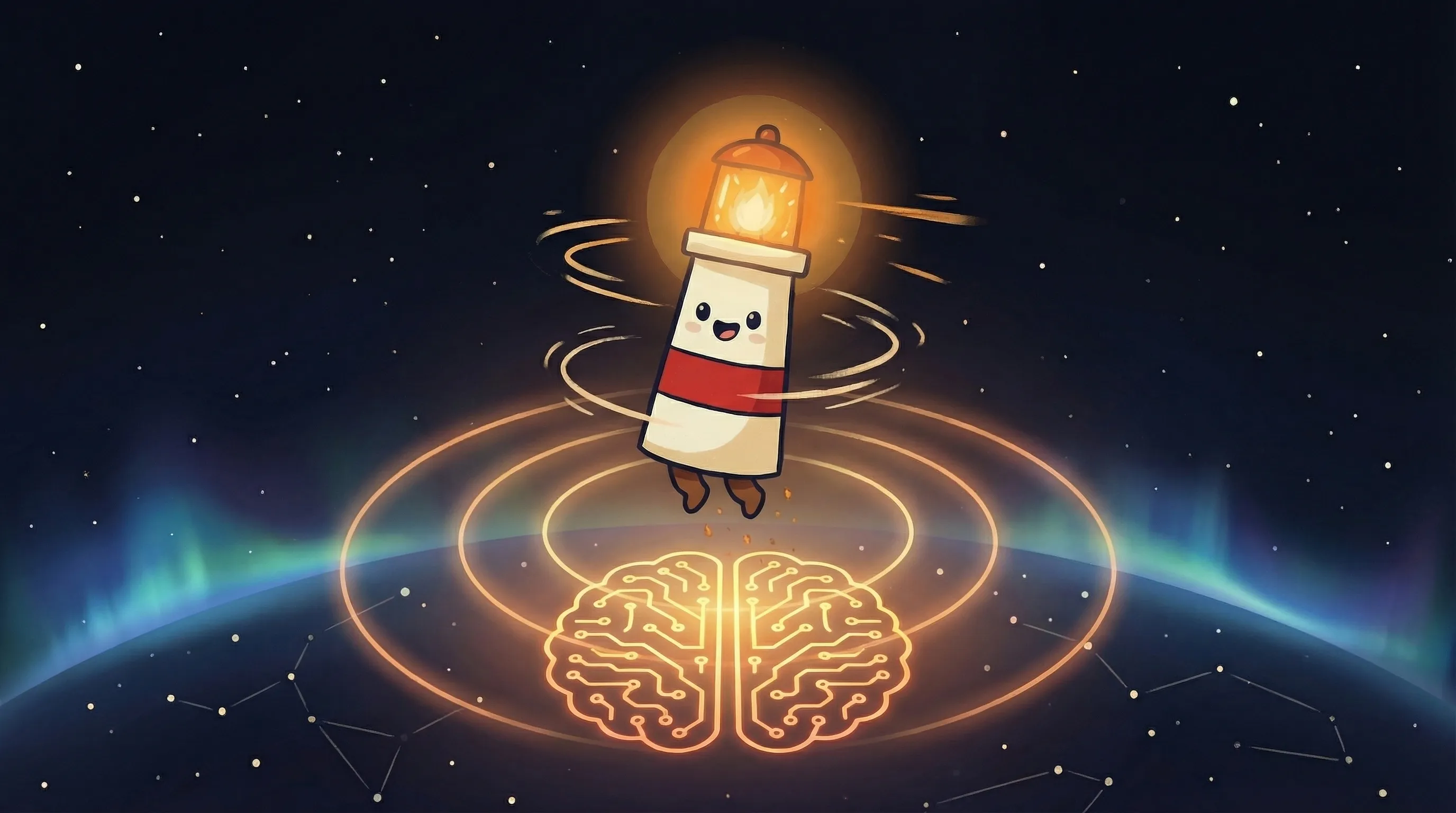 Some tools give you a feature. BrainRoad gives you a whole team.
- Identify one repeating task you do daily that requires low judgment to start.
- Decide what identity surface that task needs: chat, email, phone, or internal workflow only.
- Define what the agent may do without review and what requires approval.
- Estimate the time cost. If this task takes 30 minutes a day, the ROI math is usually obvious.
- If you’re considering self-hosting instead, budget not just for setup but for the identity, vault, and governance work around it.
- Within 48 hours, check whether the agent is producing work that sounds like your standards and escalating when it should.
- Set a 30-day checkpoint. If you’re not saving at least 3-4 hours weekly, revisit context and operating rules before concluding the product is the problem.
What This Means for Your AI Stack
- A BrainRoad account includes more than hosting. It includes an AI company model, agent identity surfaces, credential handling, persistent context, approval controls, and managed runtime operations.
- Self-hosting the same agent technology requires 12+ setup steps, 84+ minutes under ideal conditions, and carries real risk of expensive mistakes (like the $800 API credential error one user hit before setup was complete).
- The real cost advantage of a managed platform isn’t just the monthly fee. It’s the prevention of hidden costs and the fact that the product layer is already built.
- Memory isolation is the infrastructure detail that determines whether your agent actually remembers you — or starts fresh every time. Kubernetes-grade container isolation means each agent has its own persistent context.
- Small businesses using AI tools are saving 20+ hours per month (Thryv 2025 Survey). Getting there requires infrastructure that runs 24/7 — which is what a managed platform provides.
The teams that figure this out first get a compounding advantage. Every hour your agent handles is an hour you spend on the work only you can do. The teams that keep doing this manually keep paying the same tax on every project, every week, every month. The infrastructure piece stopped being the hard part months ago. The only remaining question is whether you’re going to keep avoiding it.
Frequently Asked Questions
What's the difference between BrainRoad and just using ChatGPT?
ChatGPT is a conversational tool — you open it, type a prompt, and get a response. When you close the tab, it stops. BrainRoad runs an AI agent that operates 24/7 in the background, connected to your WhatsApp, email, and calendar. It takes action on your behalf without you initiating each task. The technology behind it understands human language, but unlike a chat interface, it also does things.
Can I really set this up in 15 minutes if I'm not technical?
Yes — that’s the design intent. The guided setup wizard walks you through connecting your messaging app and email step by step, in a browser. No terminal, no configuration files, no API key setup. The 15-minute estimate is realistic for someone who has never deployed software before. The 84+ minutes is what it takes if you try to self-host the same technology manually.
What does 'memory isolation' mean for my data?
Each BrainRoad agent runs in its own isolated container. Your agent’s memory — your preferences, your conversation history, your documents — is separated from every other user’s agent. Nothing leaks between accounts. And persistent storage means your agent’s context survives platform updates, restarts, and the passage of time.
What if I want to run more than one agent?
Multi-agent support is built in. You can run separate agents for separate functions — one for email triage, one for research, one for client follow-ups — each with its own isolated memory and context. Without proper isolation, running multiple agents simultaneously causes them to lose track of what the others are doing. BrainRoad’s container architecture prevents that.
Is a managed platform worth it if I'm already comfortable with technology?
That depends on what you want to spend your time on. Self-hosting OpenClaw gives you more granular control over tool permissions and configuration. The tradeoff is setup time (84+ minutes minimum, plus debugging), ongoing maintenance, and the risk of expensive credential mistakes. If controlling the infrastructure is valuable to you, self-hosting is a legitimate path. If you’d rather spend that time on the work the agent is supposed to free up, managed hosting makes more sense.
Sources
- BrainRoad — Your Personal AI Agent
- Best Personal AI Assistant in 2026 | Top 10 Compared
- One AI Assistant for Email, Calendar & Every App
- AI for Entrepreneurs: Save 20+ Hours Monthly | 2026
- Personal Knowledge Base Your AI Can Search
Start the hosted AI employee path
Open the trial-first setup route for one verified AI employee with identity, persistent context, and governed execution before you expand into the full AI company model.
Start the Hosted Path