BrainRoad's AI CMO Now Writes Feature Announcements Automatically
On this page
Your competitor ships a product update. Within the hour, there’s a polished announcement in their newsletter, a tight social summary, and a help doc already live. You’re still in a Slack thread arguing about whether the headline should lead with the benefit or the feature name.
They’re not faster because they have a bigger team. They have the same three-person marketing operation you do. What they have is a different architecture — one where the first draft of any announcement starts writing itself the moment engineering merges the PR.
The AI assistant market is projected to grow from $3.35 billion in 2025 to $21.11 billion by 2030 — a 44.5% compound annual growth rate. Y Combinator had funded 149 AI assistant startups as of early 2026. Every one of them is making some version of the same promise: less manual work, faster content, smarter campaigns. Most of them are wrong about how to get there. There’s a specific reason why, and it matters before you spend a dollar. I’ll get to it — but first, the architecture.
Why ‘AI CMO’ Promises Keep Landing Flat
The pitch is compelling. Paste in your website URL. The platform analyzes your product, your audience, your competitive landscape, and deploys a coordinated team of AI agents to go to work on your growth. No briefs. No onboarding calls. No strategy decks.
Platforms positioning themselves as ‘the world’s first AI CMO’ are real — this isn’t vaporware. The category exists, the technology works in demos, and some of the underlying architecture is genuinely interesting. But the failure rate in production is high enough that practitioners at AI agent platforms have started asking a different question: not ‘can AI do this?’ but ‘which part of this should AI actually own?’
The honest answer from the people who’ve watched this break: most AI marketing initiatives stall because they’re run like tech experiments, not growth programs. Pilots spin up without clear business owners, tools get bought before use cases are defined, and governance gets bolted on after the fact — usually after something goes sideways.
Here’s the thing. The problem isn’t the AI. The agents themselves can write decent copy, synthesize competitive research, and format announcements faster than any human first-draft process. The problem is the wrapper around the agents — the governance, the integration with your actual stack, the defined use cases. And that’s where most deployments fall apart before they ship anything.
What the Multi-Agent Architecture Actually Does
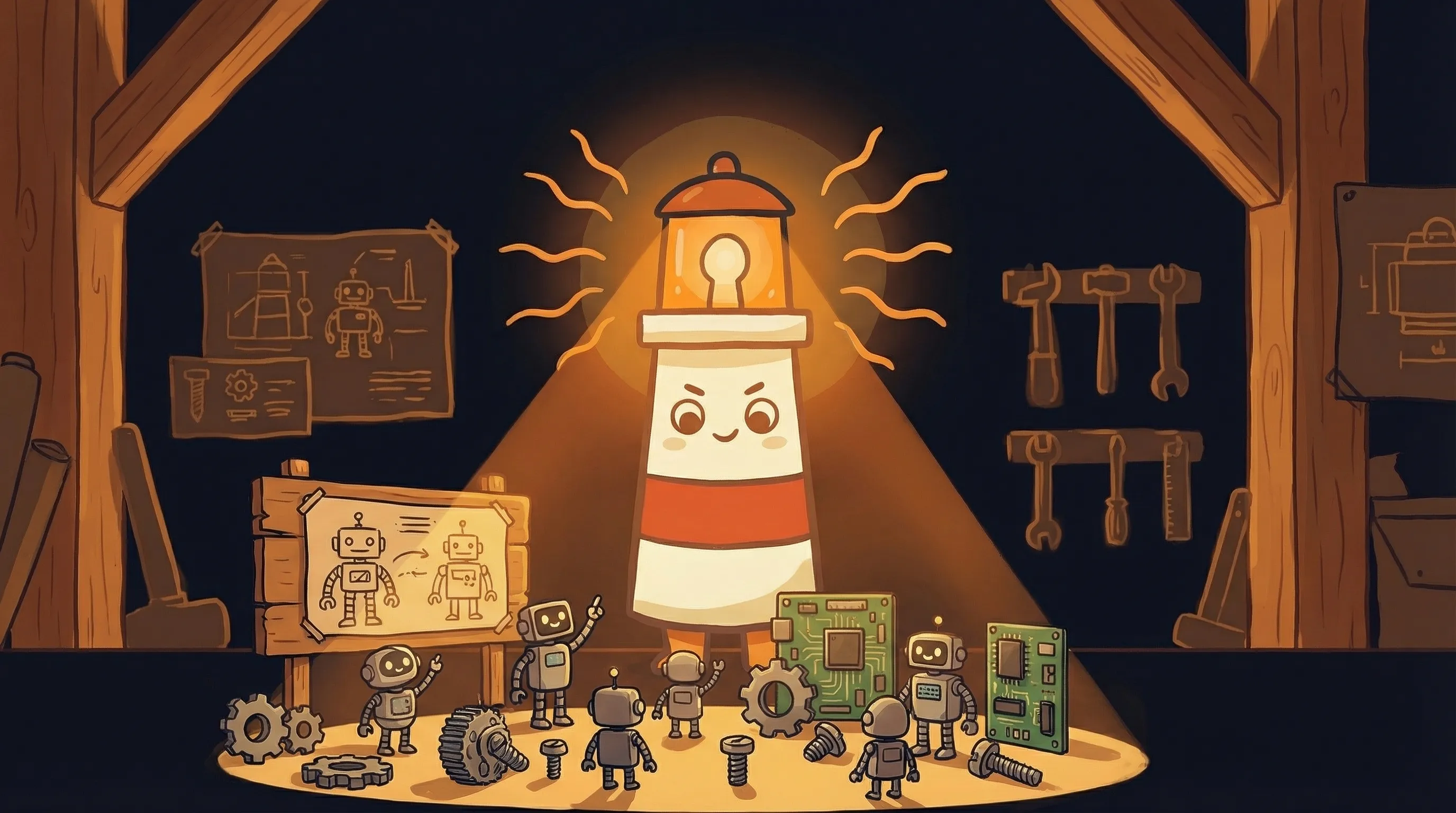
The reason AI CMO tools look different from a single chatbot isn’t branding — it’s architecture. Rather than one AI assistant generating marketing copy on demand, the multi-agent approach mirrors how a real marketing department operates: specialized agents running in parallel across different functions.
For a feature announcement specifically, that looks like this in practice:
- A research agent pulls competitor positioning and recent customer feedback to understand the announcement context
- A copy agent drafts the announcement body, email subject lines, and social variants simultaneously — not sequentially
- A distribution agent handles formatting for each channel: newsletter, help docs, approved social channels, internal Slack digest
- A review trigger fires if the announcement touches pricing, compliance language, or anything flagged as requiring human approval
That last point is not a nice-to-have. It’s the difference between a tool you can trust with production content and one that lives in a sandbox forever.
Gartner projects that 40% of enterprise applications will include task-specific agents by 2026, up from less than 5% in 2025. Worldwide AI spending is tracking toward $2.52 trillion in the same year. The infrastructure is being built. What isn’t being built fast enough is the judgment layer — the part that knows when to write and when to wait.
The strongest use cases in AI-assisted marketing are narrow and operational: research synthesis, workflow automation, reporting support, content operations, and creative testing. Feature announcements fit squarely in content operations. That’s the zone where the technology earns its keep.
What the Demo Won’t Show You
The demo uses clean data. Your situation is different.
The demo has one product, one audience, one clear value prop. Your product has three tiers, two customer segments with different needs, and a changelog that engineering updates in a format nobody outside engineering can parse. The demo shows an announcement going live in minutes. What it doesn’t show is the agent hallucinating a pricing detail, confidently writing the wrong number into a live email, and you finding out when a customer replies to ask why the price on the website doesn’t match.
This isn’t hypothetical. It’s the failure mode that kills autonomous content publishing projects in their first month.
Here’s what separates a production deployment from a demo: integration. If a tool cannot connect to your CRM, analytics, content operations, paid media workflow, or review process, it’s a demo — not a solution. That’s not our take. That’s the direct assessment from practitioners who’ve evaluated this category for a year. The agent can write the announcement. The question is whether it can write the right announcement, route it through the right approval, and publish it to the right place — without you managing every step manually.
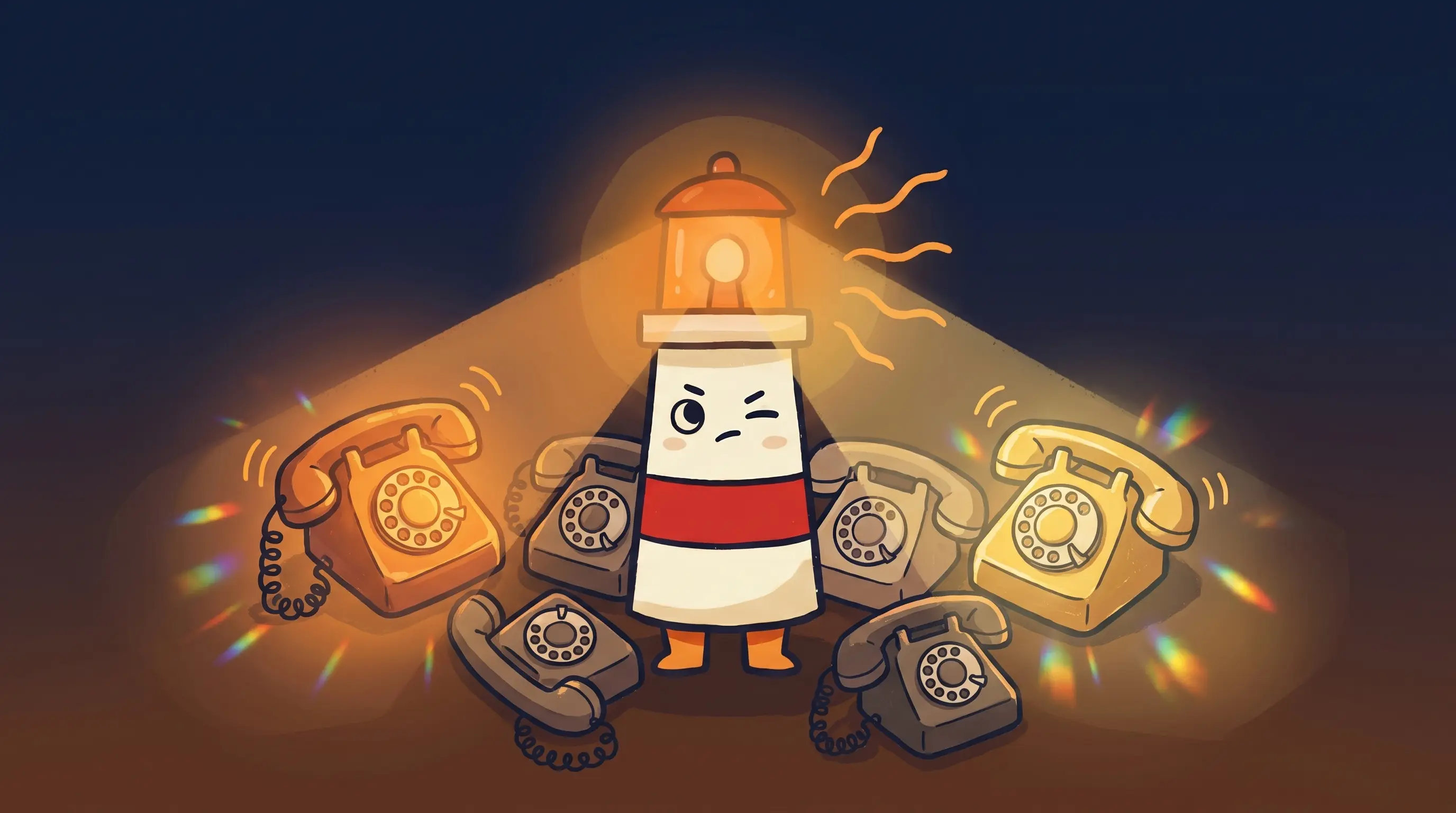
 Beacon says: good news shouldn’t wait for someone to have time to write it.
One of our early users put it plainly: he set up an agent to draft feature announcements, connected it to the right sources, built in one approval checkpoint for anything touching pricing — and stopped attending the ‘what do we say about this release?’ meeting entirely. The agent drafted it. He approved or edited in five minutes. The meeting dropped off his calendar.
That’s not an AI CMO. That’s an AI agent doing one job well, inside a system with clear rules. That distinction is worth keeping.
Where This Falls Apart in Practice
The failure modes are predictable once you know what to look for.
No defined business owner
AI marketing pilots without a named human accountable for outcomes drift into 'we're experimenting with it' limbo. Someone needs to own the results — not just the tool.
Integration gaps treated as roadmap items
If the tool doesn't connect to your CRM or analytics today, 'we're working on it' is not a shipping date. Don't build your announcement workflow on a promise.
Unsupervised publishing on sensitive content
Pricing, legal language, product limitations, competitor references — these categories need a human checkpoint. Automating them without one is where reputational risk lives.
Black-box outputs with no audit trail
If you can't see what the agent read, what it decided, and why it wrote what it wrote, you can't improve it — and you can't defend it when something goes wrong.
Starting with strategy instead of operations
Autonomous growth strategy is the hardest problem in AI marketing. Feature announcements are one of the easiest. Start there. Prove the workflow. Then expand.
How to Know It’s Working
If you deploy an AI-assisted announcement workflow, these are the signals that tell you it’s actually working — not just running:
- Draft quality is high enough that edits are light — you’re adjusting tone, not rewriting from scratch
- Time from engineering merge to published announcement drops measurably (track this from day one)
- Announcement accuracy stays clean — no pricing errors, no wrong feature names, no outdated positioning
- Human review time per announcement is under 10 minutes consistently
- Distribution happens correctly across all channels without manual reformatting
- The agent escalates appropriately — it catches the things it should flag and doesn’t flag everything
CMOs evaluating AI tools in 2026 should be able to show impact on content throughput within 30 to 60 days. If you’re past 60 days and still measuring ‘we’re learning,’ the tool isn’t working — or the deployment is.
Your Monday Morning Announcement Checklist
If you want to test this without overcommitting, here’s the sequence that actually works:
- Pick one announcement type to automate first — patch notes, minor feature releases, or help doc updates. Not your major launches. Start with the low-stakes volume.
- Map the sources your agent needs: product changelog, customer segment definitions, brand voice guidelines, any approved competitor positioning. If your agent can’t read these, it’s guessing.
- Set one approval checkpoint at a minimum — triggered by any announcement that mentions pricing, limitations, or named competitors. This is non-negotiable in production.
- If you’re on a managed agent platform, confirm it connects to your email tool, CMS, or wherever announcements live. If the integration doesn’t exist, treat the tool as a drafting assistant, not a publisher. That’s still valuable — it’s just a different workflow.
- Run 10 announcements through the workflow before judging it. The first 3 will reveal calibration issues. The next 7 tell you whether the pattern holds.
- After 30 days, measure time-to-publish versus your baseline and draft edit time. If time-to-publish hasn’t dropped by at least 40% and edit time isn’t under 10 minutes, something in the setup needs adjustment.
- If edit time is consistently under 5 minutes and accuracy is clean, expand to one additional announcement type. If it’s still over 15 minutes, fix the sources before expanding.
If you’re evaluating which platform to host your agent on, the real monthly cost comparison is worth reading before you commit. The infrastructure decision affects what integrations are possible — and that matters more than the agent’s copywriting ability.
BrainRoad runs each agent in an isolated container with persistent storage — which means your brand voice guidelines, product context, and past announcement history stay loaded between sessions without you re-uploading anything. For announcement workflows specifically, that persistent memory is what separates an agent that learns your voice from one that resets every time. Worth mentioning when you’re comparing options — but the checklist above works regardless of platform.
What This Means for Your Growth Stack
- The ‘AI CMO’ category is real — multi-agent architectures running parallel specialized tasks are genuinely different from single-chatbot tools
- The strongest use cases are narrow and operational: feature announcements, research synthesis, content operations — not autonomous strategy or unsupervised publishing
- Gartner projects 40% of enterprise apps will include task-specific agents by 2026, up from less than 5% in 2025 — the adoption curve is steep
- Integration with your existing stack is the single most important evaluation criterion — tools that can’t connect to your CRM or content workflow are demos, not solutions
- CMOs should expect measurable impact on content throughput within 30 to 60 days — if you can’t show it, the deployment needs work
- Start with low-stakes, high-volume content (patch notes, minor releases) before touching major launches
The question stopped being ‘can AI write my announcements?’ somewhere around 2024. It can. The question now is whether you’ve built the system around it that lets you trust what it writes. That’s an infrastructure and governance problem, not an AI problem.
The teams who figure that out first aren’t replacing their marketing department. They’re giving their marketing department the equivalent of a tireless junior writer who never misses a release and never needs to be reminded it’s publish day. The math on that changes your content velocity in ways that compound — and that compounding is where the real advantage lives.
Frequently Asked Questions
Can an AI agent actually replace a CMO for feature announcements?
Not replace — augment. The multi-agent architectures doing this well handle the drafting, formatting, and distribution work. Human judgment still owns brand positioning, approval on sensitive content, and anything touching pricing or competitive claims. The teams getting the most value are using AI to eliminate the 80% of announcement work that was low-creativity, high-volume repetition — freeing the humans for the 20% that actually requires judgment.
What's the biggest risk of AI-generated feature announcements?
Accuracy errors on factual claims — especially pricing, feature limitations, and compatibility information. The AI generates confident-sounding copy regardless of whether the underlying data is correct. The fix is clean source data and at least one human checkpoint on any announcement that touches sensitive categories. Without that, you’re publishing fast and correcting publicly — which is worse than publishing slowly.
How long does it take to see results from an AI announcement workflow?
30 to 60 days is the practitioner benchmark for seeing measurable impact on content throughput. The first 10 announcements through any new workflow reveal calibration issues — source quality, brand voice alignment, escalation logic. After that, the pattern stabilizes. If you’re past 60 days and still calibrating, the setup needs work, not more time.
Do I need a developer to set this up?
Depends on the platform. Managed agent hosting platforms with GUI onboarding (BrainRoad uses a wizard-based setup) don’t require code. Self-hosting or configuring raw agent frameworks does. The tradeoff: managed platforms limit some customization, self-hosted gives you more control but costs setup time — typically a weekend versus 15 minutes. For an announcement workflow, most teams don’t need the custom path.
What makes a good source for an AI announcement agent?
The agent needs: your product changelog in a parseable format, your brand voice guidelines (even a simple doc works), your customer segment definitions, and a list of content categories that require human review. That’s the minimum. The more structured your inputs, the less editing the outputs need. Garbage in is still garbage out — the AI just writes the garbage faster.
Sources
- Brainiest AI Free Plan Launch — PR Newswire
- Brainiest AI Launch — PR Newswire
- Meet the World’s First AI CMO — PureAI Review
- 2026 CMO Playbook — EverWorker AI
- AI Digital Marketing: Real vs Hype — Prose Media
- One AI Assistant for Email, Calendar & Every App — BrainRoad
Try it free for 30 days
BrainRoad builds the private Business Brain your AI helper drafts from, with review before anything sends. Free for 30 days, no credit card.
Build Your Business Brain