Best AI Virtual Assistant for Small Business Customer Service

On this page
Here’s what the market looks like right now: one set of small businesses is watching their AI agent handle customer questions at 11 PM while the owner sleeps. Another set deployed something, called it ‘done,’ and is now getting worse customer satisfaction scores than they had with a human answering the phone. Same category of tool. Radically different outcomes.
The research on this is clear and uncomfortable: companies using AI customer service platforms badly are achieving worse outcomes than those using no automation at all. Meanwhile, the businesses that picked right are watching costs drop and satisfaction scores climb. The difference isn’t budget. It’s not even features. It’s the criteria they used to choose.
We’ve gone through the current field — pricing models, resolution rates, escalation logic, and the specs that don’t show up in demo videos. There’s one piece of the evaluation most guides skip entirely. I’ll get to it after the platform breakdown, because it changes how you read every vendor’s claims.
What the Current AI Customer Service Market Actually Looks Like
The shift worth understanding: the old generation of customer service bots ran on rigid decision trees. A customer asked something even slightly outside the script and the whole thing fell apart. Generative AI changed that. Modern platforms can understand what a customer actually means, hold a real conversation, and respond with something approaching empathy — not just keyword matching.
The pressure driving adoption is real. 40% of contact centers report increased customer demand for 24/7 availability, and 36% say their customers now expect faster, more personalized responses than before. For a small business, hiring toward that expectation is a losing game — contact center agent turnover runs between 30% and 45% annually. You can’t staff your way out of this.
The stakes ahead are significant too. Analysts expect AI to resolve around 80% of customer service issues by 2029. That’s not a distant abstraction — it means the platforms you evaluate today are the infrastructure you’ll be scaling on in three years. Picking the wrong one is expensive to undo.
For small businesses evaluating AI virtual assistants right now, the field has sorted into roughly three tiers: per-conversation models, per-seat models, and enterprise platforms that have no business on a small business shortlist.
What the Pricing Models Tell You (and What They Hide)
Pricing structure is the fastest signal for whether a platform is actually built for your use case. Here’s what the main models mean in practice.
Fin by Intercom charges $0.99 per resolved conversation — and that word ‘resolved’ is doing a lot of work. You only pay when the AI actually closes the issue without human intervention. For a small business with variable support volume, that’s a compelling model. Low months cost less. The risk: if your agent’s resolution rate is poor, you’re paying for partial automation without the efficiency gains.
Nextiva’s XBert AI starts at $15 per user per month, which gets you voice and chat in one platform. That’s a meaningfully different offering — if your customers call, not just chat, this is one of the few options that handles both without stitching together separate tools. It’s earned a 4.5/5 on G2 from over 3,200 reviews and 4.8/5 on Trustpilot from more than 8,000 reviews, which tells you something about real-world satisfaction at scale.
Zendesk AI sits at $55 per agent per month plus a $50 AI add-on — so $105 per seat before you add anything else. That’s a significant per-seat cost for a small team. If you’re already deep in the Zendesk ecosystem, the integration value may justify it. If you’re not, you’re paying enterprise pricing for small business volume.
Agentforce by Salesforce runs approximately $500 per 100,000 credits, or roughly $2 per conversation. At that rate, you’d need serious Salesforce investment to make the integration worth the platform cost. For most small businesses, this one belongs on the ‘not yet’ list.
Ada’s AI agent has published more verifiable numbers: an 84% automated resolution rate on chat and an 8-point increase in customer satisfaction scores since deployment. That’s the kind of metric that actually tells you whether the tool is working — not accuracy percentages on curated test sets, but resolution rates on real customer conversations.
The Risk Nobody Puts in the Comparison Table
Here’s the thing that should change how you read every vendor demo: businesses using AI customer service platforms badly are achieving worse customer service outcomes than businesses using no automation at all.
Not ‘slightly worse.’ Not ‘about the same.’ Worse. A customer who reaches voicemail and gets no answer still has a chance to call back. A customer who spends four minutes trying to get a bot to understand them — and then gets transferred to a human who has no context about what just happened — doesn’t call back. They call your competitor.
That second scenario happens when platforms are chosen for the wrong reasons: price alone, feature count, or because the demo looked smooth. The signal gets buried in the spec sheet, but it shows up fast in the real world. 67% of callers who reach voicemail won’t leave a message — they’ll call a competitor instead. The wrong AI deployment can produce the same effect at scale.
The escalation moment is where most platforms quietly fail. A customer gets most of the way through an issue with the AI agent, then needs a human. If that handoff loses the conversation context — if the human agent starts from scratch and the customer has to re-explain everything — you’ve created a worse experience than if the AI had never been involved. This is the hidden cost of a platform with weak escalation logic.
Smart escalation with full context handoff — so customers never have to repeat themselves — is the differentiator that separates platforms that help from platforms that damage. It’s not flashy. It doesn’t show up in the stat bar on the pricing page. But it’s the thing that matters when the AI hits its limit, which it will.
What to Actually Evaluate (The Four Criteria That Matter)
Most comparison guides rank platforms on feature checklists. Here’s a tighter framework for small business AI agents specifically — four criteria that predict whether the deployment will actually work.
Automated Resolution Rate (not accuracy)
How often does the AI fully resolve a customer issue without human intervention? This is the number that tells you if the tool is actually useful. Ada's published 84% is a meaningful benchmark. Anything below 60% on your actual ticket mix means you're still doing most of the work manually.
Escalation Logic and Context Handoff
What happens when the AI can't handle the issue? Does the human agent receive the full conversation transcript and a summary of what was tried? A bad escalation experience can be more damaging than no AI at all. Test this in the demo before you sign anything.
Custom Playbook vs. External Knowledge
Does the AI agent work from your specific business knowledge — your policies, your products, your processes — or does it pull from general sources and make assumptions? An agent that works from a playbook you control stays accurate and on-brand. One that hallucinates from external sources creates support tickets, not resolutions.
Pricing Model Alignment with Your Volume
Per-conversation pricing (like Fin at $0.99) works well if your volume is variable. Per-seat pricing (like Nextiva at $15) works better if you have predictable staff and consistent volume. Mismatched pricing models create cost surprises — in both directions.
Where Each Platform Actually Wins
No platform wins everything. Here’s where each option has a genuine edge for a small business context — and where it falls short.
Fin by Intercom
Best for: Variable-volume shops already using Intercom. The $0.99/resolved conversation model aligns cost with actual outcomes. You pay less in slow months. Weak if you need voice support or a standalone platform.
Nextiva XBert
Best for: Small businesses that still take a lot of phone calls. Voice + chat in one platform, starting at $15/user/mo. Strong review scores across 11,000+ reviews suggest consistent real-world performance. Less suited for pure-chat use cases.
Ada
Best for: Teams that want published, verifiable performance data before committing. The 84% automated resolution rate and +8 CSAT improvement are meaningful benchmarks. Better fit for businesses with structured, repeatable support workflows.
Zendesk AI
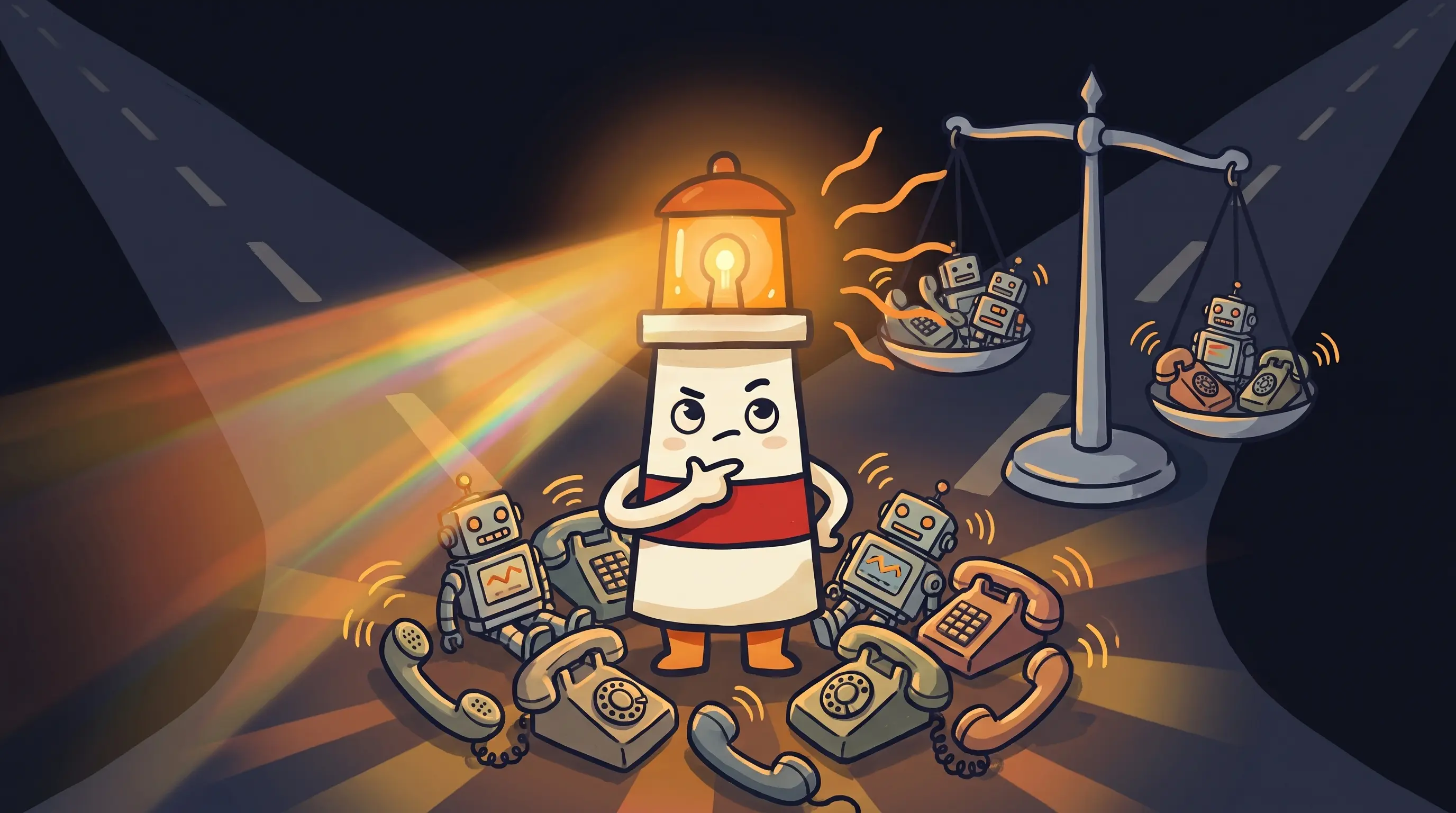
 Beacon says: the right AI assistant doesn’t replace your team — it gives them a superpower.
Best for: Teams already in the Zendesk ecosystem who need AI layered onto existing workflows. At $105/seat, it’s expensive to adopt cold. Strong if the integration replaces other tool costs.
Agentforce by Salesforce doesn’t belong on most small business shortlists at $2/conversation and enterprise-scale minimums. Crescendo.ai’s 90% automation and 99.8% accuracy claims deserve independent verification before you build a business case around them.
If you’re exploring how a personal AI assistant could extend beyond customer service — handling your own email, scheduling, and follow-ups in addition to inbound support — that’s a different use case, but the evaluation principles overlap: resolution rate, escalation quality, and knowledge control all still apply.
Your Evaluation Checklist for This Week
If you’re making this decision in the next 30 days, here’s the sequence that actually moves you toward a confident choice — not a spreadsheet with 47 columns and no clear answer.
- Pull your last 90 days of support tickets and categorize them by type — billing, product questions, scheduling, complaints. If more than 60% are repeatable and structured, you’re a strong candidate for 70%+ automated resolution. If they’re mostly complex or unique, your baseline expectation should be lower.
- Identify your escalation volume: what percentage of interactions require a human? If it’s above 50%, the platform’s escalation logic matters more than its automation rate — prioritize testing that handoff above everything else.
- Request a live demo with your actual sample tickets, not vendor-provided demo data. Any platform worth evaluating will allow this. If they push back, that’s a signal.
- Ask specifically: ‘Does your platform work from a playbook I control, or does it pull from external sources?’ Platforms that can’t clearly answer this will make your brand consistency someone else’s problem.
- If you’re comparing per-conversation vs. per-seat pricing, run the math at three volume scenarios: your average month, your slowest month, and your busiest month. The pricing model that looks cheapest on average often isn’t cheapest at peak.
- Before signing, test the escalation path with a ticket the AI won’t be able to resolve. Time it. Review what context the human agent receives. That 90-second handoff experience is what your customers will remember.
- If Nextiva is on your list and you have meaningful phone volume, request a call-handling demo specifically — not just the chat interface. The voice capability is the differentiator, and it should be demonstrated with your actual scenarios.
What This Means for Your Customer Service Stack
- The platforms that work aren’t necessarily the most expensive — Fin at $0.99/conversation and Nextiva at $15/user/mo both deliver in the right context. Agentforce at ~$2/conversation delivers enterprise pricing without small business fit.
- Automated resolution rate is the metric that matters. Ada’s published 84% is a useful benchmark. Anything a vendor can’t or won’t give you in this format deserves skepticism.
- The escalation handoff — full conversation context passed to the human agent — is the difference between an AI that improves customer experience and one that damages it. Test it before you commit.
- Platforms that operate from your controlled playbook (your policies, your products, your processes) will stay accurate and on-brand. Platforms that pull from external sources will make confident-sounding mistakes.
- The companies getting this wrong are getting outcomes worse than no automation at all. The selection decision matters more than most vendors will tell you.
The teams that pick the right platform this year will be running on proven infrastructure when AI handles 80% of customer service interactions by 2029. The ones that pick wrong will be migrating under pressure — paying twice and explaining to customers why their experience got worse before it got better. The evaluation process described above takes a week. The wrong choice costs months.
Frequently Asked Questions
What's the most affordable AI virtual assistant for small business customer service?
Fin by Intercom at $0.99 per resolved conversation is the lowest entry point for variable-volume businesses — you only pay when the AI actually closes an issue. Nextiva XBert starts at $15 per user per month and covers both voice and chat, which may deliver more value per dollar if you handle phone calls. Zendesk AI at $105 per seat is harder to justify unless you’re already in that ecosystem.
How do I know if an AI customer service platform will actually work for my business?
Ask for a demo using your actual support tickets, not vendor-provided samples. Check the published automated resolution rate — Ada’s 84% is a meaningful public benchmark. Test the escalation flow: does the human agent receive full conversation context, or does the customer have to repeat themselves? Those two tests reveal more than any feature comparison.
Can an AI virtual assistant handle phone calls, not just chat?
Most AI customer service platforms are built primarily for chat and messaging. Nextiva’s XBert AI is one of the few options that integrates voice handling with AI-assisted chat in a single platform at small business pricing. If phone support is a significant part of your volume, this is worth prioritizing in your evaluation — and requesting a voice-specific demo.
What happens when the AI can't resolve a customer issue?
This is the question most buyers forget to ask. The best platforms hand off to a human agent with full conversation context and a summary of what was already tried — so the customer doesn’t have to start over. Platforms with weak escalation logic create a worse customer experience than having no AI at all. Test this scenario explicitly during your evaluation.
Is Agentforce by Salesforce suitable for small businesses?
In most cases, no. Agentforce is priced at approximately $500 per 100,000 credits, or roughly $2 per conversation, with enterprise-scale infrastructure assumptions built in. Unless you’re already deeply invested in the Salesforce ecosystem, the platform cost and complexity will outweigh the benefits for a small business. Fin, Nextiva, and Ada are better-matched for smaller teams and budgets.
Related BrainRoad guides
Sources
- Nextiva — AI Communication Solutions for Small Businesses
- Replicant — 7 Best AI Agents for Customer Support (2026)
- Fin AI — 10 Best AI Agents for Customer Service in 2026
- Ada — AI-Powered Customer Service Automation Platform
- Crescendo.ai — 5 Best AI Virtual Agents for Customer Support
- TheLevel.ai — Top 6 AI Customer Service Agent Platforms
- Comm100 — The 14 Best AI Chatbots for Customer Service
- VirtualPBX — AI Agents for Small Business Messaging & Support