AI Answering Service: Why a Personal AI Agent Catches More Than Calls

On this page
The phone rings at 6:47 PM on a Tuesday. You’re already home. By the time you see the missed call notification, that potential customer has already called your competitor — and they picked up.
This story gets told a million times a day. Only 37.8% of small business calls get answered. That means for every 10 people who call your business ready to spend money, 6 of them hang up and try someone else.
AI answering services solve this. For $97-299/month, they pick up every call, answer basic questions, and book appointments while you’re away. But here’s what nobody mentions: phone calls are only one of the channels your customers use to reach you. And increasingly, they’re not even the primary one.
I’ll explain why the phone-only approach leaves most of the problem unsolved in a moment. First, let me show you the full picture of what you’re actually missing.
The Missed-Call Problem Is Real (But It’s Not the Whole Problem)
The voicemail death spiral is documented. You miss a call, it goes to voicemail, and 80% of those callers never leave a message. They hang up and call your competitor. For home services contractors, the numbers are brutal — 60-80% of incoming calls go unanswered.
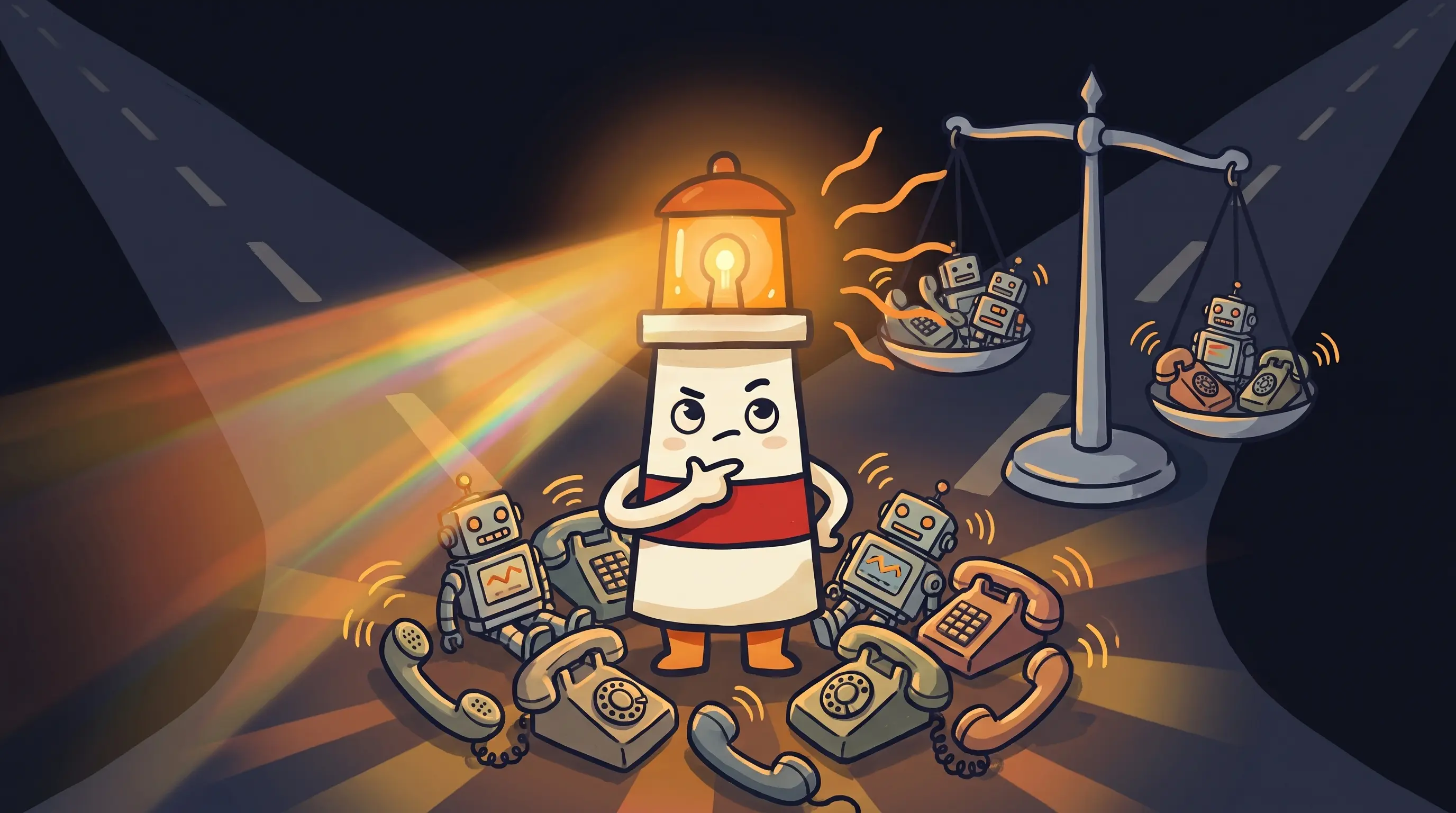
AI answering services fix this specific problem well. The technology is mature. Services like Goodcall have handled 4.7 million calls. The AI sounds human, books appointments, answers common questions, and texts you a summary.
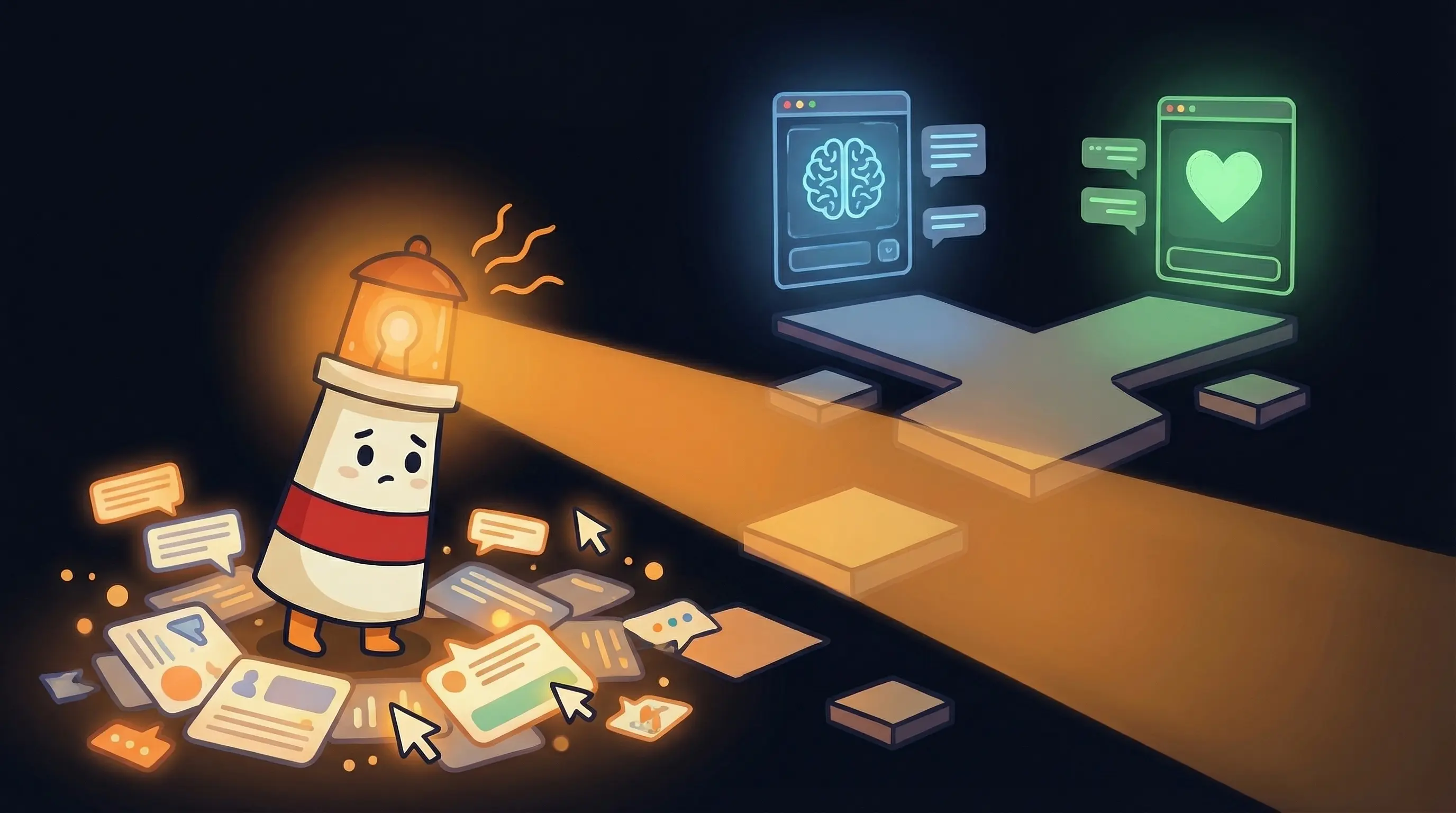
But here’s the part the phone AI vendors don’t emphasize: your customers don’t just call. They email. They text. They fill out contact forms. They send messages on WhatsApp and Instagram. They reply to your marketing emails with questions. And every one of those channels has the same problem — somebody needs to respond, and you’re not always available.
A study of communication patterns shows that email and messaging now account for 60-70% of customer-initiated business communication. Phone calls are declining year over year, especially among younger customers who prefer text-based interaction. If you only automate phone coverage, you’re solving the shrinking portion of the problem.
What AI Answering Services Do Well (And Where They Stop)
AI answering services are genuinely useful for businesses that get significant call volume. Here’s what they handle:
- Answer calls 24/7 with natural-sounding AI voices
- Book appointments directly into your calendar
- Answer common questions about hours, services, and pricing
- Transfer urgent calls to your cell phone
- Send you text or email summaries after each call
- Handle multiple simultaneous calls (no busy signals)
The leading services — Goodcall, Smith.ai, Dialzara, AI Front Desk — have proven the model works for phone coverage.
But every one of these services stops at the phone. They don’t handle email. They don’t manage scheduling requests that come via text. They don’t follow up with leads who submitted a contact form. They don’t send the proposal someone requested by email three days ago.
The phone is one channel. Your business runs on five or six.
The Real Math: Phone Coverage vs. Full Communication Coverage
Run this calculation with your own numbers. Most business owners who do it are surprised by the results.
Phone-only coverage (AI answering service):
- Monthly cost: $97-299/month
- Channels covered: Phone calls only
- Missed calls captured: ~90% improvement
- Email inquiries handled: 0%
- Scheduling requests via email: 0%
- Follow-up automation: 0%
- Total communication gap closed: ~30-40%
Full communication coverage (personal AI agent):
- Monthly cost: $29/month Pro, including $5 of managed model use each calendar month; optional prepaid top-ups
- Channels covered: Email, scheduling, messaging, follow-ups
- Email inquiries handled: 80-90% autonomously
- Scheduling requests via email: Handled end-to-end
- Follow-up automation: Automatic 3-day follow-ups
- Total communication gap closed: ~70-80%
The counterintuitive result: a personal AI agent costs less than most AI answering services and covers more channels. The gap exists because phone AI services need expensive voice synthesis and telephony infrastructure. Text-based AI agents use the same language models at a fraction of the cost.
From Phone-Only to Full Coverage: The Personal AI Agent Approach
A personal AI agent doesn’t just answer phone inquiries. It runs 24/7 in an isolated cloud environment, connected to your email, calendar, and messaging apps. It handles customer communication across every channel — not just the phone.
Here’s what changes:
The 6:47 PM email inquiry. Instead of sitting unread until morning, your agent responds within minutes with accurate information about your services. If the prospect wants to schedule a call, the agent checks your calendar and proposes times.
The weekend contact form submission. Your agent sends a personalized acknowledgment immediately, answers the prospect’s specific questions, and schedules a follow-up call for Monday morning — before your competitor even sees the inquiry.
The follow-up you keep forgetting. Three days after a consultation, your agent sends a tailored follow-up referencing the specific services discussed. This is the follow-up that most businesses never send — and it’s often the one that closes the deal.
The scheduling back-and-forth. A client needs to reschedule. Your agent handles the entire exchange — checking your availability, proposing alternatives, confirming the new time, updating your calendar. Zero emails from you.
The phone isn’t ignored in this model. Customers who call can still reach you or leave a message that your agent processes immediately. But the 60-70% of communication that happens through non-phone channels is now covered too.
AI Answering Service vs. Personal AI Agent
| Factor | AI Answering Service | Personal AI Agent |
|---|---|---|
| Monthly Cost | $97-299/month | $29/month + $5-20 API |
| Channels Covered | Phone only | Email, scheduling, messaging, follow-ups |
| 24/7 Coverage | Yes (phone) | Yes (all channels) |
| Appointment Booking | Via phone only | Via email, messaging, and calendar |
| Follow-Up Automation | No | Automatic, configurable timing |
| Email Handling | No | Triage, draft, and send autonomously |
| Data Isolation | Varies by provider | Isolated Kubernetes container per user |
| Setup Time | 15-60 minutes | 15-45 minutes + 5-7 day training |
| Simultaneous Handling | Unlimited calls | Unlimited across all channels |
| Learning Over Time | Limited | Improves from your corrections and patterns |
The honest comparison: AI answering services are excellent at the specific task of answering phone calls. But if your goal is to never miss a customer inquiry regardless of how it arrives, a personal AI agent covers more ground for less money.
When a Dedicated Phone Service Still Makes Sense
Not every business should skip the AI answering service. Here are the scenarios where phone-specific coverage matters:
- High call volume businesses (50+ calls/day) where phone is still the primary customer channel — medical offices, emergency services, restaurants
- Industries where voice interaction is expected — elderly care, legal intake, healthcare triage
- Businesses that need HIPAA-compliant voice AI — verify compliance with specific phone providers
- Complement to an AI agent — use a phone service for voice calls and a personal AI agent for everything else
For most businesses under 50 calls per day, the personal AI agent approach covers more of the communication landscape at lower cost.
How to Set Up a Personal AI Agent for Full Communication Coverage
-
Audit all your customer touchpoints (10 minutes). Phone, email, website forms, messaging apps, social DMs. Count how many inquiries come through each channel per week. Most businesses discover that phone is less than 40% of total inbound communication.
-
Sign up for BrainRoad (5 minutes). 30-day trial available. The onboarding wizard handles the technical setup — no command line, no coding.
-
Connect your email first (5 minutes). OAuth connection. The agent never stores your password. Your data runs in an isolated container. Start with email because it’s usually the highest-volume channel that’s currently unautomated.
-
Set handling rules (15 minutes). Define what the agent handles autonomously (meeting confirmations, routine inquiries, newsletter archives) versus what it drafts for your review (client communications, pricing questions, complex requests).
-
Configure WhatsApp or Signal notifications (5 minutes). Set urgency thresholds. You want 3-5 notifications per day for items that truly need your attention — not 30.
-
Run shadow mode for 5-7 days. The agent drafts all actions but waits for your approval. Review everything, correct mistakes, provide feedback. Most users reach 90%+ accuracy by week two.
-
Expand to autonomous operation. After shadow mode, let the agent handle low-risk categories without review. Expand gradually as trust builds.
Total: 40 minutes of setup plus a week of 10-minute daily reviews. If you need dedicated phone coverage as well, you can always add a phone-specific service alongside your AI agent — the two complement each other.
Your Monday Morning Communication Audit
- Pull your phone records AND email inbox for the last 30 days. Count missed calls, unanswered emails, and leads that went cold. Most businesses are surprised that email gaps exceed phone gaps.
- Calculate the cost per missed inquiry. Multiply missed inquiries across all channels by your close rate and average deal value. This number determines your budget.
- Decide: phone-only or full coverage? If phone represents 60%+ of your customer inquiries, start with a phone service. If email and messaging dominate, start with a personal AI agent.
- Start the 30-day trial. BrainRoad’s 30-day trial covers enough to test the concept. Connect your email and run shadow mode for a week.
- Measure after 2 weeks. Track total response rate across all channels. The goal isn’t just fewer missed calls — it’s fewer missed opportunities regardless of channel.
The AI answering service era solved the phone problem. The personal AI agent era solves the communication problem. Your customers don’t care which channel you answer on — they care that someone answers.
See the governed answering-service route before you start a trial
This pilot page shows the exact verified-agent proof stack for answering-service buyers: identity, memory, governance, proof of work, and human handoff.
Open the AI Answering Service RouteFrequently Asked Questions
How much does an AI answering service cost?
Standalone AI answering services run $97-299/month for phone coverage only. A personal AI agent on BrainRoad costs $29/month and handles email, scheduling, and messaging in addition to customer inquiries. If you’re paying for phone-only coverage, you’re solving one channel while leaving the rest unattended.
Will callers know they're talking to AI?
With dedicated phone AI services, the best ones sound remarkably human. With a personal AI agent approach, most customer communication happens through text-based channels (email, messaging) where AI already feels natural. The small percentage of interactions that truly require a phone call can still route to you directly.
Can an AI answering service book appointments?
Yes — most AI answering services integrate with Google Calendar and Outlook. But a personal AI agent goes further by handling the entire scheduling workflow across channels, including email-based scheduling requests, rescheduling, and follow-up confirmations.
What industries benefit most from AI answering services?
Service businesses with predictable inquiry patterns — HVAC, plumbing, dental, legal, real estate. But the bigger insight is that these same businesses lose even more revenue from unanswered emails and missed follow-ups than from missed calls. A personal AI agent covers all of it.
How long does it take to set up?
Standalone phone services set up in 15-60 minutes. A personal AI agent on BrainRoad sets up in about the same time through the onboarding wizard, but covers email, scheduling, and messaging from day one — not just phone inquiries.
What is the difference between an AI answering service and a personal AI agent?
An AI answering service handles phone calls. A personal AI agent handles phone inquiries, email, scheduling, follow-ups, and messaging — all from one platform, running 24/7 in an isolated cloud environment. One solves the phone problem. The other solves the communication problem.
Can an AI handle multiple customer inquiries at once?
Yes. Unlike human receptionists, AI handles unlimited simultaneous inquiries across all channels — phone, email, and messaging. No busy signals, no delays, no queue.
Is a personal AI agent secure for business data?
BrainRoad runs each agent in an isolated Kubernetes container with no shared infrastructure. Your data never mixes with other users. Your API keys stay in your container. This is materially different from SaaS tools that process your data on shared servers.