
Anthropic's Memory Push Raises the Bar for Governed AI Employees
On this page
One developer team built 15 skill files, a custom memory CLI with 12 commands, routing policies, and a ‘Standard Reminders Block’ that had to be manually copied into every agent delegation prompt. Every single call. They did all of this just to compensate for one missing feature: persistent memory.
Meanwhile, Rakuten deployed Anthropic’s Managed Agents with memory and cut error rates by 97%, reduced costs by 27%, and dropped latency by 34% on agent workloads.
That gap — between teams hand-soldering memory infrastructure and teams just running — is exactly what Anthropic’s April 2026 launch changes. But the raw performance numbers, impressive as they are, aren’t the most important part of this story. The more interesting question is what persistent memory reveals about why agent deployments fail in the first place — and what it takes to actually run AI like a governed employee rather than a very expensive chatbot. I’ll come back to that after we cover what actually shipped.
If you’re evaluating agentic AI for real work — not demos, not proofs of concept — this launch matters directly to your architecture decisions.
What Stateless Agents Actually Cost Your Team
Here’s how stateless agent deployments actually break in production. Not dramatically. Quietly.
Your orchestrator agent delegates work to a specialist. The specialist completes the task well. The session ends. The next session starts — and the specialist has forgotten everything it learned. The orchestrator, if it remembers to include the right skill file in the next delegation prompt, can partially reconstruct the context. If it forgets — and it will forget — the specialist proceeds without that context and produces worse work.
This is the prompt fragility failure mode: knowledge transfer in stateless multi-agent systems depends entirely on whether the orchestrator correctly includes every relevant context reference in every delegation prompt. One missing skill file reference, and your specialist agent effectively doesn’t know the skill exists.
Teams compensate in predictable ways. Custom memory CLIs. Per-agent skill files loaded manually via prompt instructions. Routing policies. Checklists of context the orchestrator must manually include each call. All of it fragile. All of it maintained by humans. All of it subject to staleness the moment the agent learns something new and the skill file doesn’t get updated.
Think of it like a software team working in shifts. Each new engineer arrives with no notes from the prior shift, no handoff document, no context on what was tried and why. They’re capable. They’re smart. But they keep starting from zero. That’s the structural problem persistent memory solves — not by making agents smarter, but by making them capable of continuity.
What Anthropic Launched on April 23, 2026
The launch is called Memory for Managed Agents and it entered public beta on April 23, 2026. Three things shipped together.
Persistent Memory Stores
Agents can now read and write to a dedicated memory directory mounted at /mnt/memory/ inside their container. Up to 8 memory stores per session, each capped at roughly 100KB (about 25K tokens). Stores can be read-only (shared reference material) or read-write (active learning). Memory persists across sessions.
Cross-Agent Context Sharing
What one agent learns, other agents in the same workspace can access. This eliminates the orchestrator-as-relay problem — agents no longer depend on the orchestrator to manually pass learned context between specialists.
Governed Audit Trails
Every memory write creates an immutable version. All writes appear in the session event stream for tracing. That means every change to an agent's memory is auditable, reversible, and attributable. Per-write, not per-session.
There’s also a capability called Dreaming — where agents reflect on accumulated sessions and actively curate memories to surface patterns that weren’t explicitly flagged. Not just storage. Active knowledge consolidation.
The customers Anthropic cited at launch are worth examining. Rakuten’s numbers (97% error rate reduction, 27% lower cost, 34% lower latency) are dramatic. Netflix cited cross-session continuity. Wisedocs deployed it for recurring-issue detection in document verification pipelines. These aren’t chatbot use cases. These are production workloads where agents need to get better over time, not just perform once.
Why These Numbers Hide the More Important Problem
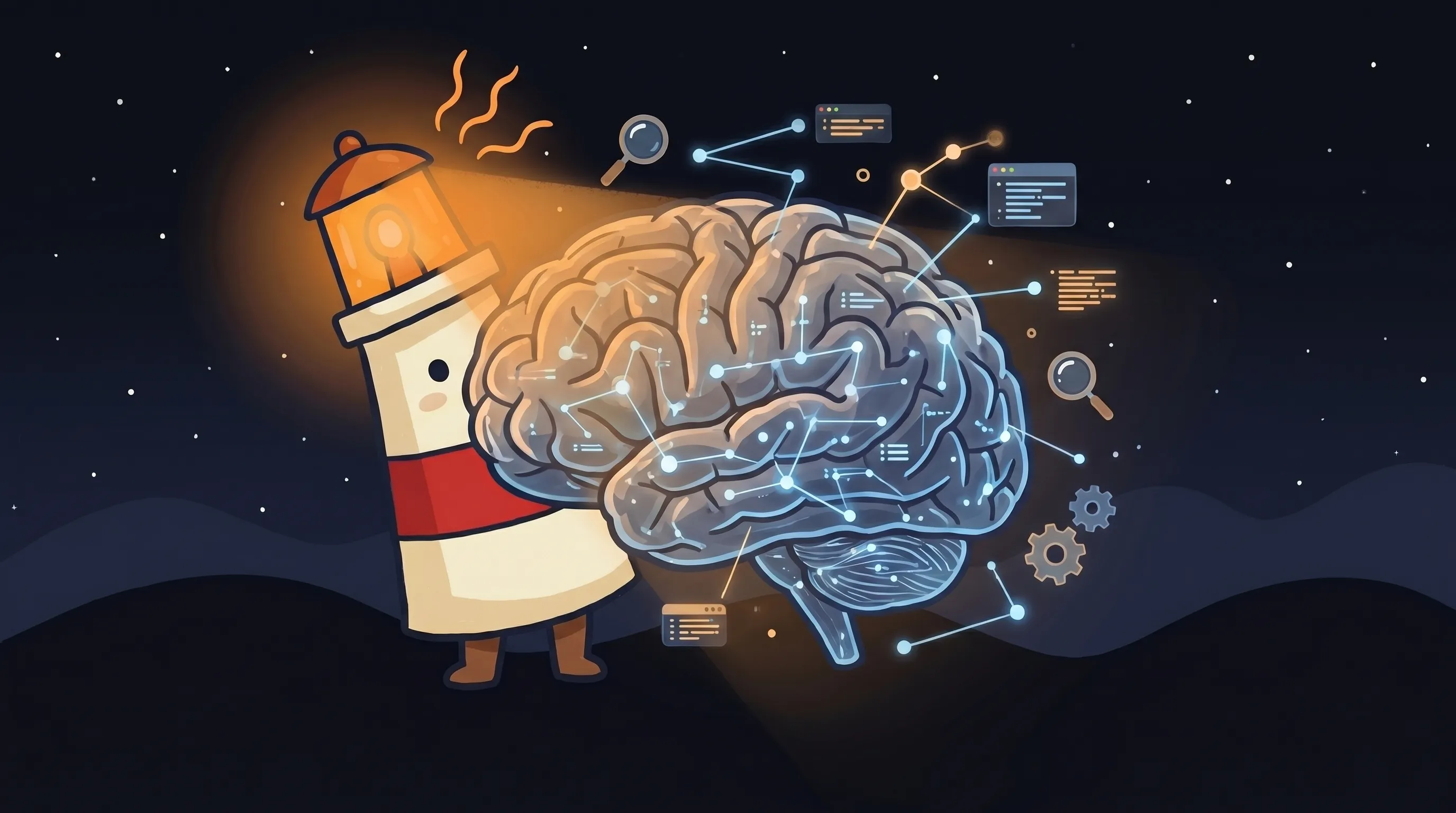
 Beacon says: memory without guardrails isn’t intelligence — it’s a liability. The smarter AI gets, the brighter governance needs to shine.
Rakuten’s 97% error rate reduction is striking. But ask what was causing those errors before. In most stateless agent deployments, errors cluster around context loss — the agent didn’t have the right information, or had stale information, or had conflicting information that nobody resolved. Fix the memory layer, and you fix a category of errors that has nothing to do with the model’s capabilities.
That’s the non-obvious insight here. The agents running before the memory launch weren’t failing because they were dumb. They were failing because they were amnesiac. And amnesia is an infrastructure problem, not an intelligence problem.
Here’s where this gets interesting for anyone building or deploying agents at scale.
Persistent memory doesn’t just fix errors. It shifts what the hard problems are. Before platform-native memory, the primary design challenge was plumbing: which storage mechanism, how do you wire it in, how do you make agents access it reliably. Those problems are now largely solved by the platform.
The problems that replace them are governance problems:
- Scope — Which agents should have access to which memory stores? An agent that handles billing shouldn’t be reading from an agent that handles personnel.
- Freshness — When is a memory stale? If your pricing agent learned your discount policy six months ago and it’s since changed, that memory is now actively harmful.
- Conflict resolution — Two agents learn different things about the same topic. Which memory wins? Who decides?
- Trust — Who audits what agents are writing to memory? What’s the escalation path when an agent writes something incorrect and other agents start citing it?
These are not technical questions. They’re organizational questions that happen to have technical levers. And most teams deploying agents right now haven’t started asking them — because they’ve been too busy building plumbing.
This connects directly to a distinction we’ve written about before — the difference between an AI employee and an AI agent. Raw capability isn’t what makes an AI trustworthy in a work context. Identity, memory, and governance are. Anthropic just shipped the memory piece. The governance layer is still mostly your problem.
How the Memory System Actually Works Under the Hood
For builders who need to understand the technical reality: memory stores are filesystem-mounted at /mnt/memory/ inside the agent container. Each store is a workspace-scoped collection of text documents. Up to 8 stores per session. Each store capped at roughly 100KB.
Stores can be configured read-only (useful for shared reference material that agents should read but not modify) or read-write (active learning, preference accumulation, case library building). When an agent writes to memory, the write is versioned immediately. It shows up in the session event stream. It can be rolled back. This is what ‘per-write audit trail’ means in practice.
There’s also a context editing capability — the platform automatically clears stale tool calls and results from within the context window when it’s approaching token limits, preserving conversation flow. This extends how long agents can run without manual intervention. Less babysitting. More autonomous operation.
The broader picture: Anthropic has now consolidated memory, multi-agent orchestration, and evaluation (called Outcomes) into a single runtime. That puts Claude Managed Agents in direct competition with tools like LangGraph, CrewAI, external evaluation frameworks, and retrieval-augmented-generation (software that searches your documents to answer questions) memory architectures. This was a deliberate consolidation play, not feature creep.
The Tradeoff Nobody in the Press Release Mentioned
Consolidation simplifies deployment. It also concentrates visibility.
Anthropic designed Managed Agents so that memory, orchestration, and tracing share context and state in one place. That means the platform sees every decision agents make. Every memory write. Every session transition. Every error. For enterprises with data-sovereignty requirements or multi-vendor strategies, that’s worth pausing on.
The tradeoff isn’t unique to Anthropic — any platform that consolidates agent infrastructure creates a similar dynamic. But it’s worth naming clearly: you’re trading modularity and data control for operational simplicity and richer traceability within one vendor’s walls.
- Lock-in surface area has grown — Memory, evals, and orchestration are now Anthropic-native. Migrating later means rebuilding all three layers simultaneously.
- Data sovereignty — Every agent decision is visible to the platform. For regulated industries, that visibility needs to be evaluated against compliance requirements before deployment.
- The 100KB per-store cap — This works well for preference and pattern accumulation. It’s not designed for document-scale retrieval. If you need agents to search large corpora, you’ll still need an external search layer alongside the memory system.
- Dreaming is still early — The active knowledge-consolidation capability is compelling in principle. In production, the reliability of what agents choose to surface versus ignore is not yet well-documented.
- Freshness management is manual — The platform provides versioned writes and audit trails. It does not currently provide automatic memory expiry or staleness detection. You own that logic.
Your Monday Morning Governed-Agent Checklist
If you’re running agents in production — or evaluating whether to — here’s how to think through the memory and governance layer this week.
Audit your current context-passing logic
List every place your orchestrator manually passes context to subagents. If the list is longer than 5 items, you're carrying maintenance debt that persistent memory can eliminate.
Define memory scope per agent role
Before touching the platform, map which agents should read from which stores. Billing agents and HR agents should not share memory stores. Scope this on paper before you configure it in the platform.
Set a freshness policy — even a rough one
Decide how often memory gets reviewed for staleness. Monthly is a reasonable starting cadence for most business-context agents. If your pricing or policy data changes more frequently, shorten the cycle.
Identify your conflict-resolution owner
Assign a human who is accountable when two agents have contradictory memories about the same topic. This is not an AI problem — it's an org chart problem. Solve it before your agents do.
Test rollback before you need it
Every memory write creates an immutable version. Verify you can roll back a write in your test environment. If you've never done it, you don't know if your access model is configured correctly.
If you're on Managed Agents, evaluate the consolidation tradeoff now
Map which components of your stack are now available natively (memory, orchestration, evals). Decide deliberately whether to consolidate or maintain separate systems — before the path of least resistance makes the decision for you.
If you're not on Managed Agents, benchmark your plumbing cost
Count how many custom memory components your team maintains. If it's more than a few, quantify the maintenance hours per month. That's the baseline to compare against platform adoption costs.
What This Changes for Anyone Building Serious AI Agents
- Anthropic launched persistent memory for Managed Agents in public beta on April 23, 2026 — including per-write audit trails, cross-session learning, and cross-agent context sharing within a workspace.
- Rakuten reported a 97% error rate reduction, 27% lower cost, and 34% lower latency after adoption — numbers that reflect how much failure was caused by context loss, not model limitations.
- The primary design challenges have shifted from plumbing (how do we store memory?) to governance (who owns what agents know, and who’s accountable when it’s wrong?).
- Anthropic now consolidates memory, orchestration, and evaluation into a single runtime — simplifying deployment but concentrating every agent decision inside one vendor’s platform.
- Freshness, conflict resolution, and scope management are not handled automatically by the platform. They remain the deploying team’s responsibility.
- Start with scope-mapping and conflict-resolution ownership before configuring memory — the governance questions are harder than the technical ones.
The teams that worked through the manual-memory era — 15 skill files, custom CLIs, reminders checklists — were never doing it because they wanted to. They were doing it because the alternative didn’t exist. It exists now.
Which means the maintenance burden of stateless agents is no longer a technical constraint. It’s a choice. And the teams that keep making it — because they haven’t evaluated the alternative, or because the migration feels like too much work right now — will keep paying compound interest on that choice every week. The gap between agents that remember and agents that don’t is a gap that gets wider over time, not smaller.
Frequently Asked Questions
What is Anthropic's Memory for Managed Agents?
Memory for Managed Agents is a persistent storage layer launched in public beta on April 23, 2026. It allows AI agents to save what they learn across sessions in structured memory stores, share that context with other agents in the same workspace, and leave an immutable audit trail for every write. Agents can create, read, update, and delete documents in a dedicated memory directory that persists between conversations.
How is this different from just giving an agent a large context window?
A large context window holds information for one session and then it’s gone. Persistent memory stores information across sessions and makes it available to future runs of the same agent — or other agents in the same workspace. Context windows are also limited in size and get expensive at scale. Memory stores are structured, versioned, and governed in ways a context window can’t be.
What are the limits of the memory system?
Each session supports up to 8 memory stores, with each store capped at approximately 100KB (around 25K tokens). Memory is mounted at /mnt/memory/ inside the agent’s container. The system is designed for preference accumulation, pattern learning, and case-library building — not for large-document retrieval, which still requires a separate search layer.
What's the main risk of consolidating into Anthropic's platform?
Consolidation simplifies deployment but concentrates visibility. When memory, orchestration, and evaluation all run on the same platform, that platform sees every agent decision. For enterprises with data-sovereignty requirements or multi-vendor strategies, this tradeoff needs deliberate evaluation before adoption. The practical risk is lock-in: migrating later means rebuilding memory, orchestration, and eval layers simultaneously.
Does the platform handle memory freshness automatically?
No. Every write is versioned and auditable, which means you can review and roll back changes. But automatic staleness detection and memory expiry are not currently built into the platform. Your team is responsible for defining and enforcing freshness policies — including deciding when agent memories about pricing, policies, or procedures are out of date.
Related BrainRoad guides
Sources
- Anthropic’s Managed Agents memory: what it changes — Wire Blog
- Anthropic Managed Agents Add Memory — OpenTools
- Anthropic wants to own your agent’s memory, evals, and orchestration — VentureBeat
- Anthropic’s Memory Push Turns AI into a Data Center Systems Problem — Data Center Knowledge
- Feature request: Persistent memory namespace for agent definitions — GitHub / anthropics/claude-code