Do not choose one AI agent runtime before your business knows what it needs
On this page
Two businesses. Same size. Same kind of work. One owner picked a single AI helper workspace six months ago and built everything around it. The other kept two running and let the work decide which one handled what. Today the first owner is looking at a migration. The second owner is just working.
The difference wasn’t luck. It was a question they asked early: what does my business actually need this AI to do — and is one runtime the right answer for all of it?
Most business owners never ask that question. They Google ‘best AI agent platform,’ pick the one with the most GitHub stars or the best marketing, and build their follow-up workflows around it. That works fine — until the platform ships a breaking change, or they realize it handles one type of task beautifully and another type badly, or a second option they dismissed six months ago has caught up fast. And in this space, fast means nine days.
If you’re comparing AI agent runtimes — specifically OpenClaw and Hermes — there’s something worth understanding before you commit to either one. They don’t actually compete at the same layer. I’ll get to what that means in a moment, because it changes the whole comparison.
How Fast Is the AI Agent Runtime Layer Actually Moving?
Here’s a number that should recalibrate your planning horizon.
Hermes Agent shipped v0.13.0 on May 7, 2026. Nine days later, on May 16, it shipped v0.14.0 — with 808 commits, 633 merged pull requests, 1,393 files changed, and 545 issues closed. Between those two releases alone, 215 community contributors touched the codebase.
That’s not a patch. That’s a near-complete rebuild of surface area in under two weeks.
The release before that — v0.12.0 to v0.13.0 — brought 864 commits and 588 merged PRs from 295 contributors. Two major releases. Nine days apart. A combined 1,672 commits.
This isn’t meant to impress you with numbers. It’s meant to make one thing clear: if you locked into a specific AI helper workspace six months ago based on a feature comparison, that comparison is obsolete. The thing you chose either got dramatically better, changed how it works, or fell behind something that barely existed when you were evaluating.
Google entered this space too. On May 20, 2026 — four days after Hermes v0.14.0 — Google introduced Agent Executor, its open-source distributed agent runtime standard, adding durable execution, session consistency, and secure sandbox isolation to the mix. The layer isn’t settling. It’s accelerating.
For a hosted AI assistant that runs your business follow-ups and customer messages, this velocity creates a specific risk: you build habits and workflows around one runtime’s behavior, and then the runtime shifts under you.
The answer isn’t to wait. It’s to not put all your business workflows on a single runtime before you understand what each one actually does.
OpenClaw vs Hermes: They’re Not Competing for the Same Job
Here’s the thing most AI agent platform comparisons get wrong.
OpenClaw and Hermes are built around fundamentally different ideas about where the work should happen. OpenClaw is built around a Gateway — a central control plane that routes work to agents and keeps each one isolated. The gateway is the load-bearing element. Agents are interchangeable workers the gateway assigns tasks to.
Hermes inverts that. The agent itself is the load-bearing element. It executes a task, evaluates how it went, extracts a pattern, and gets better at that type of task over time. There’s no central router. The agent learns.
For a business owner, that distinction matters in practical terms.
OpenClaw: Predictable, contained workflows
Each agent has scoped permissions. One agent cannot read another agent's files or run its code. If you have a follow-up workflow that needs to happen the same way every time, OpenClaw's Gateway model keeps it predictable. OpenClaw has 13,700+ skills and plugins — if a business tool exists, there's probably already a connection built.
Hermes: Deep reasoning that improves
Hermes is built for tasks that require judgment — reading context, synthesizing scattered notes, handling ambiguous requests. It learns from how previous tasks went. v0.14.0 now supports 22 messaging platforms including Teams, LINE, and SimpleX. It shaved 19 seconds off startup time and made browser-based tasks 180x faster.
Neither one is 'better' — they work at different layers
About 20% of the r/openclaw community runs both together, using OpenClaw as the coordinator and Hermes as the specialist that handles complex work. That's not an edge case. It's the architecture the experienced community has converged on.
Choosing between them as if it’s a binary decision is the wrong frame. Choosing the wrong system for your actual work isn’t a feature gap — it’s a category mismatch that generates operational debt for months.
What Each AI Agent Runtime Actually Does for Business Owners
Let’s make this concrete. You’re running a small business. You have customer emails, leads to follow up with, files and notes scattered across tools, and paperwork that never seems to turn into tasks. Where does each runtime actually help?
OpenClaw’s strength is routing and containment. If you have a defined workflow — new lead comes in, draft a follow-up, flag it for review — OpenClaw keeps that predictable. Its 13,700+ plugins mean it connects to most business tools you’re already using. Its Gateway isolates each piece of work so one workflow can’t accidentally bleed into another.
Hermes’s strength is judgment under ambiguity. A client sends a long email referencing three past projects, mentions a problem, and asks a question that depends on context spread across six previous messages. Hermes reads all of it, synthesizes, and drafts a reply that accounts for the history. OpenClaw would route the task. Hermes would actually think through it.
The real question isn’t which one to use. It’s which one handles which type of work in your business.
Two Runtimes, One Set of Business Files
This is the part that changes the comparison entirely.
Both runtimes can work from the same set of business files — your client notes, past emails, project summaries, SOPs, pricing documents. The AI helper doesn’t need to be locked to one runtime to remember your business context. The files and notes are the memory. The runtime is just the engine that reads them and does the work.
At BrainRoad, we run OpenClaw and Hermes side by side in the same workspace. The same business files feed both. The same review step — check with you before anything gets sent, posted, or changed outside the system — applies to both. You’re not managing two separate AI systems. You’re managing one set of business context with two engines that handle different types of work.
That’s the posture worth building toward. Not ‘pick the right one’ but ‘let the type of task determine which engine handles it.’
Practically, that looks like this: OpenClaw routes the structured stuff — new lead notifications, scheduled follow-ups, standard customer message responses. Hermes handles the complex stuff — the client email that needs real synthesis, the proposal draft that requires pulling from three different past projects, the response that needs actual judgment.
Both of them draft. Neither of them sends. You review and approve before anything reaches a customer. The approval step isn’t a limitation — it’s the point. The AI handles the prep work at whatever hour it arrives. You handle the final call.
What Goes Wrong When You Lock Into One Runtime Early
It’s Monday morning. You’ve built your entire follow-up workflow on OpenClaw — lead comes in, gets routed, draft gets queued. It’s working.
Then a client sends a three-page email about a complicated situation involving two projects, a billing dispute, and a question about your availability for a call next week. Your OpenClaw workflow routes it to ‘draft a reply.’ The reply comes back technically correct and completely wrong — it answered the last question and missed the actual problem.
Or the reverse: you’ve built everything on Hermes because the judgment quality is excellent. Then you realize you need a clean, predictable pipeline for onboarding new clients — the same seven steps, every time, with nothing varying. Hermes will do it, but you’re using a reasoning engine to follow a checklist. That’s the wrong tool for the job, and you’ll feel the overhead.
The harder version: you commit to one runtime, build institutional knowledge around its quirks, and then it ships a major update that changes how it handles memory or messaging. Hermes shipped two such updates nine days apart in May 2026. If your workflows assumed the old behavior, you’re migrating.
A 30-day side-by-side test comparing both runtimes on identical hardware found OpenClaw took roughly 4 hours to fully configure versus about 90 minutes for Hermes. Hermes’s setup tool even detected an existing OpenClaw install and offered to migrate settings automatically. The point: setup time isn’t a reason to skip the comparison. Running both isn’t twice the work.
Your First Week Running Both Runtimes
You don’t need to architect a full two-runtime system from day one. You need to run a parallel test that teaches you which types of tasks each runtime handles better for your specific business.
Here’s how to start. If you’re exploring agentic AI helpers for your business, this first-week approach keeps you in control while you learn what each engine actually does.
- Day 1 — Build your business file set first. Before you configure either runtime, write down the ten things you want AI help with most: customer email replies, lead follow-ups, proposal drafts, whatever they are. Then gather the files those tasks need — client notes, past proposals, your pricing, your standard reply templates. This is the shared context both runtimes will work from. Do this before touching any runtime configuration.
- Day 2 — Set up Hermes for the judgment tasks. Point it at your business files. Give it two or three tasks that require reading context and synthesizing — a complex client reply, a proposal draft that references past work. Let it produce drafts. Don’t send anything yet. Just evaluate the output quality.
- Day 3 — Set up OpenClaw for the rule-based tasks. If you have a defined follow-up sequence, a new-lead notification flow, or a repeating weekly task, wire that through OpenClaw’s Gateway. These are tasks you could write as explicit rules. OpenClaw’s 13,700+ skill connections mean your existing business tools are probably already supported.
- Day 4-5 — Run the same task through both and compare. Take one ambiguous customer message — the kind where the right reply depends on context — and send it through both runtimes. Compare the drafts. You’ll quickly see which engine handles that type of work better for your business.
- If cost is a concern: Check the real monthly cost of running a personal AI agent — running two runtimes doesn’t necessarily mean double the cost, since they’re handling different task volumes.
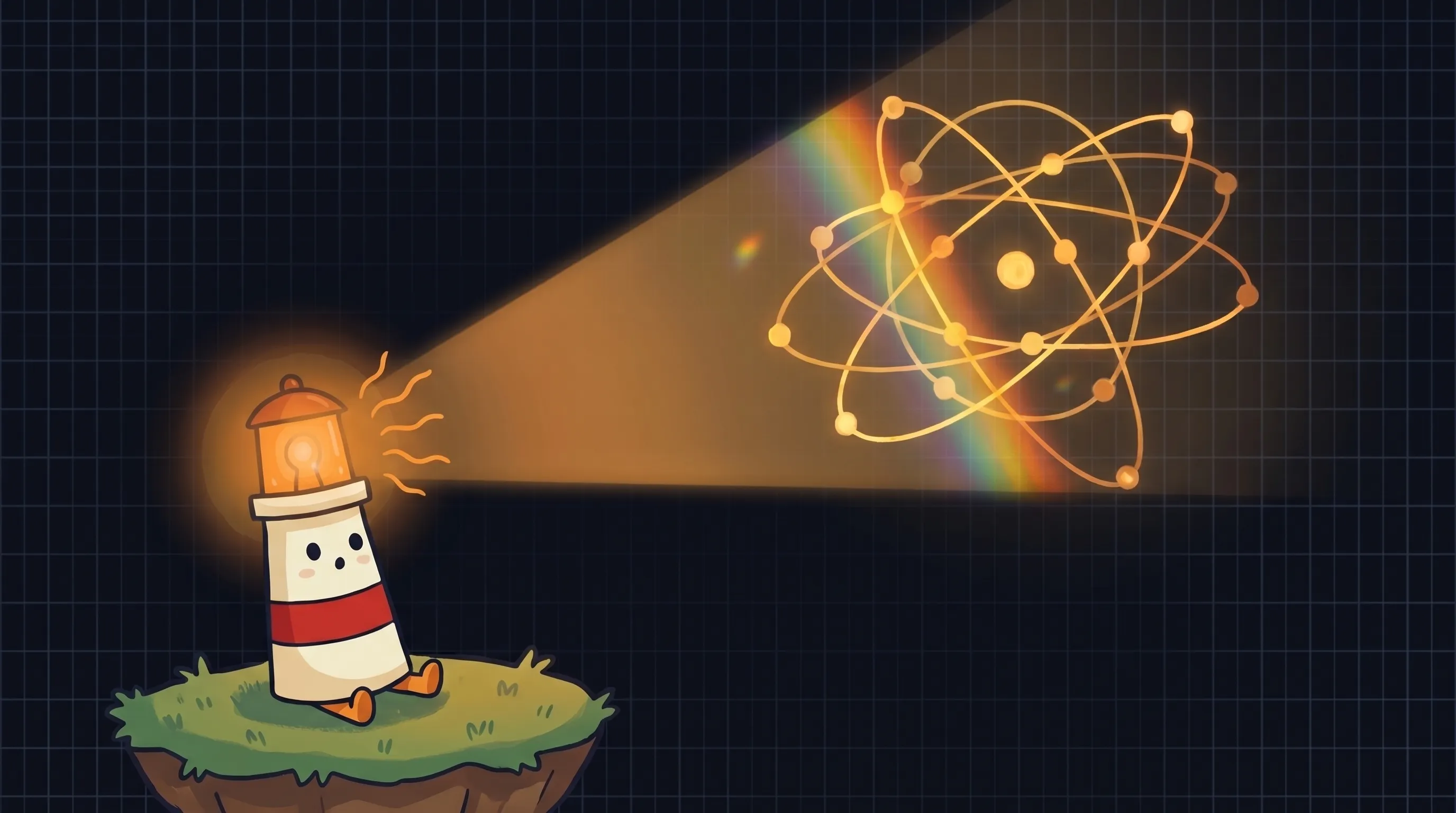 Some tools look identical until you shine a light on what you actually need them to do.
- Day 6-7 — Set the approval boundary once, for both. Whatever you decide about which runtime handles what, set the same rule for both: nothing gets sent to a customer, posted publicly, or changed in your business tools without a review step. The AI prepares. You approve. That boundary applies regardless of which engine drafted the work.
Where the Two-Runtime Approach Gets Complicated
- Keeping context consistent. If Hermes drafts a reply to a client and OpenClaw routes the next message from that same client, they need to be working from the same updated notes. If you don’t have a shared file system both runtimes read from, they’ll have incomplete context. The files are the shared memory — maintain them in one place, not two.
- Security posture differs between runtimes. As of May 2026, OpenClaw carries a documented vulnerability with a severity score of 8.8, and a security audit found 341 malicious skills in its plugin marketplace. Hermes reports no CVEs with a sandboxed approach. If your business handles sensitive client data, audit what you’re installing from OpenClaw’s marketplace before connecting it to customer information.
- Velocity means your evaluation expires fast. The comparison you run today will look different in 30 days. Build workflows that can adapt — don’t hardcode assumptions about which runtime handles what into tools your whole business depends on. Document your reasoning so when something changes, you remember why you made the call.
- More setup surface area. Two runtimes means two configurations to maintain, two places where something can break, and two sets of release notes to track. For a solo business owner, that’s real overhead. The mitigation: use a hosted platform that handles the infrastructure, so you’re managing the business logic rather than the runtime maintenance.
- OpenClaw’s plugin count is both an asset and a risk. 13,700+ skills is a lot of capability — and a lot of third-party code with varying quality and security. Vet what you install, especially anything that touches customer data or your financial tools.
How to Know the Setup Is Working
- You can point to a specific task type and say which runtime handles it and why — not because you read a comparison, but because you tested it on your actual work.
- Both runtimes are reading from the same business files. A client note updated after a Hermes-drafted reply is visible the next time OpenClaw routes a task from that client.
- You haven’t approved a draft that felt wrong for context reasons. If the AI is drafting replies that miss obvious client history, the shared file set isn’t complete yet.
- The review step is taking you less than two minutes per draft. If it’s taking longer, the draft quality is too low and the runtime isn’t the right fit for that task type.
- You’ve identified at least one task type where you switched from one runtime to the other because the output quality was clearly better.
What This Means for Your AI Agent Platform Choice
The experienced community that has spent the most time with these runtimes has largely stopped asking ‘which one should I use?’ About 20% of the r/openclaw community runs both together — OpenClaw coordinating, Hermes doing the deep work. That’s not a niche configuration. It’s what people end up at after trying to force one runtime to do everything.
The honest summary: OpenClaw wins on integrations and predictable routing. Hermes wins on memory, learning, and judgment. No single runtime wins on everything — and the people who tried to make one do everything mostly learned that the hard way.
The question isn’t which AI agent runtime to trust with your business. The question is what your business actually needs each runtime to do — and whether you’ve run enough real tasks through both to know the answer.
The runtime layer is moving fast enough that the business owners who stay flexible — shared files, shared approval boundary, two engines for two types of work — are the ones who won’t be rebuilding from scratch when the next nine-day release window arrives.
What This Means for How You Set Up AI Help Today
- The runtime layer is not stable enough for a single-platform bet. Two major Hermes releases shipped nine days apart in May 2026. Google entered the space four days later. Evaluate on architecture fit, not current feature lists.
- OpenClaw and Hermes solve different problems at different layers. OpenClaw is a Gateway-based coordinator. Hermes is a learning loop built around the agent itself. They’re not substitutes — they’re complements.
- Approximately 20% of the experienced community already runs both together. This isn’t exotic. It’s the natural endpoint of trying to force one runtime to handle all task types.
- The shared file set is the critical investment. The business context — client notes, past work, pricing, templates — is what makes either runtime useful. Build that first. The runtimes read from it. You update it. Both stay current.
- The approval boundary applies to both runtimes equally. Draft first, review second. Nothing external — no customer email, no posted content, no changed record — moves without a human check. That rule doesn’t change based on which engine drafted the work.
Frequently Asked Questions
Do I need technical skills to run OpenClaw and Hermes side by side?
For self-hosted setups, some familiarity with command-line tools helps — Hermes now installs via a single pip command, and OpenClaw has its own setup process. A hosted platform like BrainRoad handles the infrastructure for you, so you configure the business logic (what tasks the AI handles, what it can see) without managing the runtime itself. The parallel test described in this article is the same either way — the evaluation happens at the task level, not the infrastructure level.
What's the difference between an AI agent runtime and an AI agent platform?
A runtime is the engine — the software that actually runs the AI helper and executes tasks. OpenClaw and Hermes are runtimes. An AI agent platform is typically a hosted service that runs one or more runtimes for you, adds a management interface, handles updates, and gives you a place to configure what your AI helper can see and do. The distinction matters because you can run two runtimes on one platform — you don’t need two separate accounts or services.
Is it more expensive to run two AI agent runtimes than one?
Not necessarily. The main cost drivers are API usage (how much the AI model processes) and hosting (where the runtime runs). Running two runtimes on the same hosted platform doesn’t automatically double either cost — you’re splitting your task volume between them, not running the same tasks twice. If one runtime handles your structured follow-up workflows and the other handles complex drafts, your total API usage may be similar to what you’d spend running all of it through a single less-optimized runtime. The real cost breakdown is covered in depth in our article on the real monthly cost of running a personal AI agent.
How fast should I expect OpenClaw vs Hermes to handle tasks?
Hermes v0.14.0 cut its startup time by roughly 19 seconds and made browser-based tasks 180 times faster by using a persistent connection to the browser instead of starting a new session each time. For most business tasks — drafting a reply, synthesizing notes, routing a follow-up — both runtimes are fast enough that response time won’t be the deciding factor. The performance differences matter more at scale or for real-time use cases.
What if one of these runtimes changes significantly after I've built workflows around it?
This is the core risk the article describes. Hermes shipped 808 commits between v0.13.0 and v0.14.0 in nine days. The mitigation: keep your business files and context in a format both runtimes can read, document which runtime handles which task type and why, and avoid hardcoding assumptions about runtime behavior into tools your whole business depends on. A hosted platform that manages runtime updates for you reduces the exposure — you get the improvements without manually managing the migration.
Sources
- Hermes Agent v0.14.0 Release Notes — NousResearch GitHub
- Hermes Agent RELEASE_v0.14.0.md — NousResearch GitHub
- Hermes Agent vs OpenClaw: When to Use Which — DEV Community
- AI Agent Frameworks Compared: Complete Guide May 2026 — Hundred Tabs
- OpenClaw vs Hermes 2026: 1,300 Reddit Comments Analyzed — Kilo
- OpenClaw vs Hermes: 30-Day Side-by-Side Comparison — BetterClaw
- Hermes Agent vs OpenClaw: My Honest Opinion After Testing Both — AdvenBoost
- Agent Executor, Google’s Distributed Agent Runtime — Google Cloud Blog
- AI Agent Platform Comparison 2026: 12 Tools Ranked — Totalum