How One Solopreneur Built a 3-Person AI Team That Never Sleeps
On this page
Your competitor just shipped their newsletter, replied to three leads, and queued next week’s social content. It’s 6:47 AM. They’re still asleep.
You’ve got 11 tabs open — one chatbot for writing, one for research, one for outreach, a spreadsheet you update manually, and a task manager you check when you remember. None of them talk to each other. None of them work when you’re not working. When you close the laptop, everything stops.
That’s not an AI team. That’s a collection of AI tools. There’s a real difference — and once you see it, you can’t unsee it. I’ll show you what the actual architecture looks like after we cover the three builders who figured it out first. One of them runs a million-dollar business with zero employees. Another built his team on a Mac Mini sitting in an apartment in the Philippines. And there’s a specific design decision all of them got right — about how their agents remember things — that most tutorials skip entirely.
You’re Not Missing Better Tools — You’re Missing an Org Chart
If you’re exploring what personal AI assistants can actually do, the first thing to understand is this: the problem isn’t capability. The technology available right now is genuinely extraordinary. The problem is structure.
Solo founders who plateau are doing everything manually — strategist, researcher, writer, editor, marketer, analyst, customer support, back office. All of it, alone. That’s not a workflow. That’s a slow-motion ceiling.
The founders who escape that ceiling aren’t using fancier AI. They changed how they think about it. Instead of ‘I’m a person who uses AI tools,’ they operate as the CEO of a small company — and their AI systems are the team members with defined roles, responsibilities, and lanes. That mental model shift sounds simple. It changes everything about what you build and how you build it.
Jacob Bank runs a million-dollar business with zero employees. His entire marketing operation — posting everywhere, building a 50,000+ subscriber newsletter, running weekly webinars — is him and what he describes as roughly 40 AI agents. Each one has a specific function inside a defined workflow. Not 40 tabs. An org chart.
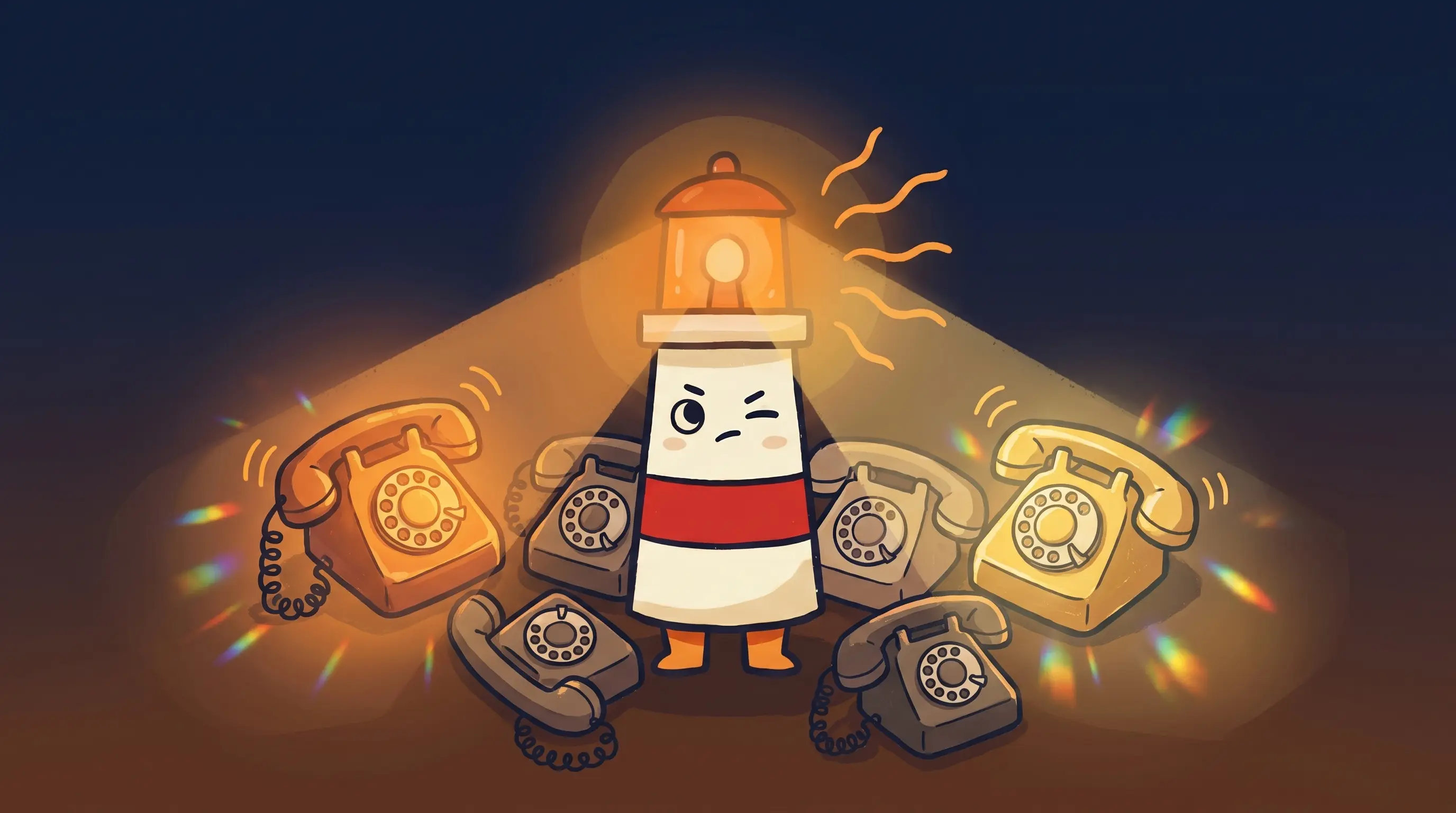
 Beacon says: with the right AI crew behind you, you’re never really working alone.
Three Real AI Teams That Are Running Right Now
These aren’t demos or thought experiments. These are builders who shipped working systems and documented what happened.
The Council — Aaron Sneed, Defense-Tech Founder
Aaron built 'The Council,' a group of 15 custom AI agents helping him run a defense-tech business solo. The lineup includes a chief of staff agent, a legal agent, and an HR agent. Each agent has a defined domain. The chief of staff coordinates. Aaron is the board.
The Overnight Crew — 6-Agent Research & Publishing System
One builder spent a few weeks assembling a 6-agent system covering research, writing, outreach, QA, scheduling, and a coordinator that ties it all together. No custom code. By morning, work was done. The coordinator agent is the key — without it, you have six individual tools, not a team.
The War Room — 10 Agents on a Mac Mini M4 Pro
Running from an apartment in the Philippines, this is a 10-agent system where each agent is its own AI instance with a distinct personality, tool access, domain expertise, and dedicated email address. It operates a real business. Six weeks of autonomous operation, documented in full.
Three different setups. Three different scales. The same underlying architecture: defined roles, a coordination layer, and something all three builders solved that most guides don’t mention.
The Memory Problem Nobody Mentions (This Is the One That Breaks Most Setups)
Here’s what I hinted at earlier: there’s one design decision that determines whether your agents remember anything useful tomorrow, or start from scratch every session.
It’s memory architecture. Specifically, how long different types of information live before they expire.
The War Room’s builder documented their shared context system explicitly. Status updates expire after 24 hours. Metrics persist for 7 days. Decisions stay alive for 30 days. Core business context — your positioning, your customers, your non-negotiables — persists indefinitely.
Without this structure, you get capable agents with amnesia. With it, you get a team that compounds — each day’s work building on the last. That compounding effect is why the solopreneurs running these systems can handle output volumes that a traditional 3-5 person team would struggle to match.
Think of it like an employee handbook that the team actually reads. The permanent layer tells every agent what the business is, who it serves, and what matters. The short-lived layers tell them what’s happening this week, today, right now. Both are necessary. Most setups only have the second one — and they wonder why their agents keep repeating context they’ve already provided.
How to Map Your AI Org Chart
You don’t need 15 agents to start. You need three functional layers: a coordinator, a set of specialist workers, and a human review checkpoint for anything that touches money, relationships, or public reputation.
Here’s how the roles break down for a typical solopreneur operation:
The Coordinator
This agent receives your high-level intention ('publish a newsletter this week about X') and routes tasks to the right specialists. It holds the permanent context — your voice, your positioning, your customer profile. Without a coordinator, you're the coordinator, which defeats the purpose.
Research Agent
Scans sources, synthesizes findings, produces a structured brief. It doesn't write. It gathers and organizes. Giving it a writing task too makes it worse at both.
Writing Agent
Takes the research brief and produces draft content in your voice. Fed by the research agent's output and the permanent style context held by the coordinator.
QA / Review Agent
Checks outputs against defined standards — accuracy, tone, completeness, brand rules. It's the last automated gate before anything reaches you or goes public. Non-negotiable for overnight work.
Outreach / Communications Agent
Handles templated follow-ups, scheduling requests, and status updates. This is where you need the clearest human-review rules. Anything involving a new relationship, a significant ask, or money goes to your inbox first.
The specialist agents described above map directly to the AI automation workflows that actually stick in practice — not because they’re complex, but because each one has one job and knows when to stop.
Where This Falls Apart (And Why That’s Useful to Know)
The builder who shipped the 6-agent overnight crew was direct about it: figuring out which decisions are safe to fully hand off is the hardest part. They got it wrong a few times early on.
Most first-time builders make the same set of mistakes:
- Automating decisions that look routine but aren’t. Pricing, relationship-stage judgments, anything with legal exposure — these feel like rules but aren’t. They need a human in the loop.
- Skipping the coordinator layer. Without one agent holding overall context, specialist agents contradict each other, repeat work, and produce outputs that don’t cohere. The coordinator is load-bearing.
- No memory tiers. Agents that start fresh every session can’t compound work. They’re expensive employees with no institutional memory.
- Over-automating outreach before QA is solid. A poorly-reviewed email that goes to a real prospect at 3 AM is worse than no email at all. Earn the right to fully automate by nailing QA first.
- Building too much before testing one flow end-to-end. The overnight crew builder was explicit: nothing exotic, no custom code. Ship one workflow. See where it breaks. Then expand.
The Cost Math That Changes the Conversation
A US employee costs $104,000–$156,000 annually once you factor in a 30% benefits overhead on top of a typical $80,000–$120,000 base salary. A 10-person team runs $1.04 million to $1.56 million a year before you’ve shipped a single thing.
That’s the math every solo founder is working against. The emerging alternative isn’t to hustle harder — it’s to staff differently. The next generation of lean startups may look less like a 10-person team and more like 3 humans plus 50 AI agents. Some are already there.
Turns out the bottleneck was never capability. It was architecture.
Your Monday Morning AI Team Setup
You don’t need a War Room on day one. You need one working loop. Here’s how to build it this week:
Write your permanent context document
One page, maximum. Your business in plain English: what you sell, who buys it, your voice, your non-negotiables. Every agent gets this. This is your indefinitely-persistent memory layer — the equivalent of a handbook that doesn't expire.
Pick one workflow that runs at least 3 times a week
Newsletter research and drafting. Lead follow-up. Social content creation. Pick the one that costs you the most time. Don't pick your most complex process — pick your most repetitive one.
Define three agents for that workflow
One gathers information. One produces a draft. One checks it. If you're using a platform like BrainRoad or building on OpenClaw, set each up as a separate agent with its own system prompt and access to only the tools it needs — nothing more.
Set your memory tiers explicitly
Status updates: 24-hour expiry. Weekly metrics: 7-day expiry. Key decisions: 30-day expiry. Permanent context: no expiry. Even if you're keeping this in a shared document rather than a memory system, write the tiers down. Your agents need to know which context is durable.
Add a QA checkpoint before anything goes out
Run every draft through a QA agent (or a QA step) before it reaches a human or a channel. Define pass/fail criteria in writing: accurate, on-brand, no placeholders, no hallucinated facts. If the QA agent flags it, the loop kicks back to the writing agent — not to you.
Run it overnight. Review in the morning.
If 80% of outputs are usable without edits, expand to a second workflow. If it's below 80%, fix the QA criteria or the writing agent's system prompt before adding anything new. $50–150/month in API and hosting costs should get you a solid first loop running within 30 days.
Identify the first decision you won't automate
Before you expand: write down at least one class of decision that always comes to you first. Anything involving a new prospect relationship, a contractual commitment, or a public-facing claim under your name. This list is more valuable than the automation. Know your override conditions before you need them.
What the Solo-Enterprise Model Actually Changes
The builders running these systems aren’t special. Aaron Sneed built his 15-agent council while running a defense-tech business — a category not exactly known for moving fast on new tooling. The War Room builder documented six weeks of autonomous operation from an apartment in the Philippines. The 6-agent overnight crew was built in a few weeks with no custom code.
What they share isn’t talent. It’s the decision to stop thinking about AI as a productivity tool and start treating it as an organizational question. Who does what? Who checks the work? What do they remember? Who has override authority?
Those aren’t technology questions. They’re management questions. And the founders who answer them clearly — before they build anything — are the ones whose agents actually work while they sleep.
The teams that figure this out first get a compounding advantage. Every week their agents run, they build institutional memory, refine their QA rules, and expand into new workflows. The ones who wait keep doing everything manually — not because they’re behind on tools, but because they never made the org-design decision. The technology isn’t the hard part anymore. The hard part is deciding to run your business like a CEO instead of a one-person shop.
What This Means for Your Agent Strategy
- Solo founders running multi-agent systems — some managing up to 40 distinct agents — are generating million-dollar revenue with zero traditional headcount. The model is proven, not theoretical.
- The coordinator agent is load-bearing. Without one agent holding permanent context and routing tasks, you have individual tools, not a team.
- Tiered memory (24-hour status → 7-day metrics → 30-day decisions → permanent context) is what separates agents that compound work from agents that start fresh every session.
- US employee costs run $104,000–$156,000 annually per person with benefits. A lean AI team handling equivalent output costs a fraction of one salary — and works overnight.
- The hardest part of building a multi-agent system is correctly identifying which decisions should never be fully automated. Write that list before you build anything.
- Start with one workflow, three agents, and a QA checkpoint. Ship it. Hit 80% output quality before expanding. The builders who went slowly at first went further overall.
Frequently Asked Questions
How many AI agents do I need to start?
Three is enough. One to gather information, one to produce output, one to check the work. A coordinator can be a fourth. The builders running 10–40 agents all started with one working loop. Get that right first — then scale the org chart.
Do I need to write code to build an AI agent team?
No. The 6-agent overnight crew in our evidence was built with no custom code. Platforms like BrainRoad and others provide wizard-based setup. What you do need is clear thinking about roles, memory, and when human review is required — that’s org design, not software development.
What tasks should I never fully automate?
Anything involving new relationships, contractual commitments, money, or public claims under your name. The rule of thumb: if the mistake could be screenshotted and shared, or cost you a client, it needs a human in the loop. Everything else is a candidate for automation — once your QA layer is solid.
What is the coordinator agent and why does it matter?
The coordinator receives your high-level intent and routes tasks to specialist agents. It holds your permanent context — voice, positioning, customer profile — so every specialist starts with accurate background. Without a coordinator, you end up managing the agents yourself, which defeats the purpose of building a team.
How does memory work across multiple agents?
The most effective approach uses tiered memory: status updates expire after 24 hours, weekly metrics after 7 days, key decisions after 30 days, and core business context persists indefinitely. This ensures agents know the difference between ‘what we’re doing today’ and ‘how this business works’ — and don’t start from scratch every session.
Related BrainRoad guides
Related BrainRoad guides
Sources
- I built a 6-agent overnight crew for my solopreneur business — Reddit r/AI_Agents
- Solo Founder Runs Company With 15 AI Agents — Business Insider
- I Built 10 AI Agents That Run a Real Business — DEV Community
- Run a One-Person Business with AI: Design Your AI Team — AI Shortcut Lab
- The Solo-Enterprise: How One Person with AI Agents Now Outcompetes 50-Person Teams — Daily AI World
- The Next 10-Person Startup Is Actually a 3-Person Team + 50 AI Agents — Medium / Bonsai Labs
- I Built an AI Team That Works 24/7 — Medium